NVIDIA's open-source VA-API driver for Linux gets a maintenance update with FreeBSD support and VP8 corruption fixes.
The NVIDIA-VAAPI-Driver project has released version 0.0.15, continuing its mission to bring video acceleration capabilities to Linux users running NVIDIA GPUs with the Firefox web browser. This community-driven open-source project builds upon NVIDIA's NVDEC interface, which is part of their proprietary user-space driver stack, to provide VA-API support for hardware video decoding.
Why This Driver Matters
NVIDIA's official Linux drivers have historically lacked native VA-API support, creating a gap for users who wanted GPU-accelerated video playback in applications that rely on the VA-API interface. While NVIDIA GPUs support hardware video decoding through their NVDEC interface, the lack of VA-API compatibility meant that popular applications like Firefox couldn't leverage this hardware acceleration.
The NVIDIA-VAAPI-Driver project bridges this gap by implementing a VA-API interface that translates requests to NVIDIA's NVDEC, enabling hardware-accelerated video decoding in Firefox and other VA-API-compatible applications. This is particularly valuable for users with NVIDIA Turing GPUs and newer, who can now enjoy smooth 4K video playback and reduced CPU usage during video streaming.
What's New in Version 0.0.15
The latest release brings several important fixes and improvements:
FreeBSD Support Enhancement
One of the notable additions in this release is improved compatibility with FreeBSD. The driver now properly handles Firefox checks on FreeBSD systems, expanding its reach beyond Linux. This is significant because NVIDIA has been providing official driver support for FreeBSD, making it a viable platform for users who prefer the BSD ecosystem but still want to use NVIDIA hardware.
VP8 Slice Header Fix
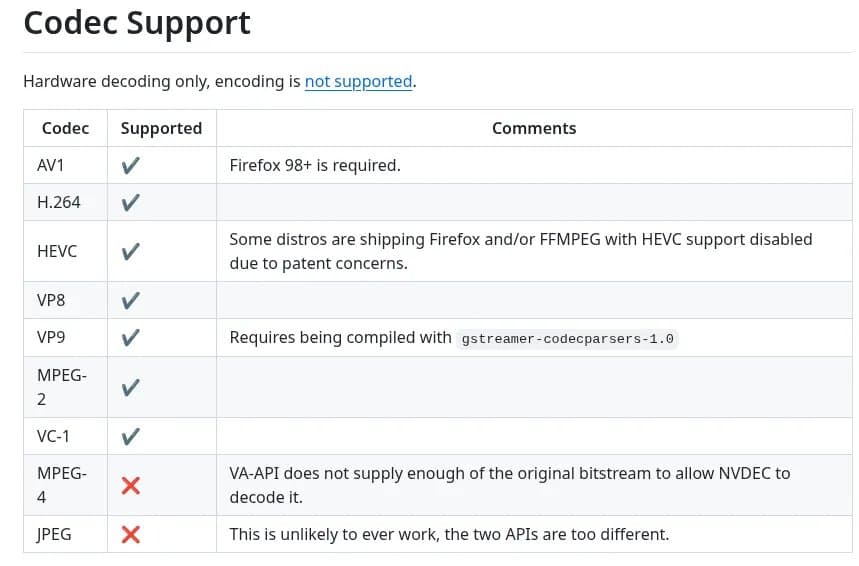
The most technically interesting change addresses an issue with VP8 video content. The driver now properly handles VP8 slice headers that are ingested by NVDEC but not used by VA-API. This fix should resolve green corruption issues that some users experienced when playing VP8-encoded videos. The corruption likely occurred because the driver was either ignoring or mishandling these slice headers, leading to decoding errors that manifested as visual artifacts.
Documentation Improvements
Alongside the technical fixes, the release also includes small markdown formatting improvements to the project's documentation. While not as exciting as performance enhancements, good documentation is crucial for open-source projects, especially those that require users to build and install drivers manually.
Current Status and Future Outlook
For now, the NVIDIA-VAAPI-Driver remains an essential tool for NVIDIA Linux users who want hardware video acceleration in Firefox. The project works well with NVIDIA Turing GPUs and newer, providing a practical solution until Firefox natively supports Vulkan Video, which would provide a more modern and potentially more efficient path to hardware video acceleration.
The driver's continued development and regular updates demonstrate the strength of community-driven open-source projects in filling gaps left by proprietary software. As video resolutions continue to increase and streaming becomes more demanding, tools like this will remain important for ensuring smooth playback on a wide range of hardware configurations.
The NVIDIA-VAAPI-Driver 0.0.15 release is available for download from the project's GitHub repository, where users can find installation instructions and contribute to the project's ongoing development.
Comments
Please log in or register to join the discussion