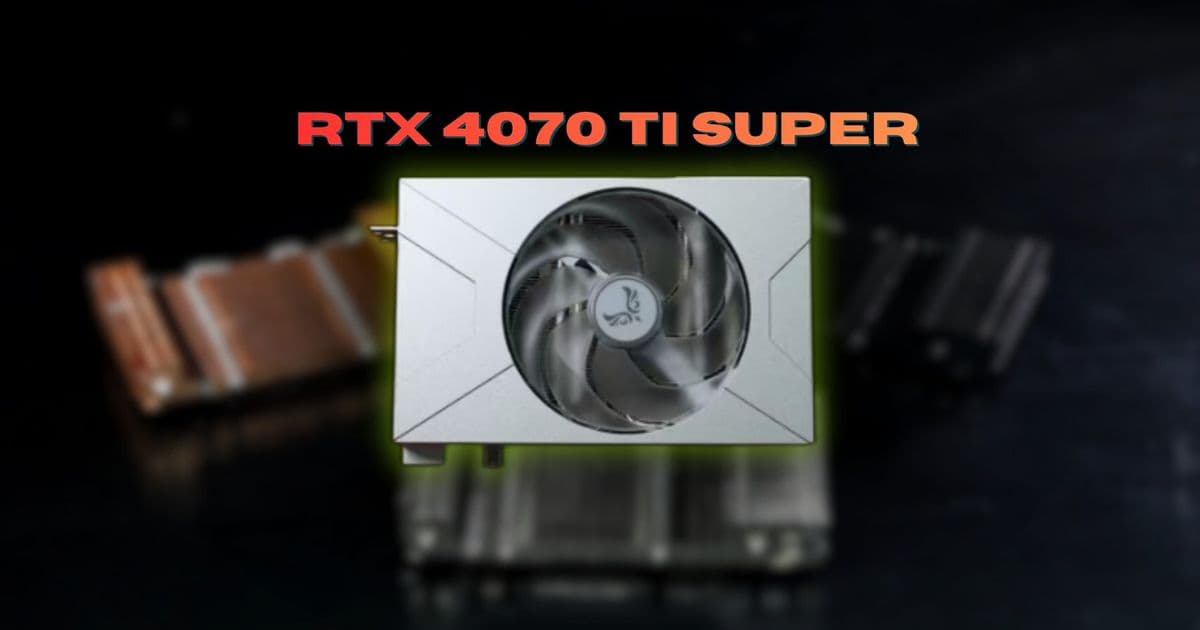
Zephyr's ambitious single-fan RTX 4070 Ti Super project has been cancelled due to skyrocketing VRAM costs, forcing the company to pivot to a more affordable RTX 4070 Super for its small form factor lineup.
Chinese GPU manufacturer Zephyr has cancelled its highly anticipated single-fan RTX 4070 Ti Super graphics card project, citing dramatic increases in VRAM costs and strong industrial demand from AI clients that have disrupted the memory supply chain.
(Image credit: Zephyr)
Memory Crisis Forces Strategic Pivot
The cancellation announcement came via a Bilibili post where Zephyr explained that "significant increases in VRAM costs" combined with "industry order demands" have made the RTX 4070 Ti Super project financially unfeasible. The company's statement suggests that AI data centers are consuming memory and storage supplies at unprecedented rates, leaving smaller GPU manufacturers to compete for expensive remaining inventory.
According to UNIKO's Hardware, who first reported on this development, GDDR6X memory prices have experienced a staggering increase. Two-gigabyte GDDR6X chips that previously cost approximately $7.25 in China before the AI boom have now surged to nearly $30 per chip. This represents a price increase of over 300% in a relatively short period.
Technical Specifications and Market Implications
The RTX 4070 Ti Super features 16 GB of GDDR6X memory across a 256-bit interface, delivering 672.3 GB/s of memory bandwidth. In contrast, the RTX 4070 Super uses 12 GB of GDDR6X on a 192-bit bus, providing 504.2 GB/s of bandwidth. This reduction in memory capacity and bandwidth represents a significant compromise for small form factor enthusiasts who were eagerly awaiting Zephyr's innovative cooling solution.
Power requirements also differ substantially between the two cards. The RTX 4070 Ti Super operates at 280W TGP (Total Graphics Power), while the RTX 4070 Super has a more modest 220W TGP. This difference in power consumption was a key factor in Zephyr's ability to design a single-fan cooling solution for the higher-end card.
Industry-Wide Memory Shortage Impact
The memory shortage affecting Zephyr is part of a broader crisis in the semiconductor industry. Recent reports indicate that AI data centers are "swallowing the world's memory and storage supply," creating unprecedented demand that traditional consumer electronics manufacturers struggle to meet. This situation has forced companies like Samsung and SK hynix to shorten memory contracts as pricing power shifts back to suppliers.
Memory makers are projected to earn $551 billion from the AI boom, highlighting the scale of industrial demand that's reshaping the consumer GPU market. The crisis has become so severe that some reports suggest Nvidia may no longer be selling VRAM bundled with its GPUs to board partners, forcing manufacturers to source memory independently at inflated prices.
Future Prospects and RTX 5070 Ti Possibility
Despite the setback, Zephyr remains optimistic about its future product roadmap. The company has hinted at the possibility of developing an "insane single-fan RTX 5070 Ti" card, though it warns that such a product would be expensive and faces uncertain development prospects. The company states that development of this potential card would be "predicated on supply chain analysis and further market research."
This pivot to the RTX 4070 Super represents a pragmatic business decision for Zephyr, allowing the company to maintain its presence in the small form factor market while navigating the current memory crisis. The RTX 4070 Super, while less powerful than the originally planned 4070 Ti Super, still offers strong performance in a compact form factor that appeals to SFF PC enthusiasts.
Market Context and Industry Trends
The cancellation of Zephyr's RTX 4070 Ti Super project illustrates the broader challenges facing GPU manufacturers in the current market environment. Small and specialized companies are particularly vulnerable to supply chain disruptions and price volatility, as they lack the purchasing power and long-term contracts that larger manufacturers can leverage.
This situation also highlights the growing tension between AI industry demand and consumer electronics production. As AI applications continue to expand, the competition for critical components like high-bandwidth memory is likely to intensify, potentially leading to more cancellations and product adjustments across the GPU market.
For small form factor enthusiasts, the shift from a 4070 Ti Super to a 4070 Super represents a compromise in performance but maintains access to Zephyr's innovative single-fan cooling technology. The company's ability to successfully cool even the higher-TGP 4070 Ti Super suggests that the 4070 Super variant could potentially feature overclocked specifications, partially offsetting the performance gap.
The memory crisis affecting Zephyr is just one manifestation of the broader semiconductor supply challenges that have characterized the tech industry in recent years. As AI continues to drive unprecedented demand for specialized components, manufacturers across all segments of the electronics industry will need to adapt their strategies and product offerings to navigate an increasingly constrained supply environment.
Comments
Please log in or register to join the discussion