
MIT researchers have created a computational violin that realistically reproduces the instrument's sound through physics-based modeling, offering violin makers a powerful tool to test designs before physical construction.
Violin making has always been a delicate balance of art, craft, and intuition. For centuries, luthiers have relied on their experience and ears to create instruments that produce beautiful, resonant sounds, often waiting until the final product is complete to know if their design choices succeeded. Now, a team of MIT engineers has developed a computational violin that could transform this traditional process by allowing makers to hear how an instrument will sound before any wood is carved.
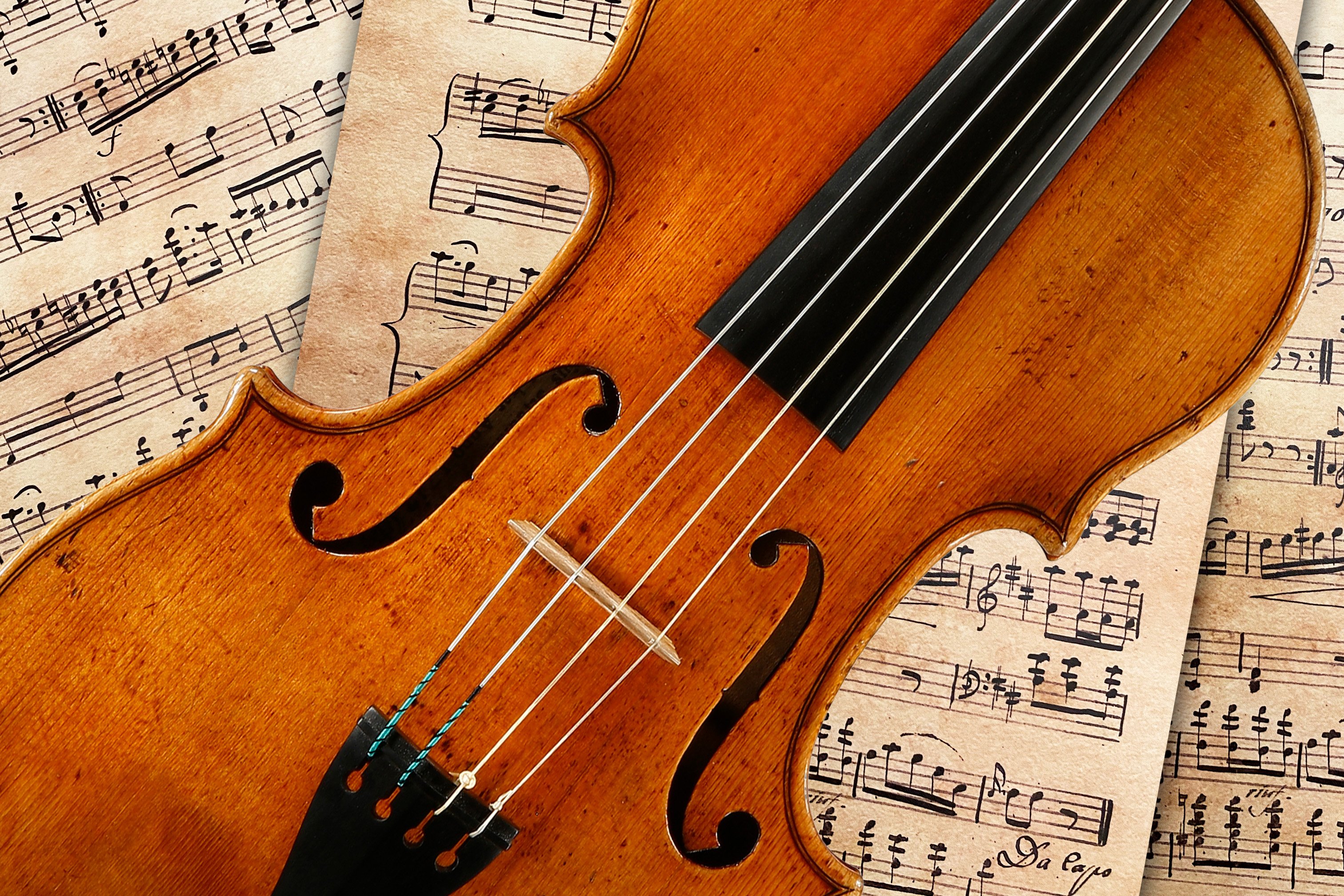
The new computational violin, detailed in a study published in the journal npj Acoustics, represents a significant departure from existing virtual violin technologies. While current software programs typically rely on sampling and averaging notes from actual instruments, the MIT approach takes a fundamentally different path by modeling the physics of how a violin produces sound.
"These days, people try to improve designs little by little by building a violin, comparing the sound, then making a change to the next instrument," explains Yuming Liu, senior research scientist at MIT. "It's very slow and expensive. Now they can make a change virtually and see what the sound would be."

The computational violin's development began with CT scans of a rare 1715 Stradivarius violin from the instrument's "Golden Age" of making. These scans, part of the Strad3D project, provided the researchers with detailed anatomical data that they imported into solid modeling software to create a precise three-dimensional representation.
"The entire thing is a matrix of millions of individual elements," says Arun Krishnadas PhD '23, one of the researchers. "And ultimately, you see this whole three-dimensional being, which is the violin and the air all connected and interacting with each other."
The team then applied finite element simulation, dividing both the violin and the surrounding air into millions of tiny elements. For each element, they noted its material properties—whether maple or spruce for the body, steel or natural fibers for the strings—and applied physics-based equations to predict how each element would move in relation to all others.
"We're not saying that we can reproduce the artisan's magic," adds Nicholas Makris, professor of mechanical engineering at MIT. "We're just trying to understand the physics of violin sound, and perhaps help luthiers in the design process."
As a demonstration, the researchers used their computational violin to play two short excerpts: "Bach's Fugue in G Minor" and "Daisy Bell"—a nod to the first song ever produced by a computer-synthesized voice. The system currently simulates pizzicato, or plucked strings, which is less complex to model than bowed strings.
"If there's anything that's sounding mechanical to it, it's because we're using the exact same time function, or standard way of plucking, for each note," notes Makris, who is also a lute player. "A musician will adapt the way they're plucking, to put a little more feeling on certain notes than others. But there could be subtleties which we could incorporate and refine."
The practical applications for luthiers are immediately apparent. By tweaking parameters such as wood type, body thickness, or other design elements, makers can virtually test how these changes would affect the instrument's sound. When the researchers varied the thickness of the virtual violin's back plate or changed its wood type, they could hear clear differences in the resulting sounds.

"You can tweak the model, to hear the effect on the sound," Makris explains. "Since everything obeys the laws of physics, including a violin and the music it makes, this approach can add an appreciation to what makes violin sound."
While the computational violin currently only models plucked strings, the researchers see this as a foundation that could eventually be expanded to include bowing techniques. The physics of bowing involves more complex interactions between the bow, string, and instrument body, but the team believes their current model provides the groundwork for future development.
This research represents a fascinating intersection of traditional craftsmanship and modern computational science. By providing a physics-based understanding of how violins produce sound, the MIT team offers luthiers a new tool that doesn't replace their artistry but complements it with scientific insight. As violin making continues to evolve, this computational approach could help preserve and enhance the centuries-old tradition while accelerating innovation in instrument design.
Comments
Please log in or register to join the discussion