Britain's communications regulator has largely preserved existing regulations for fiber broadband, maintaining oversight of BT/Openreach while expecting competition to emerge by 2031. The framework aims to balance investment incentives with consumer protection during the next phase of national broadband expansion.
Britain's communications regulator, Ofcom, has published its Telecoms Access Review for 2026-31, outlining a regulatory approach that largely maintains the existing framework while making targeted adjustments for the next phase of fiber broadband deployment across the UK.
The review, which follows the previous 2021 assessment, acknowledges that BT's infrastructure arm Opencontinue to hold "significant market power" (SMP) in multiple markets. Consequently, the regulator will continue imposing regulations to address Openreach's monopoly-like influence, ensuring fair competition in the wholesale broadband market.
Regulatory Framework Maintained
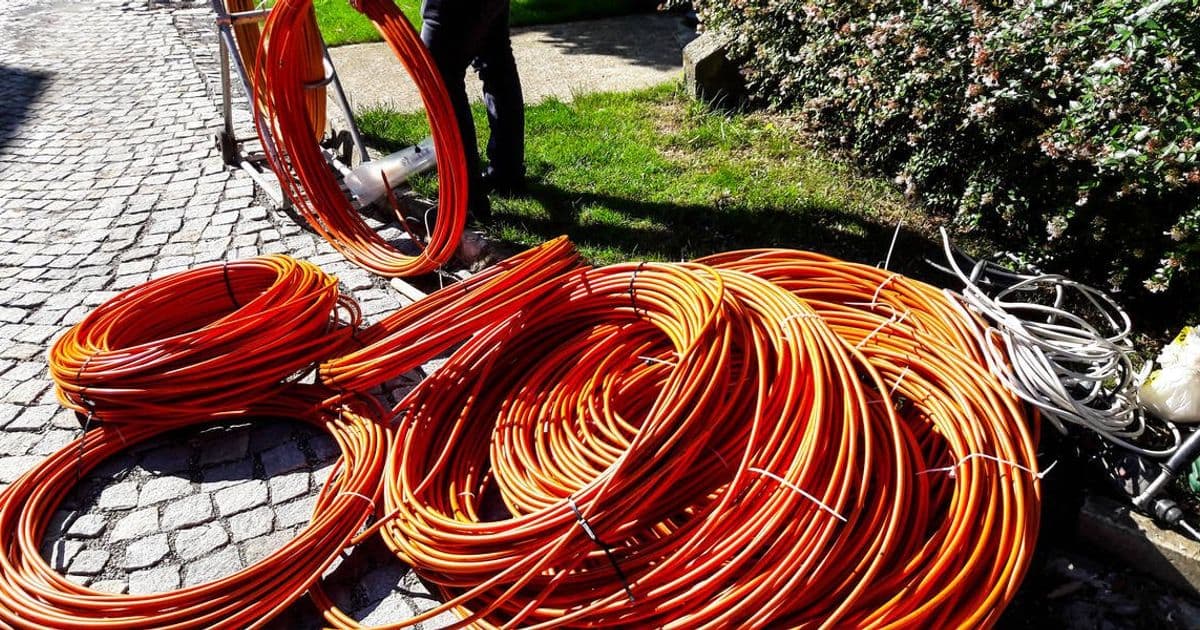
The cornerstone of the regulatory approach remains the Physical Infrastructure Access (PIA) scheme, which requires Openreach to allow competing network firms access to its utility poles and underground ducts. This enables alternative network providers (altnets) to deploy new fiber infrastructure alongside Openreach's own network.
Ofcom has divided the UK into two regulatory areas with different requirements:
- Area 2: Regions where at least one alternative provider exists, now covering 86% of UK premises
- Area 3: Typically rural locations where competition is unlikely
In Area 2, the regulator will maintain flat, inflation-adjusted prices for basic superfast broadband products while allowing flexibility on pricing for other speed bands. For Area 3, Openreach will be permitted "to recover the reasonable costs of its investments" in fiber rollout.
Price Cap Adjustments
The regulator has increased the price cap on what Openreach can charge retail internet service providers (ISPs) for using its network. This cap now covers download speeds up to 80 Mbps, an increase from the previous 40 Mbps limit. Higher-speed products remain unregulated to incentivize investment in networks capable of delivering greater speeds.
Market Status and Progress
Since the 2021 review, significant progress has been made in fiber deployment. According to Ofcom, the number of premises with access to full-fiber broadband has increased from 6.9 million (24% of premises) to 23.7 million (78%) by July 2025. Despite this expansion, take-up rates have only risen to 42% of premises, compared to 24% in 2021.
The UK government has allocated £5 billion ($6.7 billion) for Project Gigabit, a scheme designed to subsidize broadband rollout in hard-to-reach areas. To date, over 30 contracts have been awarded under this program. Ofcom anticipates that technologies such as fixed wireless access (FWA) and new satellite services will play increasingly important roles in extending connectivity to underserved regions.
Compliance Timeline and Expectations
Ofcom has established a clear timeline for the regulatory framework:
- Immediate (2026-31): Maintain current regulations with price cap adjustments
- By 2031: Achieve effective competition in wholesale services
- Post-2031: Potential shift to cost-based regulation if competition fails to materialize
The regulator expects that by the end of this review period, effective competition will exist for wholesale services, potentially eliminating the need for regulation. However, contingency measures remain in place should this target not be met.
Industry Reactions
Alternative network providers have generally welcomed the regulatory approach. A spokesperson for CityFibre noted that the review provides "a stable regulatory framework as we scale our network and bring the benefits of genuine infrastructure competition – lower prices, faster speeds and better services – to consumers and businesses nationwide."
Virgin Media O2 echoed this sentiment, stating that "with scaled wholesale competition not yet established in the UK, Ofcom is right to hold its nerve, provide certainty, and avoid a rush to deregulation."
Paolo Pescatore, analyst and founder of PP Foresight, characterized the move as "more like evolution than revolution," noting that Ofcom "believes the approach is working, but competition remains fragile."
Openreach, while acknowledging the complexity of the document, emphasized its commitment to building the UK's best network. "No one is going further or faster than us to build the UK's best network(s)," stated Mark Shurmer, managing director for Regulatory Affairs at Openreach. "Our investments help customers – and the country – do brilliant things, but they only happen when the environment is stable and supportive."
Practical Implications for Compliance
For businesses operating in the UK broadband market, the regulatory review has several practical implications:
- Infrastructure sharing: Openreach must continue providing access to its physical infrastructure through the PIA scheme
- Pricing structures: ISPs should anticipate adjusted pricing for wholesale broadband services, with increased caps for speeds up to 80 Mbps
- Market expansion: Opportunities exist in underserved areas, particularly with the government's Project Gigabit subsidies
- Technology diversification: Consideration of FWA and satellite solutions for hard-to-reach locations
The regulatory framework aims to balance the need for continued investment in fiber infrastructure with the protection of consumer interests through controlled pricing and competition measures. As the UK approaches 2031, the effectiveness of this approach will be measured by the emergence of genuine competition in the wholesale broadband market.
Comments
Please log in or register to join the discussion