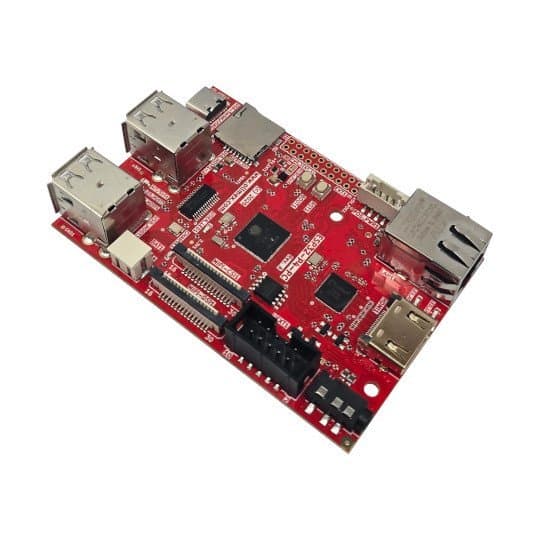
Olimex has launched the ESP32-P4-PC, a compact single-board computer featuring native HDMI output, Ethernet connectivity, four USB ports, and a 400MHz dual-core RISC-V processor, designed for industrial HMIs and media-focused IoT applications.
Olimex, a Bulgarian electronics manufacturer known for its open-source hardware, has unveiled the ESP32-P4-PC, a compact single-board computer (SBC) that brings desktop-like connectivity to the popular ESP32-P4 platform. The board measures just 90 × 60 mm but packs an impressive array of features typically found on larger, more expensive SBCs.
What's New with the ESP32-P4-PC
The ESP32-P4-PC represents a significant evolution from Olimex's previous ESP32-SBC-FabGL board. While the FabGL variant focused on VGA output and retro computing emulation through the FabGL library, the new ESP32-P4-PC takes a more modern approach with native HDMI output. This is achieved through an LT8912B MIPI-to-HDMI converter chip, making it the first development board in this category to include integrated HDMI without requiring external graphics support.
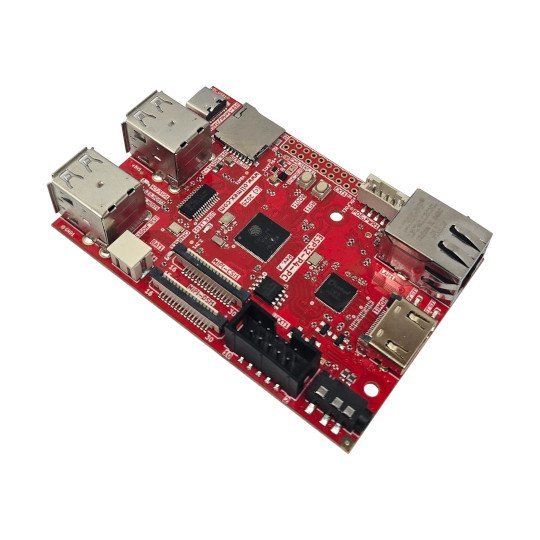
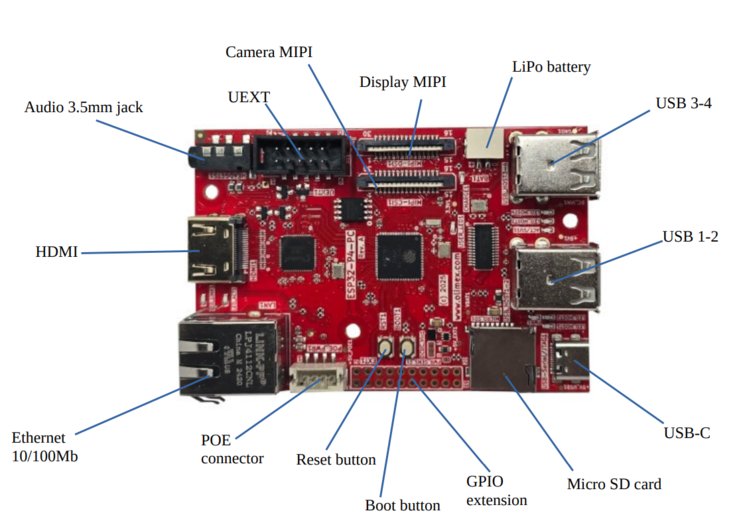
The board's connectivity options are particularly noteworthy. It features four USB 2.0 ports, a 10/100Mbit Ethernet port with optional Power over Ethernet (PoE) support, and the aforementioned HDMI output. For expansion and interfacing, users get a 20-pin GPIO header, JTAG for debugging, and a UEXT port for modular expansion. The inclusion of a MIPI DSI/CSI interface allows for direct connection of displays and cameras, while a 3.5mm audio jack handles audio output.
Power and Battery Management
One of the most interesting aspects of the ESP32-P4-PC is its power system. The board can be powered via USB-C and includes a built-in battery charging circuit. This allows the board to run from a LiPo battery, and more impressively, it can act as an uninterruptible power supply (UPS) out of the box. When USB-C power is removed, the board automatically switches to battery power without requiring a reboot of the MCU. The battery circuit also includes external power sensing, providing intelligent power management capabilities.
Performance and Use Cases
At the heart of the ESP32-P4-PC is a 400MHz dual-core RISC-V processor. While this isn't designed to compete with Linux-based SBCs like the Raspberry Pi, Orange Pi, or Banana Pi in terms of raw computing power, it's more than capable for its intended use cases. The processor can handle 1080p H.264 video processing and display 2D GUIs effectively.
Olimex is marketing this as a "PC-like" board, but with important caveats. It's not meant to replace desktop computers or even run desktop-class applications. Instead, it's positioned as a high-end embedded platform suitable for industrial Human-Machine Interfaces (HMIs), smart displays, and media-focused IoT gateways where HDMI output and stable wired connectivity are priorities over full PC-level computing.
Open Source and Availability
The ESP32-P4-PC follows Olimex's tradition of open-source hardware. All design files, including schematics and the user manual, are available on GitHub, allowing developers to modify and customize the board for their specific needs. This openness is particularly valuable for industrial and commercial applications where customization may be required.
Currently available for pre-order at €24.95 on Olimex's store page, the board is scheduled to begin shipping on February 23, 2026. This pricing positions it competitively within the ESP32 development board market while offering features that typically require more expensive solutions.
Comparison to Previous Models
The ESP32-P4-PC represents a clear upgrade path from the ESP32-SBC-FabGL. While the FabGL board was excellent for retro computing enthusiasts and those needing VGA output, the new model broadens the appeal with HDMI support and more modern connectivity options. The addition of Ethernet, multiple USB ports, and the battery management system makes it suitable for a wider range of applications, from industrial control panels to digital signage.
The shift from a retro-focused design to a more general-purpose embedded platform reflects the evolving needs of the maker and industrial communities. As more applications require network connectivity, multiple peripheral support, and modern display outputs, boards like the ESP32-P4-PC fill an important niche between simple microcontroller boards and full-fledged SBCs.
Target Audience and Applications
This board is particularly well-suited for developers and companies working on:
- Industrial control panels and HMIs
- Digital signage and information displays
- IoT gateways with display capabilities
- Smart home controllers with HDMI output
- Media players for embedded systems
- Educational projects requiring multiple connectivity options
The combination of HDMI output, Ethernet connectivity, and battery backup makes it especially attractive for applications where reliability and multiple connectivity options are crucial. The open-source nature also means it can be easily integrated into commercial products without licensing concerns.
While it won't replace your desktop computer or even a Raspberry Pi for general computing tasks, the ESP32-P4-PC carves out a unique position in the embedded development ecosystem by offering desktop-like connectivity in a compact, power-efficient package at an accessible price point.
Comments
Please log in or register to join the discussion