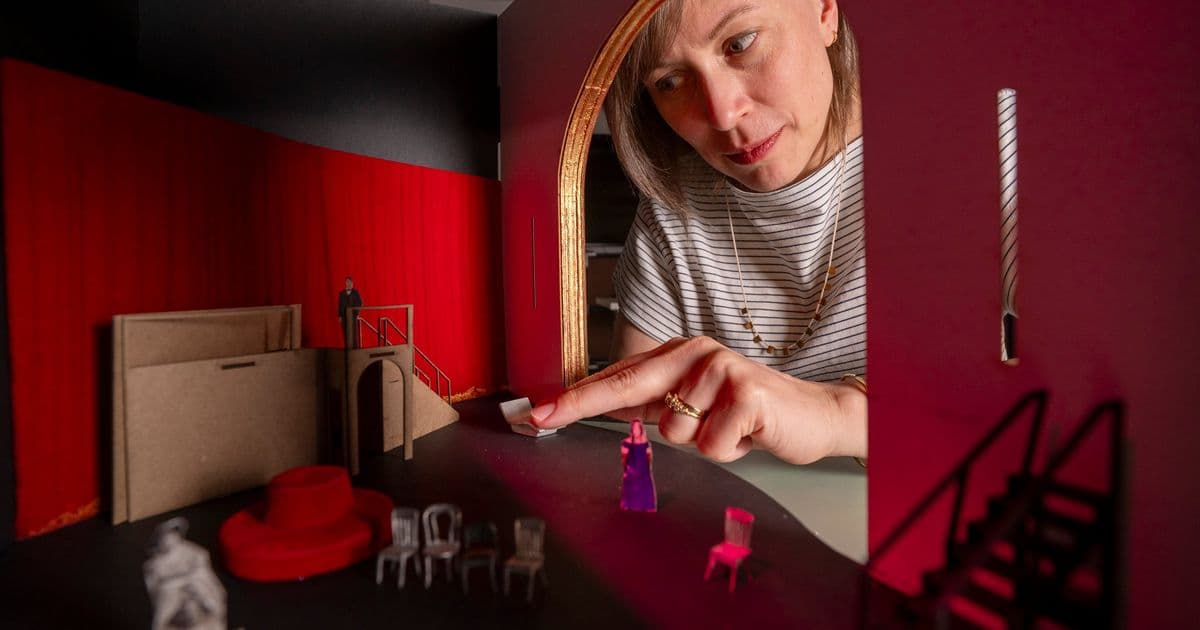
Associate Professor Sara Brown shares the philosophy, process, and practical challenges behind her award‑winning theater sets, from a soaring Noh opera at the Brooklyn Academy of Music to classroom projects that train MIT students to think visually and collaboratively.
One Stage at a Time
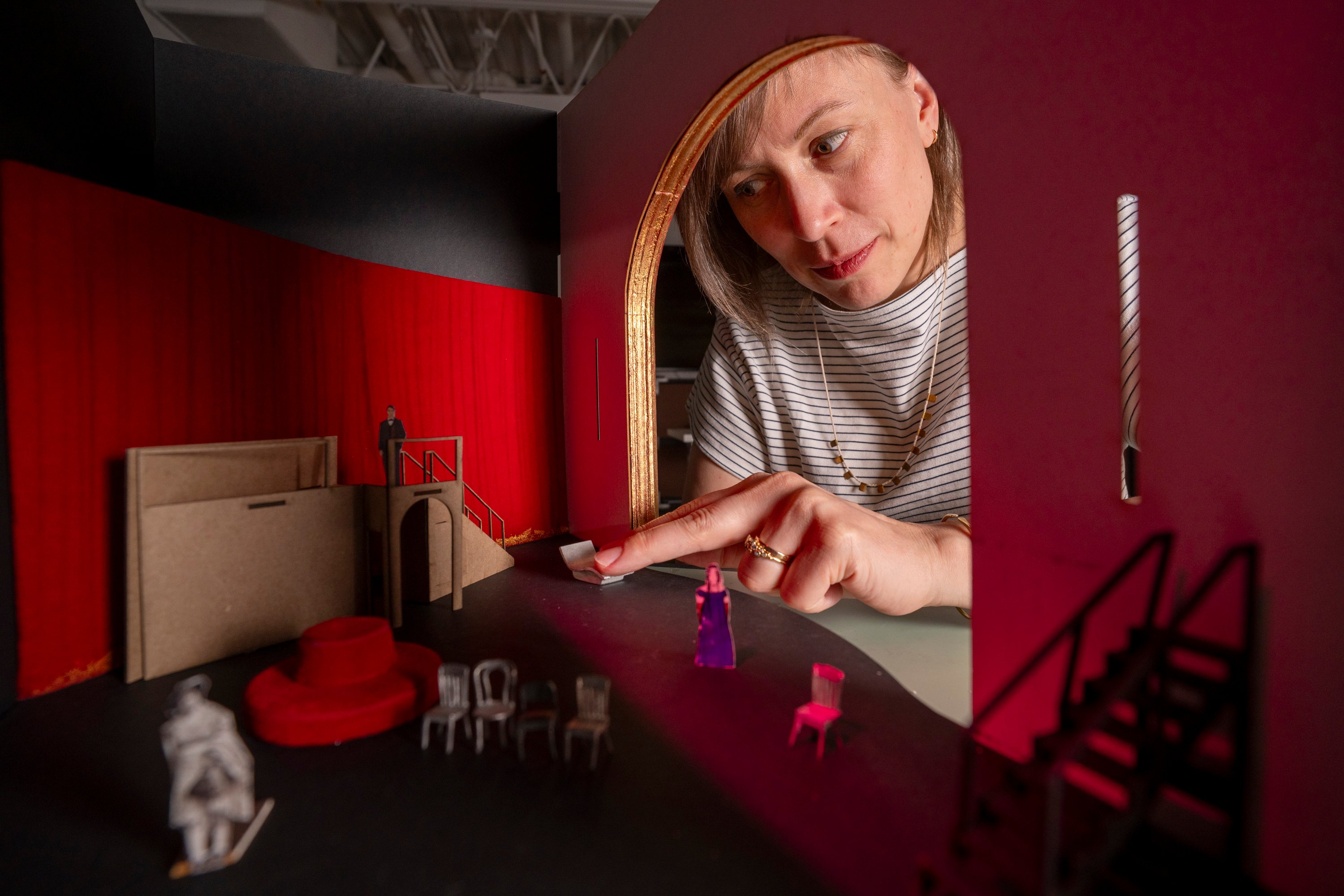
When the lights come up on a production, the audience’s first impression is the stage itself. For MIT Associate Professor Sara Brown, that first impression is the result of a disciplined blend of artistic intent and engineering pragmatism. Brown, an accomplished set designer whose work has appeared at venues such as the Brooklyn Academy of Music, the Royal Shakespeare Company, and the Guthrie Theater, now channels the same rigor into a series of undergraduate courses that ask students to “see” a play before they ever pick up a pencil.
Research‑driven practice: the Hagoromo set
In 2015 Brown was commissioned to redesign the set for a chamber‑opera adaptation of the Japanese Noh play Hagoromo. The story pivots on an angelic figure who loses her feathered cloak, a fisherman who reluctantly returns it, and a final ascent to the heavens. To keep the focus on the two protagonists, Brown erected three tall walls that formed a rectangular frame around the central performance area. Musicians and the chorus were lifted onto a mezzanine behind the walls, creating a visual hierarchy that suggested a “heaven‑and‑earth” contrast.
The design was more than a backdrop; it acted as a framing device that separated the dancers from a potentially cluttered stage. Brown worked closely with lighting designer Clifton Taylor to cut ventilation slots in the walls, allowing natural light to spill onto the stage while a rigging system provided spotlights for the dancers. The collaboration illustrates a core principle of her practice: artistic ideas must be reconciled with structural realities such as load‑bearing capacity, sight‑line clearance, and crew safety.
Technical approach in the classroom
Brown’s MIT courses—Foundations of Set Design, Design Drawing for Theatrical Artists, and Interdisciplinary Design Lab—mirror the workflow she uses on professional projects. A typical semester begins with a close reading of the script, followed by a meeting with a director (often a graduate student or faculty collaborator) to surface the thematic “challenge” of the piece. Students then develop concept sketches, scale models, and digital renderings using tools like Rhino 3D and SketchUp. Throughout the process they must answer practical questions:
- Load calculations: How much weight can the stage support when a suspended platform is added?
- Material selection: Which fabrics provide the desired drape while remaining fire‑retardant?
- Rigging geometry: Where should trusses be placed to allow unobstructed movement for performers?
Brown emphasizes that these calculations are not optional add‑ons; they shape the artistic vocabulary of the set. For example, a student who proposes a massive rotating wall must first verify that the stage’s motorized turntable can handle the torque and that the control system can be integrated with the lighting console.
Real‑world applicability: adaptable designs
One of Brown’s most cited professional achievements is a set that served two productions simultaneously: Death of a Salesist and Skeleton Crew. The design featured a modular wall system that could be reconfigured in minutes, allowing each play to present a distinct environment while sharing the same physical infrastructure. This approach reduces material waste, cuts production costs, and shortens load‑in times—benefits that directly translate to student projects.
In a recent MIT production of Pride and Prejudice in Hartford, Connecticut, Brown’s students built a circular foreground space with a slightly raised rear area that housed a piano and a set of columns. The layout could be rearranged to suggest a ballroom, a drawing‑room, or a garden, demonstrating how a single, well‑engineered structure can support multiple narrative settings.
Limitations and ongoing challenges
While Brown’s methodology bridges artistic vision and engineering constraints, she acknowledges several persistent hurdles:
- Budget constraints: Even with modular components, set construction often exceeds the modest budgets of academic productions.
- Time pressure: Professional timelines can compress design, fabrication, and rehearsal phases into a few weeks, leaving little room for iterative testing.
- Interdisciplinary communication: Designers, lighting technicians, and directors speak different vocabularies; misalignment can lead to costly revisions.
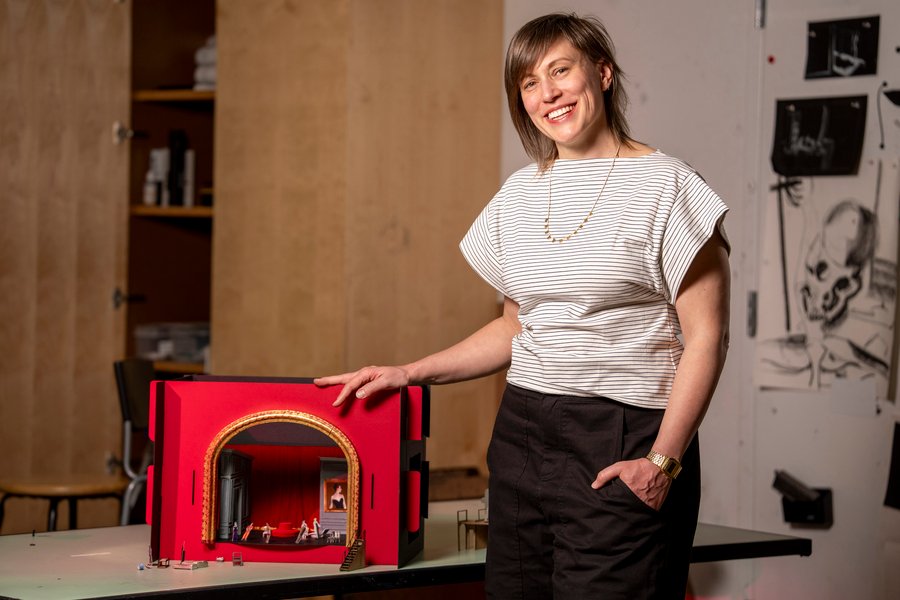
To mitigate these issues, Brown incorporates rapid‑prototyping techniques—laser‑cut cardboard mock‑ups, 3‑D‑printed scale models, and virtual reality walkthroughs—early in the design cycle. These tools give all stakeholders a shared visual reference before any major material is ordered.
Community as a design catalyst
Brown repeatedly stresses that theater‑making is a collective endeavor. In her words, “You might bump up against rough edges, but you develop strategies to work with everybody with dignity.” This ethos informs her mentorship of the MIT Morningside Academy of Design, an interdisciplinary hub where engineering, architecture, and performance students collaborate on public installations and experimental stagecraft.
She draws a parallel between set design and architecture: where architects aim for efficient flow, set designers often create intentional obstacles that shape a performer’s movement. By highlighting these contrasting goals, Brown helps students appreciate how the same design process can produce opposite outcomes depending on the context.
Looking ahead
Having earned tenure in 2025, Brown plans to expand her research into responsive environments—stage elements that change shape or opacity in response to sensor data. Early prototypes involve programmable LED panels embedded in modular wall sections, allowing a set to shift mood in real time based on audience noise levels or performer proximity.
For students, the takeaway is clear: mastering the technical underpinnings of set design opens creative pathways that are otherwise blocked by practical concerns. As Brown puts it, “The good stuff happens when you mine your interior life, then test those ideas against the physics of the stage.”
Related resources
- MIT Music and Theater Arts faculty page – Sara Brown
- Brown’s recent interview on set‑design workflow – MIT News article
- Open‑source Rhino scripts for stage geometry – GitHub repository
Comments
Please log in or register to join the discussion