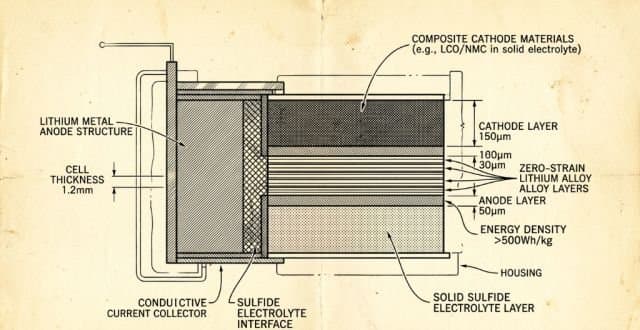
Ganfeng Lithium has begun small‑batch manufacturing of a 10 Ah lithium‑metal solid‑state battery that it rates at 500 Wh/kg. The claim, if reproducible, would double the gravimetric energy of today’s best lithium‑ion packs, but the announcement leaves open questions about cycle life, manufacturability, and safety under real‑world conditions.
Ganfeng Lithium Starts Low‑Volume Production of 500 Wh/kg Solid‑State Cells
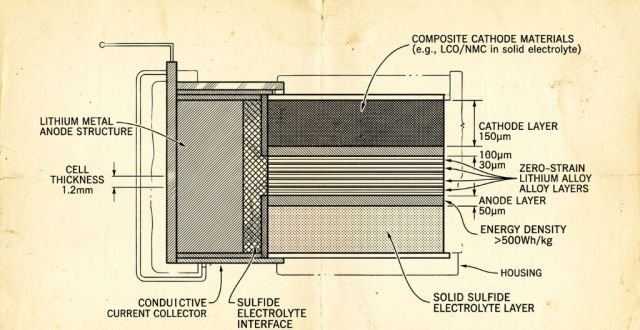
Ganfelf Lithium Group – the world’s largest lithium‑metal producer, controlling roughly 45 % of global supply – announced on 25 May 2026 that it has begun limited‑run production of a 10 Ah lithium‑metal solid‑state battery (SSB) with a claimed gravimetric energy density of 500 Wh/kg. The company positions the cell as the first commercially‑available solid‑state unit to reach that figure.
What the press release claims
- Energy density: 500 Wh/kg, about twice the 250‑300 Wh/kg typical of current high‑energy lithium‑ion packs.
- Form factor: 10 Ah capacity, roughly the size of a standard 18650 cell but with a solid electrolyte.
- Two parallel development tracks:
- Lithium‑metal anode – targets the 500 Wh/kg figure but acknowledges challenges with cycle life and dendrite growth.
- Silicon‑based anode – offers 400 Wh/kg and a reported >1 100 full‑cycle life, which Ganfeng says meets “mass‑production qualification”.
- Materials architecture: proprietary lithium‑alloy anode combined with a sulfide‑based solid electrolyte cathode, designed to limit volume change to 3‑5 % during cycling and to survive nail‑penetration and thermal‑runaway tests up to 250 °C.
- Customers: Tesla, Volkswagen, Hyundai, BMW and several Chinese EV manufacturers are listed as existing partners.
What is actually new?
1. Demonstrated gravimetric energy
The 500 Wh/kg figure is the first publicly disclosed number that reaches the half‑kilowatt‑hour per kilogram mark for a solid‑state cell. Earlier academic prototypes from Toyota, QuantumScape and others have reported 400‑450 Wh/kg in lab settings, but Ganfeng’s claim is the first attached to a production‑line pilot.
2. Integrated supply‑chain advantage
Because Ganfeng supplies roughly half of the world’s lithium metal, it can source the high‑purity lithium‑alloy anode material at scale. That vertical integration reduces the risk of material bottlenecks that have slowed other SSB projects.
3. Parallel anode strategies
Most competitors focus on a single chemistry (e.g., lithium‑metal with sulfide electrolyte). Ganfeng’s simultaneous silicon‑based track gives it a fallback path that trades some energy density for a longer cycle life, which could be more attractive for mass‑market EVs.
Limitations and open questions
Cycle life vs. energy density
The press release only provides a cycle‑life figure for the silicon‑based 400 Wh/kg cell (>1 100 cycles). No durability data are given for the 500 Wh/kg lithium‑metal version. In earlier solid‑state work, high energy density often correlates with rapid capacity fade due to dendrite formation and interfacial resistance growth. Until Ganfeng publishes calendar‑life or cycle‑life curves for the 500 Wh/kg cell, the claim remains speculative for automotive use.
Manufacturing complexity
Solid‑state cells require handling of brittle sulfide electrolytes in dry‑room environments, and the transition from laboratory stacks to roll‑to‑roll production has proven difficult for other firms. Ganfeng’s announcement of “small‑batch” production suggests that the process is still at a pilot scale; scaling to the hundreds of megawatt‑hours needed for a vehicle platform will likely expose yield and cost issues.
Safety validation
The company cites nail‑penetration and thermal‑runaway tests up to 250 °C, but those are static bench tests. Real‑world safety involves abuse scenarios such as internal short circuits, mechanical shock, and long‑term calendar aging. Independent validation from third‑party labs will be necessary before automakers can certify the cells for production vehicles.
Cost considerations
Lithium‑metal anodes and sulfide electrolytes are more expensive than conventional graphite anodes and liquid electrolytes. Ganfeng’s upstream lithium advantage may lower raw‑material cost, but the overall cell cost will also depend on electrolyte synthesis, cell assembly equipment, and yield. No cost figures were disclosed, so it is unclear whether the technology can compete with advanced lithium‑ion chemistries that are already approaching $100/kWh at volume.
How this fits into the broader solid‑state race
| Company | Reported Energy Density | Cycle Life (reported) | Status |
|---|---|---|---|
| Toyota | 400 Wh/kg (lab) | 500+ cycles (lab) | Pilot line, limited volumes |
| QuantumScape | 350‑400 Wh/kg (prototype) | 300‑500 cycles (prototype) | Small‑scale pilot, targeting 2027 production |
| Samsung SDI | 380 Wh/kg (prototype) | 800 cycles (prototype) | Pilot production 2025‑2026 |
| Ganfeng | 500 Wh/kg (pilot) | >1 100 cycles (silicon track) | Low‑volume production started |
Ganfeng’s claim pushes the energy‑density envelope, but the trade‑off between that figure and cycle life mirrors the broader industry pattern: higher gravimetric energy often comes with reduced longevity. The dual‑track approach may allow the company to target premium EV models with the 500 Wh/kg cell while supplying higher‑volume platforms with the 400 Wh/kg silicon variant.
Practical implications for EV manufacturers
- Range increase: If the 500 Wh/kg cell can be integrated into a 70 kWh pack, the pack mass could drop from ~450 kg to ~315 kg, potentially adding 100‑150 km of range or allowing more cabin space.
- Weight‑critical applications: High‑performance sports cars, drones, and aerospace platforms could benefit most in the near term, where the cost premium is easier to justify.
- Supply‑chain risk: Automakers that already source lithium‑hydroxide from Ganfeng may find the transition to its solid‑state cells smoother than switching to a competitor’s chemistry.
Bottom line
Ganfeng Lithium’s announcement marks a noteworthy step: a pilot‑scale solid‑state cell that reaches 500 Wh/kg on paper. The real test will be whether the cell can sustain that energy density over a practical number of cycles, be manufactured at acceptable yield, and meet automotive safety standards without inflating cost dramatically. Until independent data on cycle life, calendar aging, and production economics emerge, the claim should be treated as a promising prototype rather than a commercial reality.
For more details on Ganfeng’s solid‑state roadmap, see the company’s official press release here.
Comments
Please log in or register to join the discussion