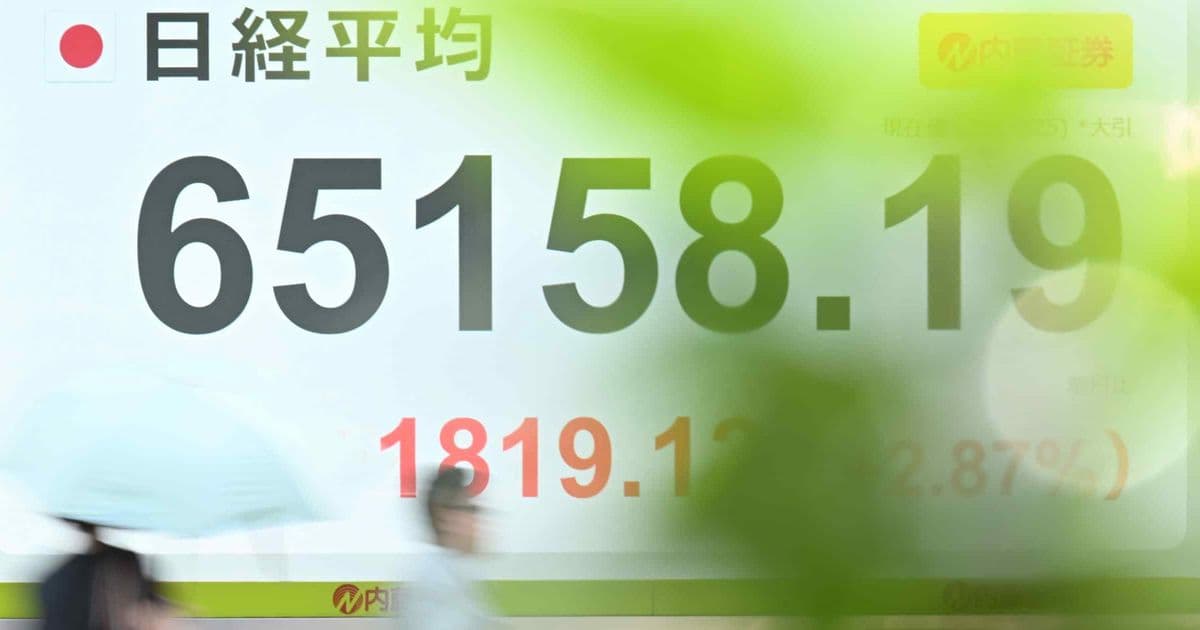
The Nikkei 225 and TOPIX surged to all‑time highs on May 25, 2026, as investors priced in lower geopolitical risk after reports of progress in U.S.–Iran talks. The rally lifted the broader market, boosted risk‑on sectors and sparked speculation about a shift in capital flows toward Japanese equities.
Japanese equities surge to new highs
On Monday, the Nikkei 225 closed at 34,782 points, up 3.0 % from the previous session, while the TOPIX reached 2,421 points, also a 3 % gain. Both indices posted their highest levels since the market’s inception, marking the first time Japan’s benchmark indices have broken the 34,000‑point barrier for the Nikkei and the 2,400‑point mark for TOPIX.

Market context: geopolitics meets commodities
The rally unfolded as news emerged that senior U.S. officials and Iranian diplomats were making “substantial progress” toward a framework that could curb Tehran’s nuclear activities and lift sanctions. Analysts at Nomura and Goldman Sachs noted that even a tentative diplomatic breakthrough reduces the risk premium on oil‑dependent economies, prompting a 4 % drop in Brent crude to $78 per barrel.
Lower oil prices have a two‑fold effect on Japan:
- Import cost relief – Japan imports roughly 80 % of its energy needs. A $10‑per‑barrel decline translates to an estimated ¥150 billion improvement in the trade balance for the quarter, boosting corporate earnings forecasts.
- Sector rotation – Energy‑intensive exporters such as Toyota, Mitsubishi Heavy Industries, and J‑Power saw their shares rise 2‑3 % as input‑cost pressures eased.
What the move means for investors
1. Re‑pricing of risk‑off assets
Japanese government bonds (JGBs) have been under pressure, with the 10‑year yield slipping to 0.12 %, its lowest level since 2016. The yield gap with U.S. Treasuries narrowed to 70 bps, narrowing the incentive for carry trades that have traditionally favoured the yen. As a result, the JPY appreciated modestly against the dollar, moving from ¥152 to ¥149.
2. Flow of foreign capital
Data from the Bank of Japan shows that foreign inflows into the TOPIX rose to ¥1.2 trillion in the week ending May 23, the highest weekly net purchase since 2020. Institutional investors cited “improved geopolitical stability” and “attractive valuation multiples” – the Nikkei’s price‑to‑earnings (P/E) ratio now sits at 15.8x, below the global average of 17.2x.
3. Sector winners and laggards
- Technology & AI: Companies like Kioxia and CyberAgent rallied 4‑5 % after reporting that AI‑driven memory demand is outpacing supply constraints.
- Automobiles: Toyota and Honda each gained around 2 % as analysts cut cost‑inflation assumptions.
- Consumer discretionary: Retailers such as Fast Retailing lagged, hovering near flat, as the market’s focus remained on macro‑driven themes.
4. Potential headwinds
While the market is buoyant, several risks linger:
- Negotiation setbacks – If talks stall, oil prices could rebound, re‑injecting cost pressures.
- Domestic fiscal concerns – Japan’s public debt now exceeds 260 % of GDP, keeping long‑term bond yields under scrutiny.
- Policy stance – The Bank of Japan’s decision to maintain ultra‑loose monetary policy could clash with a strengthening yen, pressuring exporters.
Strategic implications for corporate Japan
- Capital allocation – With cheaper import costs, manufacturers are likely to accelerate capex on next‑generation production lines, particularly in battery and hydrogen technologies.
- M&A activity – A stronger yen and lower yields make Japanese firms more attractive acquisition targets for foreign investors, potentially spurring a wave of cross‑border deals.
- Talent recruitment – The market’s positive sentiment may help Japanese firms compete for global AI talent, as higher equity valuations improve compensation packages.
Bottom line
The convergence of diplomatic optimism and falling oil prices has ignited a broad‑based rally in Japan’s equity markets, pushing the Nikkei and TOPIX to historic highs. While the upside appears robust, investors should monitor the trajectory of the Iran talks and domestic fiscal policy, both of which could reshape risk sentiment in the weeks ahead.
Comments
Please log in or register to join the discussion