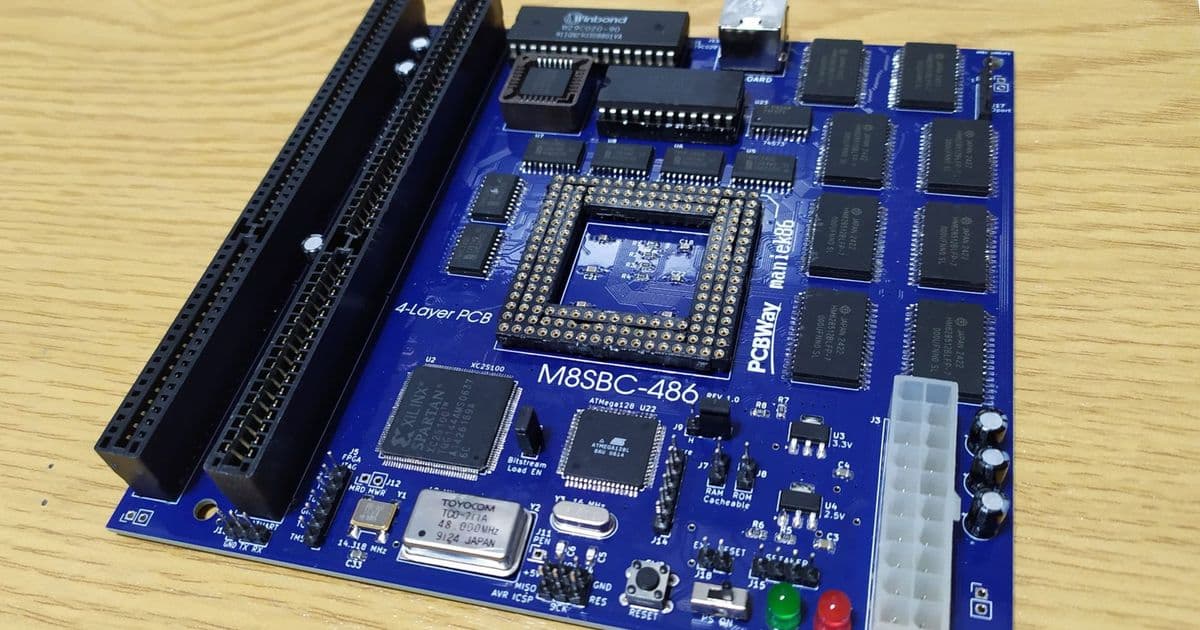
A retro computing enthusiast has created a fully open-source Intel 486 motherboard from scratch in under six months, using an FPGA to implement the chipset and achieving compatibility with Linux, DOS, Windows 3.1, and classic games like Doom, Prince of Persia, and Wolfenstein 3D.
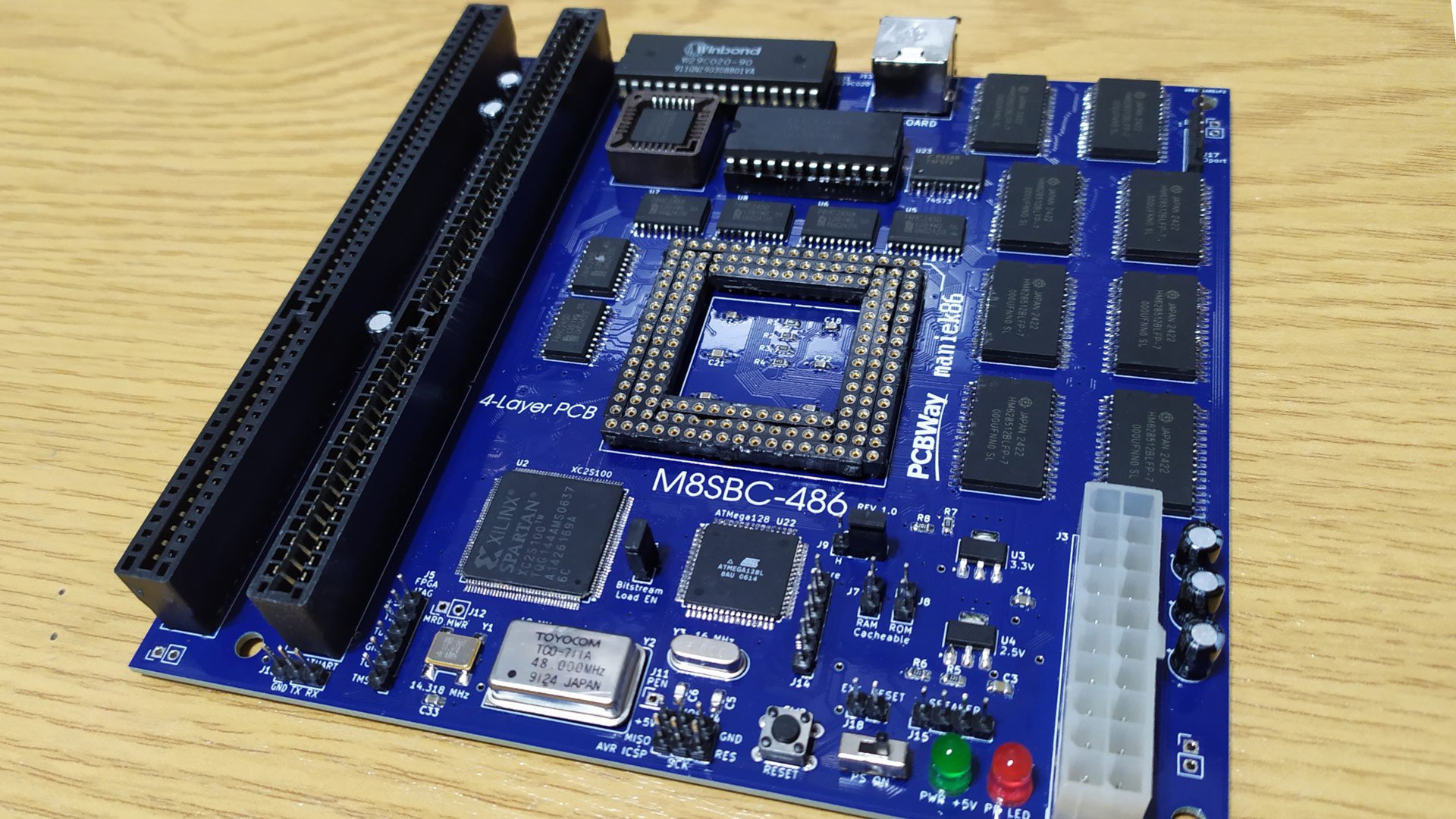
A programming and electronics enthusiast known as Maniek86 has demonstrated a remarkable achievement in retro computing: a fully open-source Intel 486 motherboard designed and built from scratch in under six months. The M8SBC-486 project, which began research in April of last year with actual development starting in August, represents a complete reimplementation of the 486 platform architecture rather than a clone of existing designs.
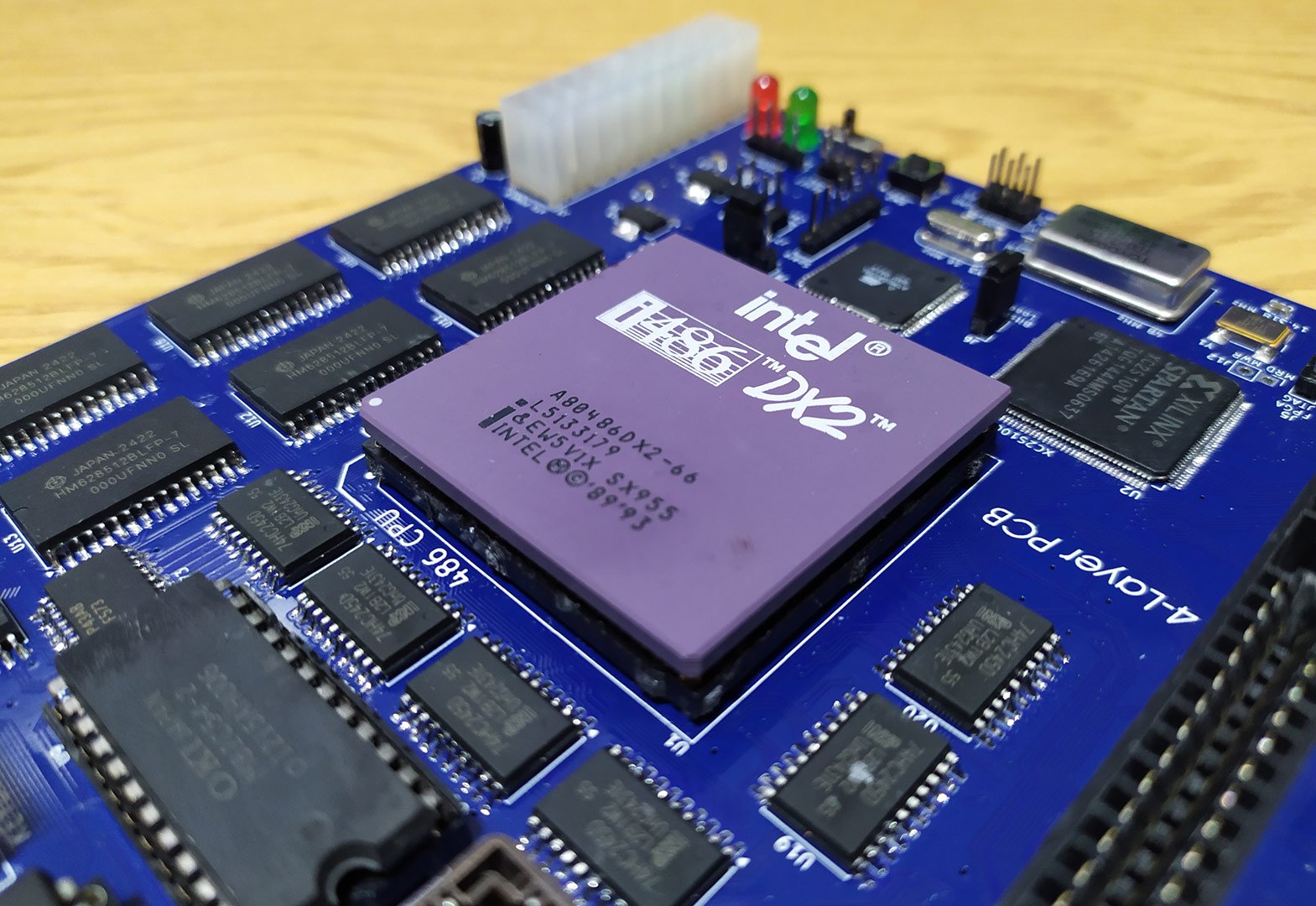
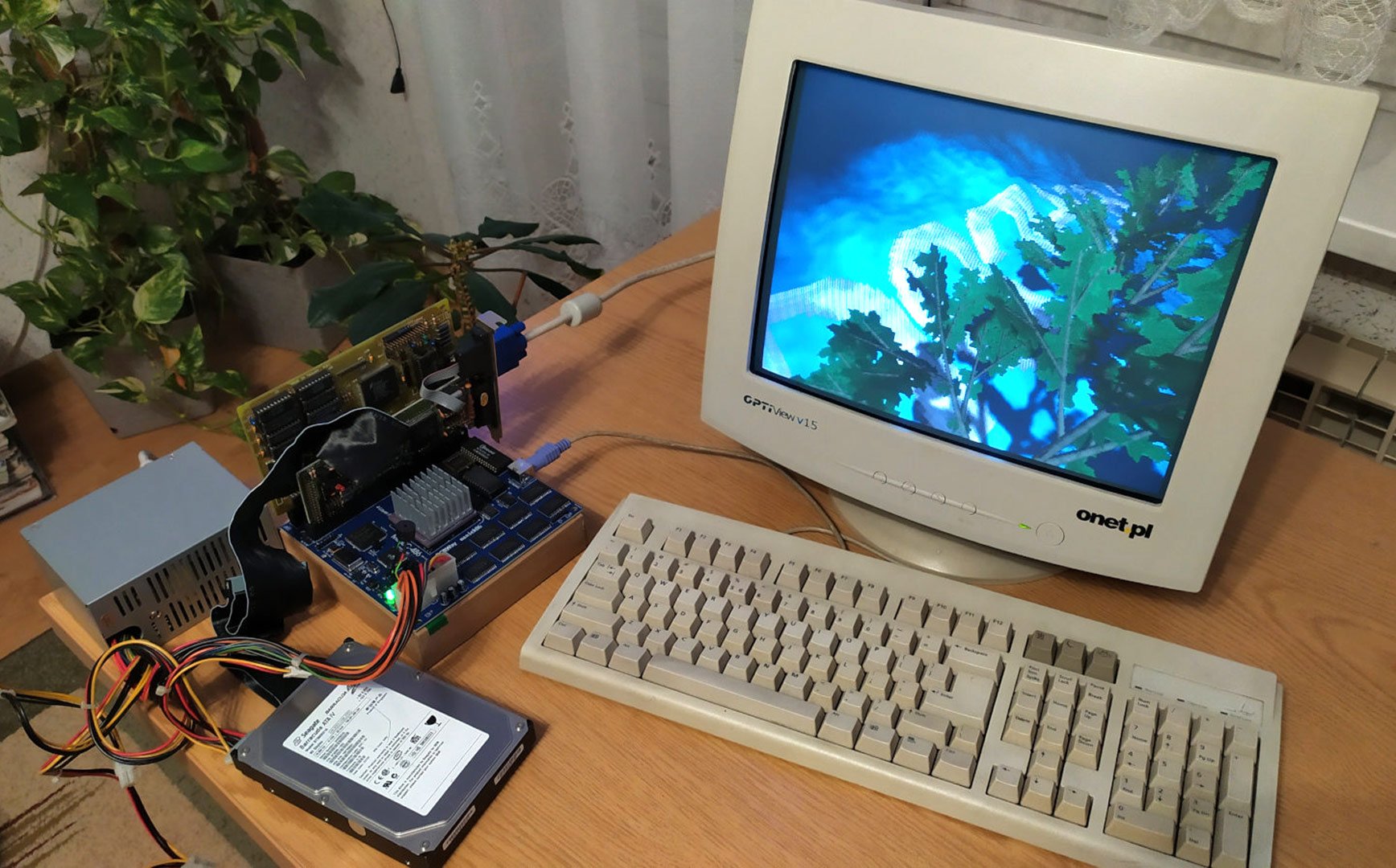
The project's initial goal was modest but specific: create a system capable of running Linux and the original Doom. However, the final implementation has proven far more capable, successfully booting various DOS versions, Windows 3.1 (with some caveats), and a library of classic games including Prince of Persia and Wolfenstein 3D. This breadth of compatibility is particularly impressive given the project's streamlined design philosophy.
Technical Implementation: FPGA as Chipset
The core innovation lies in the chipset implementation. Rather than sourcing vintage Intel chipsets or creating a direct clone, Maniek86 implemented the entire chipset logic in a Xilinx Spartan II XC2S100 FPGA, codenamed "Hamster 1." This approach allowed for rapid iteration and customization while maintaining compatibility with standard 486 CPUs.
The FPGA handles several critical functions that would typically require discrete chips:
- Memory controller for 4MB of SRAM
- Programmable Interval Timer (8254)
- Programmable Interrupt Controller (8259)
- CMOS RTC and storage
- PS/2 keyboard controller
- ATMega128 integration for reset handling, nonvolatile CMOS storage, and FPGA bitstream loading
This consolidation into a single FPGA significantly reduces component count and board complexity, though it requires substantial digital logic design work.
Hardware Specifications
The motherboard follows a compact 150 x 150mm 4-layer PCB design, slightly smaller than the Mini-ITX standard. Key specifications include:
- CPU Socket: PGA-168 for 5V Intel 486 processors
- Front Side Bus: 24 MHz (enabling DX2 CPUs to run at 48 MHz)
- Memory: 4MB SRAM
- ROM: 256KB BIOS (224KB accessible)
- Expansion: Two 16-bit ISA slots
- I/O: PS/2 keyboard port
- Form Factor: Custom 150x150mm, 4-layer PCB
Pragmatic Design Choices
Maniek86 adopted a pragmatic, goal-oriented approach that prioritized the core objective over comprehensive compatibility. This philosophy resulted in several deliberate omissions:
- No secondary PIC or DMA controller - These are typically required for full ISA bus compatibility and multi-device interrupt handling
- Limited ISA slot functionality - Graphics cards exhibit poor or glitchy performance, sound cards are nearly 100% incompatible, and most other cards require ISA PnP feature support and DMA to function properly
These trade-offs were acceptable because they didn't impede the primary goal of running Linux and Doom. The project demonstrates how focused requirements can accelerate development while still delivering substantial capability.
Development Timeline and Process
The six-month timeline from concept to working prototype is noteworthy for a custom hardware project of this complexity. Research began in April of last year, with actual development starting in August. The FPGA-based approach was crucial to this speed, as it allowed for:
- Rapid iteration - Logic changes could be implemented in software rather than requiring new chip designs
- Reduced component sourcing - No need to locate vintage chipsets or create custom ASICs
- Flexible debugging - FPGA configuration could be updated without physical board changes
PCB prototyping and manufacturing were handled by PCBWay, which Maniek86 credited for their support in the project.
Open Source Implications
The entire project is open source, making the design files, FPGA code, and documentation available for others to study, modify, and build upon. This openness addresses a significant gap in the retro computing community: while many enthusiasts collect and restore original 486 hardware, few create new, compatible motherboards from scratch.
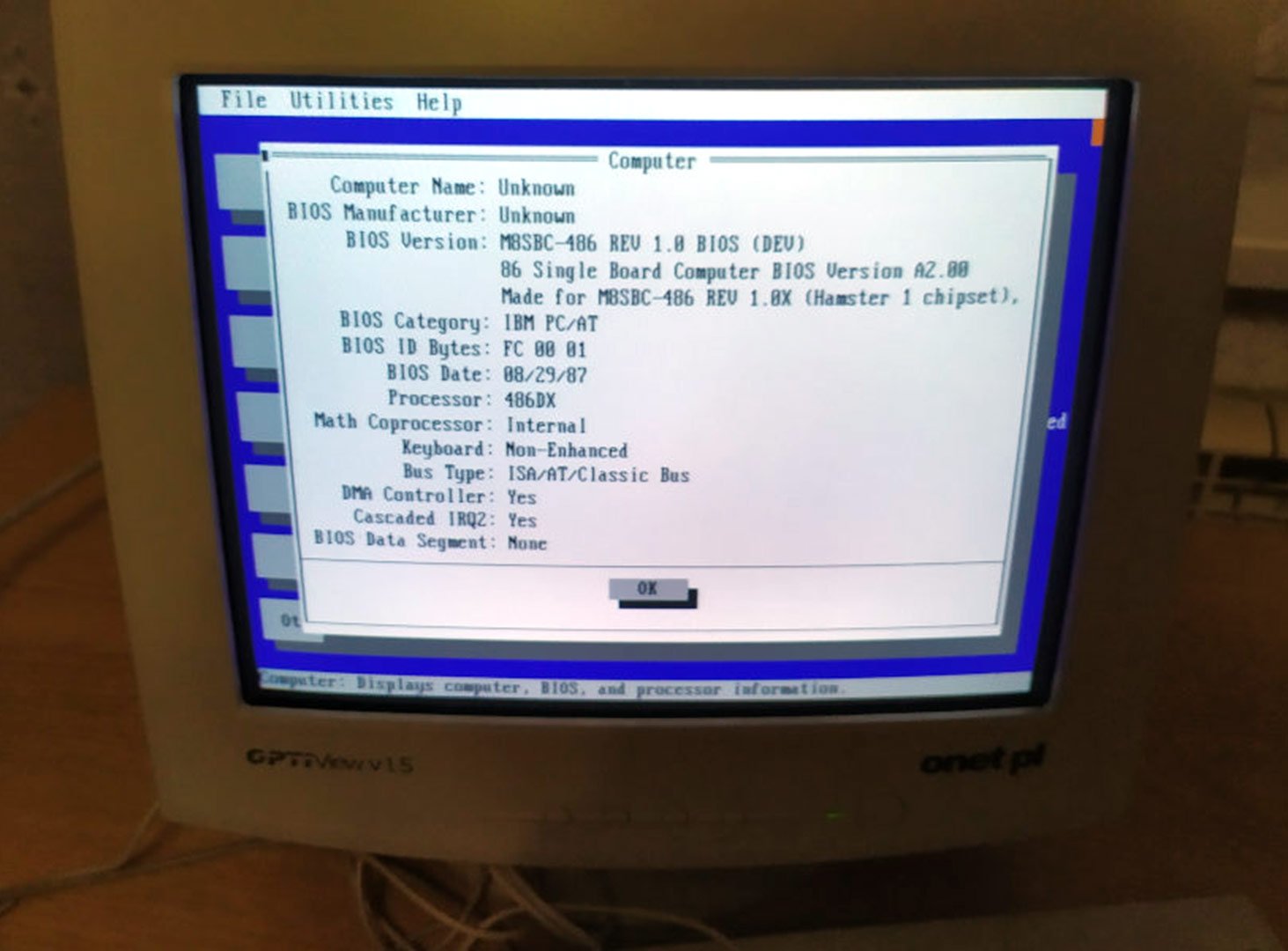
Maniek86 acknowledges that "there are still many issues" with the current implementation but sees significant potential for improvement through community collaboration. The maker suggests that this work could serve as a foundation for:
- More robust and stable implementations
- Fully custom boards for other x86 CPUs
- Enhanced ISA slot functionality
- Better compatibility with legacy expansion cards
Technical Challenges and Future Development
The current limitations highlight several technical challenges that remain for future development:
ISA Bus Implementation: The two ISA slots work but with significant limitations. Graphics cards show glitchy performance, likely due to timing issues or incomplete bus mastering implementation. Sound cards are nearly universally incompatible, probably because they require precise DMA timing and interrupt handling that isn't fully implemented.
DMA and PnP Support: The absence of DMA (Direct Memory Access) and ISA Plug and Play support severely limits expansion card compatibility. Most ISA cards from the 486 era assume these features are present.
CPU Compatibility: While the board accepts 5V 486 CPUs, the 24 MHz FSB limits it to DX2-class processors. A DX4 (100 MHz) would require different clock generation and potentially more robust power delivery.
Broader Context in Retro Computing
This project arrives at a time when interest in retro computing is experiencing a renaissance. Enthusiasts are not only preserving original hardware but also creating new implementations that capture the essence of classic systems while incorporating modern conveniences like FPGA reliability and open-source flexibility.
The M8SBC-486 demonstrates that creating a functional 486-class system from scratch is feasible with current technology, even if the implementation differs significantly from the original Intel design. This opens possibilities for:
- Educational projects - Understanding 486 architecture through hands-on implementation
- Modern retro builds - Creating reliable systems without hunting for aging original components
- Custom applications - Adapting the design for specific use cases where original hardware is unavailable
Conclusion
The M8SBC-486 represents a significant achievement in retro computing hardware design. By combining modern FPGA technology with careful architectural research, Maniek86 has created a functional 486 motherboard in a timeframe that would have been impossible with traditional methods. The project's open-source nature ensures that this work can serve as a foundation for future development, potentially leading to more complete implementations or adaptations for other classic CPU architectures.
While the current implementation has limitations—particularly in expansion card compatibility—it successfully demonstrates that creating new, compatible hardware for classic systems is both practical and valuable. As the project matures and potentially attracts community contributions, it could evolve into a robust platform for retro computing enthusiasts and educational purposes alike.
For those interested in exploring the design files or building their own derivative, the project's open-source availability provides an excellent starting point for understanding 486 architecture and FPGA-based system design.
Comments
Please log in or register to join the discussion