OpenAI is preparing to launch ads in ChatGPT with premium pricing comparable to live NFL broadcasts, charging up to $60 per 1,000 views while offering limited performance data to advertisers.
OpenAI is preparing to launch advertisements within ChatGPT, with pricing that rivals premium television spots during live NFL broadcasts. The Microsoft-backed AI company plans to begin rolling out ads to users with free accounts or the $8 ChatGPT Go subscription in the United States, marking a significant shift in how AI-powered search and answer platforms might monetize their services.
Premium Pricing for AI Answers
The reported pricing structure is particularly striking: OpenAI is considering charging up to $60 per 1,000 views for advertisements that appear beneath ChatGPT's responses. This CPM (cost per thousand impressions) rate puts ChatGPT ads in the same pricing tier as some of the most expensive advertising real estate in media—live NFL game broadcasts.
This premium pricing strategy reflects OpenAI's confidence in ChatGPT's engagement metrics and user base. With over 300 million weekly active users as of late 2024, ChatGPT has established itself as a daily utility for millions of people seeking information, assistance, and creative support.
Limited Performance Data for Advertisers
However, OpenAI's approach to advertiser transparency appears notably different from traditional digital advertising platforms. According to reports, the company will provide advertisers with data about impressions and total clicks but won't share detailed performance metrics like click-through rates or conversion data.
This limited data approach makes strategic sense given the nature of ChatGPT interactions. Unlike traditional search engines where users click through to external websites, ChatGPT often provides complete answers within the platform itself. This means the click-through rate to external advertiser sites is likely significantly lower than what advertisers experience on Google or other search platforms.
"OpenAI has told early advertisers that it will give them data about impressions, or how many views an ad gets, as well as how many total clicks it gets," said a media buyer working with some of the advertisers. "Advertisers will get high-level insights like total ad views," an OpenAI spokesperson confirmed, noting that this approach is "similar to what TV networks offer."
Privacy-First Advertising Approach
OpenAI has emphasized that its advertising strategy will prioritize user privacy. The company has confirmed that it won't use personal information, including health data, to train its models for advertising purposes. Additionally, OpenAI states that ads won't influence the answers ChatGPT provides, maintaining the integrity of the AI's responses.
This privacy-first approach aligns with growing regulatory scrutiny around data usage and AI systems, while also addressing user concerns about the potential for AI to become a tool for invasive targeted advertising.
Subscription Model as Ad-Free Alternative
For users who prefer an ad-free experience, OpenAI is positioning its subscription tiers as the solution. The $20 per month ChatGPT Plus subscription will remain ad-free, while the $8 ChatGPT Go subscription will include advertisements. This creates a clear value proposition: pay more for an uninterrupted experience, or accept ads at a lower price point.
This model mirrors strategies used by other digital platforms, from streaming services to mobile apps, where subscription tiers offer ad-free experiences as a premium feature.
Industry Implications
The introduction of ads to ChatGPT represents a significant moment in the evolution of AI-powered search and assistance. As users increasingly turn to AI for information discovery and task completion, the advertising landscape is adapting to meet them where they are.
However, the high pricing and limited performance data suggest that OpenAI is still experimenting with the optimal balance between monetization and user experience. The company appears to be positioning ChatGPT ads as premium placements rather than competing directly with the volume-based advertising models of traditional search engines.
What This Means for Users and Advertisers
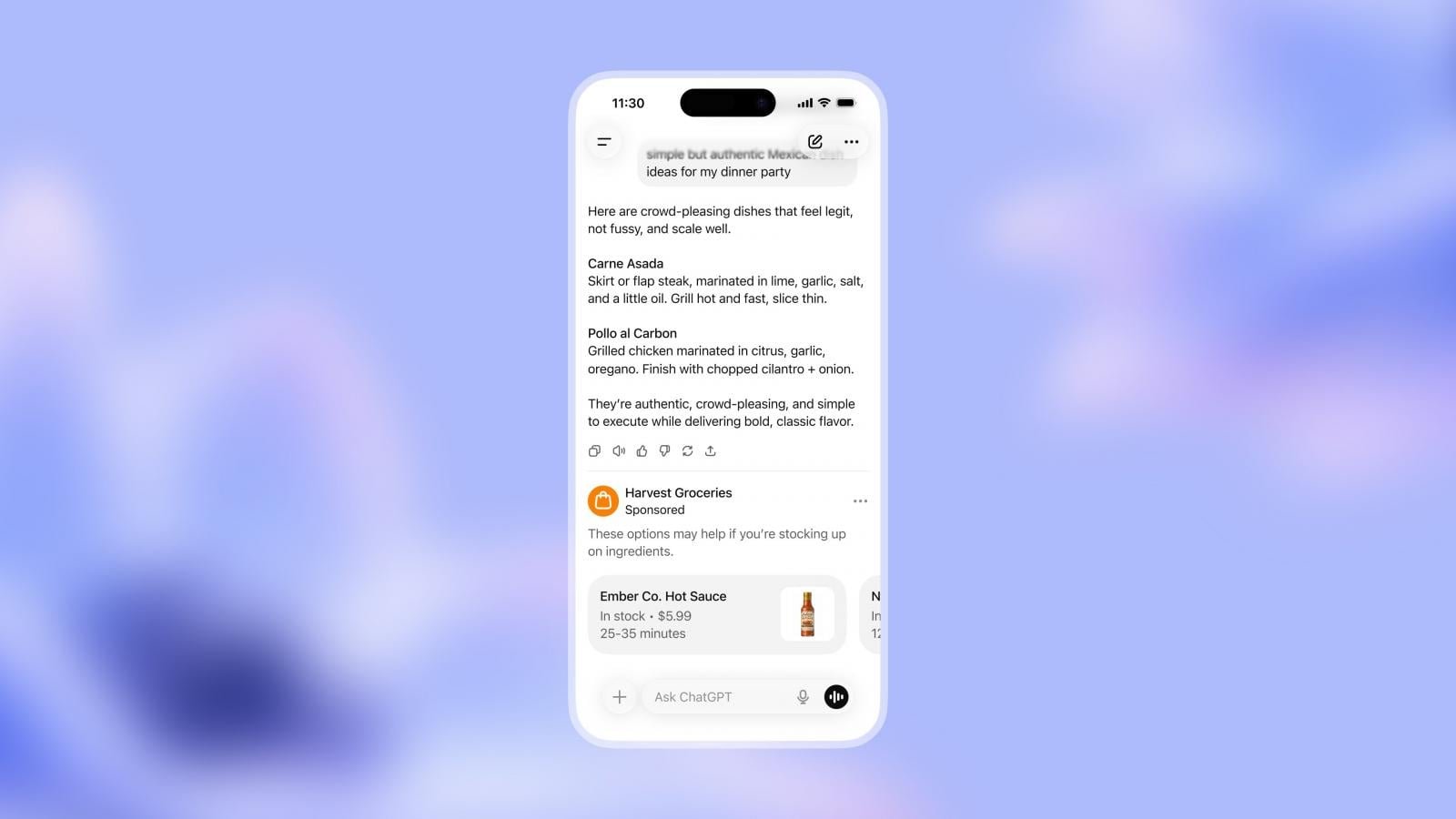
For users, the introduction of ads means that free-tier ChatGPT access will soon include commercial content within responses. The ads will appear beneath answers, maintaining the conversational flow while creating new revenue opportunities for OpenAI.
For advertisers, ChatGPT represents a new frontier in reaching engaged audiences, albeit with different expectations around performance measurement. The platform offers access to users who are actively seeking information and assistance, potentially making them more receptive to relevant advertising messages.
As ChatGPT ads begin rolling out in the coming weeks, the industry will be watching closely to see how users respond to this new element in their AI interactions, and whether OpenAI's premium pricing model proves sustainable in the competitive landscape of digital advertising.
The move also raises questions about the future of AI-powered search monetization. As more users turn to AI assistants for information discovery, traditional search advertising models may need to evolve. OpenAI's approach—premium pricing, limited data, privacy-focused—could represent one possible future for this emerging market.
Whether this model succeeds will likely depend on whether advertisers find value in reaching ChatGPT's engaged user base, and whether users are willing to accept ads in exchange for free access to one of the most capable AI assistants available today.
Comments
Please log in or register to join the discussion