
OpenAI CFO Sarah Friar asserts a direct correlation between compute capacity and revenue growth, but financial data reveals persistent losses despite scaling to 1.9GW, with industry-wide AI investments reaching $7 trillion despite profitability concerns.

OpenAI's Chief Financial Officer Sarah Friar has published a detailed financial outlook asserting a direct correlation between compute capacity and revenue generation. According to Friar, OpenAI's computational resources expanded from 0.2GW in 2023 to 1.9GW in 2025 – a compound annual growth rate exceeding 200%. Revenue reportedly followed this trajectory, climbing from $2 billion in 2023 to over $20 billion in 2025.
"This growth pattern was never witnessed before at this scale," Friar stated, claiming additional compute would have accelerated customer adoption. The assertion echoes Nvidia CEO Jensen Huang's famous maxim about scaling efficiency, positioning computational power as a de facto currency in AI development.
The Compute-to-Revenue Equation
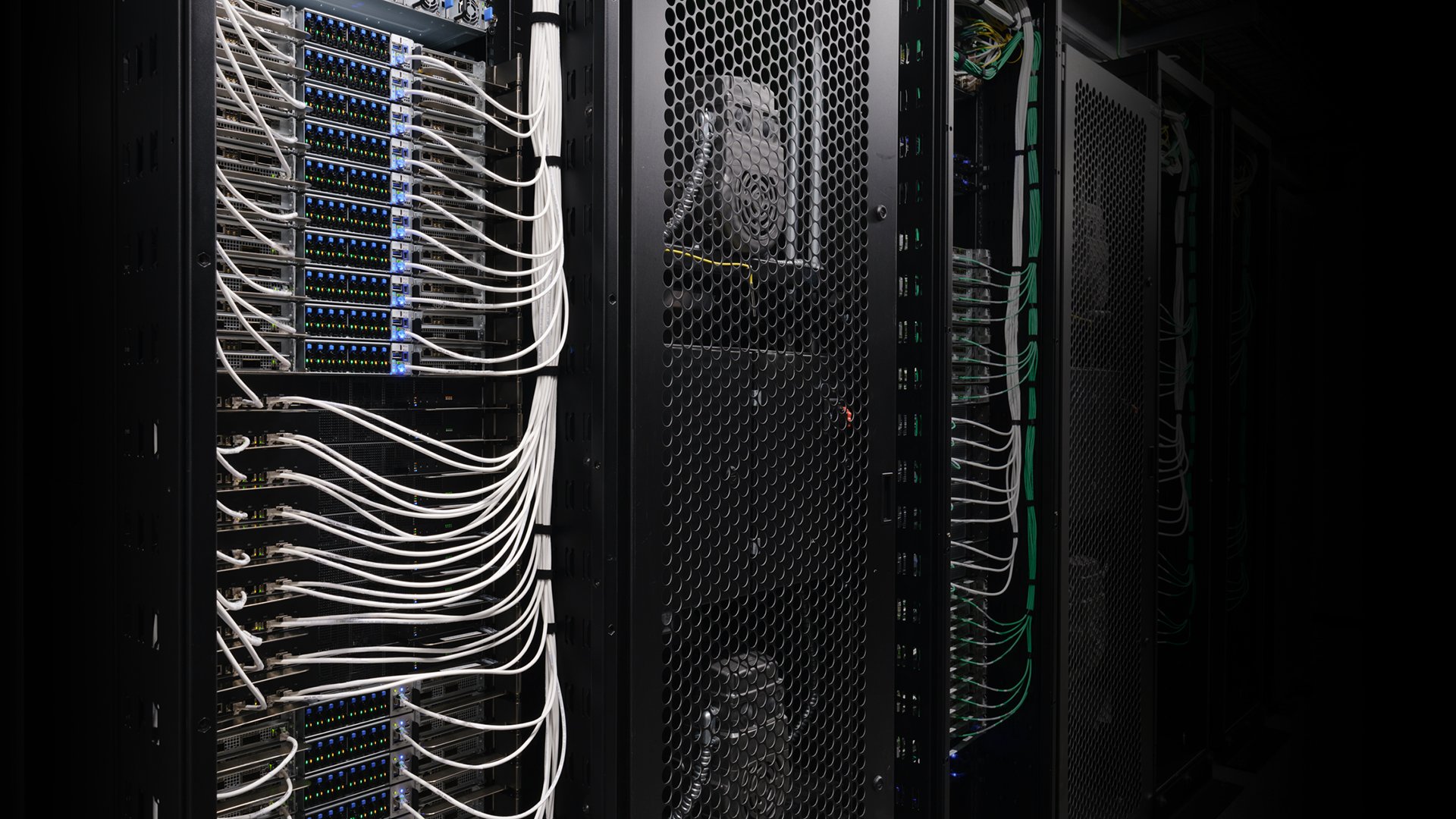
Technical analysis reveals OpenAI's infrastructure scaling:
- 2023: 0.2GW / $2B revenue
- 2024: 0.6GW / $6B revenue
- 2025: 1.9GW / $20B+ revenue
This 3X annual growth in computational capacity primarily relies on Nvidia H100/H200 and AMD MI300X accelerators, with power consumption becoming a critical metric for AI operators. Friar describes compute transitioning from "fixed constraint" to strategic portfolio asset, a view shared by industry leaders including Microsoft's Satya Nadella and Nvidia's Huang.
Financial Reality Check
Despite reported revenue growth, internal financials obtained by the Financial Times reveal significant imbalances:
- 2025 Expenditure: $22 billion ($1.83B/month)
- 2025 Revenue: $9 billion
- Net Loss: $0.69 lost per dollar earned
Market share data compounds concerns, with OpenAI's dominance dropping from 90% in 2024 to 60-70% in 2025 as Google Gemini and Perplexity gain traction. The company acknowledges profitability remains distant, projected for 2030.
Industry-Wide Burn Rate
OpenAI's financial pattern reflects broader AI industry dynamics:
- xAI: Burning $1B monthly against $500M annual revenue
- Anthropic: Targeting 2028 profitability with conservative scaling
- Total AI Investment: $7 trillion earmarked for datacenters through 2030
This investment volume equals 1.5 times Germany's GDP or the combined market capitalization of Microsoft and Amazon. As JP Morgan notes, the AI infrastructure buildout represents a 50-year commitment according to Nvidia's Huang.
The Viability Question
While Friar positions compute expansion as "capital committed in tranches against real demand signals," the $13 billion annual deficit raises concerns about sustainability. Pure-play AI firms lack traditional revenue streams, leaving only data centers and IP as assets should funding collapse.
With agent-based workflows transitioning from "novelty to habit" and new economic models emerging in research fields, OpenAI bets its 10GW infrastructure expansion will eventually align costs with returns. However, with over half of CEOs reporting minimal productivity gains from AI deployments, the industry's high-risk trajectory continues facing scrutiny.

Bruno Ferreira is a contributing writer covering semiconductor and AI infrastructure economics
Comments
Please log in or register to join the discussion