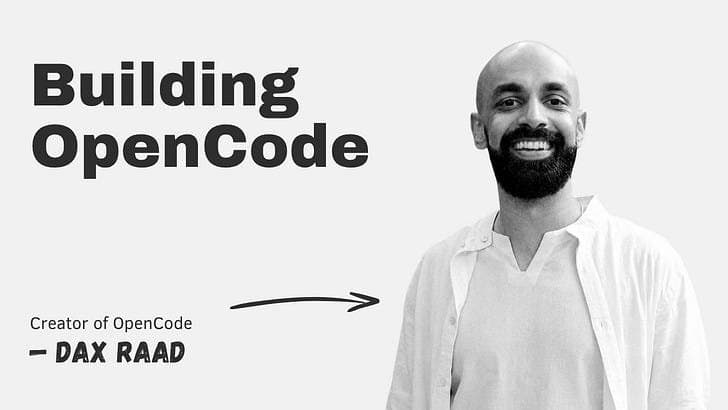
Dax Raad, co-founder of OpenCode, shares insights about the company's rapid growth from 650K to 8M monthly active users, the limitations of current AI coding tools, and why engineering judgment remains crucial in the age of AI.
OpenCode's Explosive Growth and the Realities of AI Coding Tools
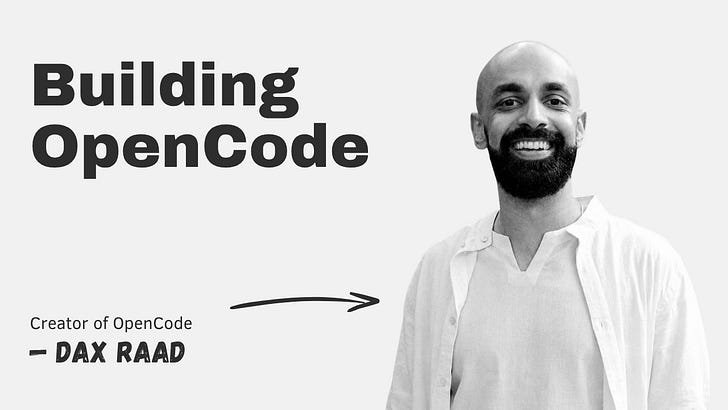
OpenCode has experienced explosive growth, surging from approximately 650,000 monthly active users to nearly 8 million in just a few months, with nearly 1 million daily active users. This remarkable trajectory makes OpenCode one of the fastest-growing AI developer tools on the market. In a recent episode of The Pragmatic Engineer Podcast, Dax Raad, co-founder of OpenCode, shared valuable insights about the company's journey, the current state of AI coding tools, and why engineering judgment remains paramount.
What's New: OpenCode's Rapid Rise and Strategic Positioning
OpenCode's success story offers several important lessons for developers and companies in the AI space. Dax revealed that a key factor in their growth was recognizing and capitalizing on the open source category that other coding agent companies had overlooked.
"Every market-leading dev tool across the industry is open source," Dax noted. "We were wondering why no coding agent had successfully claimed the open source category. So, we focused on positioning and it paid off handsomely."
The "inverted" strategy OpenCode employed is particularly interesting: start with a good-enough product, then optimize. Dax admitted their harness wasn't ideal during the first five months, but it was still good enough to attract users. "Once we won enough market share, we went back and tried to make our harness good and smart," he explained.
The company also demonstrated adaptability when Anthropic blocked integration with Claude Code. Rather than seeing this as a setback, OpenCode turned it into a growth opportunity by partnering with OpenAI and other model providers.
Why It Matters: The Limits and Realities of AI Coding Tools
Despite building one of the most popular AI coding harnesses, Dax maintains a healthy skepticism toward the benefits of AI in software development. This balanced perspective offers valuable counterpoints to the often-hyped narratives surrounding AI coding tools.
AI Makes Coding Easier, But Doesn't Eliminate Hard Problems
Dax observed that while AI has made many aspects of coding objectively easier, the fundamental challenge of software development remains:
"A lot of the job has become objectively easier with AI, but why does it feel like I am still having to think as hard as I ever did?"
This sentiment challenges the common assumption that AI tools automatically translate to increased productivity or output. Dax's personal experience shows that the thinking-to-doing ratio has barely changed: "Pre-AI, I would spend 95% of my energy thinking about what to do and 5% on doing it. Now I spend 96% of my time thinking, and 4% on actually doing it."
Product Positioning Beats Raw Speed of Execution
A crucial insight from Dax is that in the early stages of a product, thinking about the right direction matters more than executing quickly:
"Thinking upfront beats building prototypes and seeing what sticks. This is especially true in the period before a product-market fit is found. AI doesn't help much in this early phase because the problem is figuring out what to build, not how fast you can build it."
This suggests that AI tools are most effective when applied to problems well-defined, rather than as a means to rapidly explore undefined problems.
The Quality vs. Quantity Dilemma
Dax raised concerns about how AI might impact code quality, particularly in environments where engineers are motivated to produce quality work but are surrounded by colleagues focused on output:
"Motivated engineers who care about quality get buried by slop PRs from devs who don't care. I've hired people from companies where they were one of the few who still cared about quality. In contrast, former colleagues just pumped out AI-generated code and focused on getting their tasks done, ignorant of the decreasing quality of code."
This creates an engineering leadership problem that many companies may not be adequately addressing.
How to Use It: Practical Insights for Developers and Teams

Leverage AI for Tech Debt Management
One positive aspect Dax highlighted is how AI makes dealing with technical debt easier than ever:
"Agents make refactoring across a codebase cheap: for example, ask an agent to implement a new pattern everywhere across the codebase. It's very easy and cheap to clear up tech debt, today. So, do more of it!"
This represents a significant shift in how teams can approach technical debt, potentially leading to more maintainable codebases.
Re-evaluate Incentive Structures
Dax pointed out a fundamental disconnect between how AI benefits are realized and how they're measured:
"Most software engineers profit from AI as time gained, not increased output — unless you change incentives! The natural way for software engineers to 'cash out' their AI tooling gains is with time savings, by doing the same work as before, but faster. Until compensation and motivation structures change, most teams should expect output to stay flat while engineers go home earlier."
This suggests that organizations need to rethink their performance metrics and incentive structures to truly benefit from AI tools.
Balance AI-Generated Code with Strong Engineering Principles
As AI becomes more prevalent in development, Dax suggests that "old enterprise patterns" are making a comeback:
"Old 'enterprise' patterns are coming back in fashion for writing quality software, as agents are the new junior engineers. Things like domain-driven design and verbose design patterns went out of style over the past two decades because they're tedious to type out. But they are actually very useful when there are junior devs on the team – or when there are agents that need strong guardrails."
This indicates that as AI tools become more prevalent, traditional software engineering practices that provide structure and guardrails may become even more valuable.
Focus on Industry Expertise Alongside Technical Skills
Dax shared an important perspective on future-proofing one's career:
"The future-proof tech career: solid software engineering + deep industry expertise. Engineers undervalue how easily they can become industry insiders compared to people who only focus on engineering, but never become an expert in one business area."
This suggests that combining technical skills with domain expertise creates a more resilient and valuable career path in the age of AI.
Business Realities of AI Coding Tools

Dax also shared some business insights about the AI coding space that challenge common assumptions:
No AI-native coding agent company is "winning" by being better with AI: According to Dax, none of OpenCode's competitors are crushing them, and nobody is using AI so well that others cannot compete.
Inference is profitable: Dax noted that "inference is very profitable" and that there's potential for 90% margins depending on the model, contrary to the common belief that API tokens are sold at a loss.
GPU bottlenecks: The demand for GPUs is becoming a limiting factor across the industry, affecting the scalability of AI-powered tools.
Conclusion: Balancing AI Optimism with Engineering Realism
The conversation with Dax Raad offers a refreshingly balanced perspective on AI coding tools. While acknowledging their benefits, he emphasizes that the fundamental challenges of software development remain, and that taste, judgment, and strong engineering principles are more important than ever.
For developers and teams looking to leverage AI tools effectively, the key takeaways are:
- Focus on positioning and product-market fit before optimizing execution
- Use AI to address technical debt rather than accelerate feature development
- Re-evaluate incentive structures to align with how AI actually creates value
- Balance AI-generated code with strong engineering practices and domain expertise
As Dax wisely noted, "Get positioning right and the world just keeps handing you wins you didn't expect." This advice applies not just to companies building AI tools, but to developers navigating the evolving landscape of software development in the age of AI.
You can listen to the full episode on YouTube, Spotify, or Apple Podcasts. For more information about OpenCode, visit their website or follow Dax Raad on X.
Comments
Please log in or register to join the discussion