The latest update to Opera's flagship browser introduces visual organization for tab groups, context-aware AI that respects tab boundaries, and new dynamic themes with audio feedback, while folding its beta program into the main release.
Opera has released Opera One R3, the latest iteration of its flagship browser, bringing a suite of features focused on visual organization, AI context management, and audio-visual themes. The update, rolling out today, builds on the Tab Islands concept introduced in previous versions and incorporates the agentic AI engine from the recently launched Opera Neon browser.
Tab Islands Get a Visual Overhaul
Tab Islands, Opera's automated system for grouping related tabs, now receives a significant visual upgrade. Users can now assign one of nine distinct colors to each Tab Island and give them custom names. This addresses a common pain point for power users who juggle multiple projects or browsing sessions simultaneously. The color-coding provides an at-a-glance visual cue, while named islands replace generic groupings with context-specific labels like "Research," "Shopping," or "Development."
This feature is particularly valuable for developers and designers who often maintain dozens of tabs across different contexts. Instead of relying on memory or manual tab management, the color and name system creates a persistent visual hierarchy within the browser interface.

Context-Aware AI That Respects Tab Boundaries
Opera One R3 integrates the agentic AI engine from Opera Neon, which the company claims improves performance on AI-related tasks by up to 20%. More importantly, the AI now demonstrates an understanding of Tab Islands, providing context-aware responses that don't mix information across different tab groups.
When you ask the Opera AI a question while working within a specific Tab Island, it will base its response on the content of those tabs alone. This prevents the common issue where AI assistants pull information from unrelated contexts, which can lead to confusing or irrelevant answers. Users can disable this context-aware behavior in the chat settings if they prefer broader knowledge access.
The AI also gains the ability to understand YouTube videos, allowing users to ask questions about video content directly. This extends the AI's utility beyond text-based queries and into multimedia consumption, which is increasingly relevant as more technical documentation and tutorials are delivered via video platforms.
Dynamic Themes with Audio Feedback
Opera One R3 introduces three new dynamic themes: Radiance, Orbit, and Sonic. Radiance and Orbit feature the update's overall new visual design and include dedicated soundscapes that provide subtle audio feedback during browsing activities.
The Sonic theme represents a deeper integration, created in partnership with Spotify. It reacts to the music being played through Opera's in-browser player, creating a synchronized audio-visual experience. While this might seem like a novelty, it demonstrates Opera's exploration of browser interfaces that respond to user activity beyond simple clicks and scrolls.
Deeper Google Integration and Beta Consolidation
The update brings deeper integration with Google services, adding Gmail and Google Calendar directly to the browser sidebar. This reduces the need to switch between tabs or applications for common productivity tasks, aligning with Opera's strategy of creating a more self-contained browsing environment.
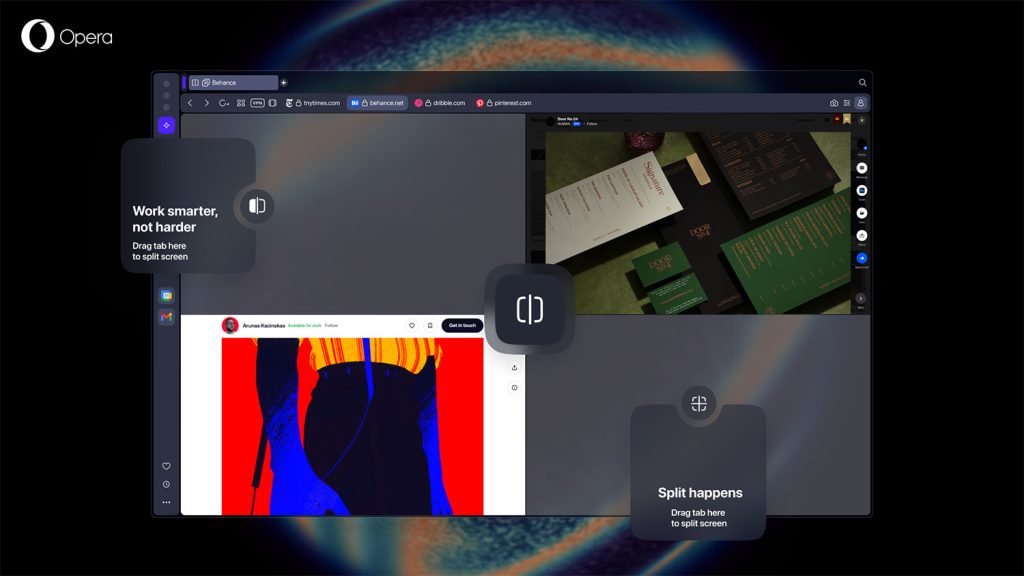
Perhaps more significant for the development community is the consolidation of Opera's beta program. The company is folding its beta features into the main browser through an "Early Bird Mode." Users who activate this mode will gain access to experimental features, including a four-way split screen capability. This approach streamlines the testing process, allowing more users to try cutting-edge features without maintaining separate browser installations.
Cross-Platform Considerations for Developers
For mobile developers maintaining cross-platform applications, Opera One R3's features present interesting considerations. The color-coded Tab Islands and context-aware AI could influence how users organize and interact with web-based tools and documentation. Developers building web applications that need to work within tabbed environments should consider how their interfaces might integrate with or benefit from these organizational features.
The deeper Google integration also highlights the ongoing convergence between browsers and native operating systems. As browsers become more capable of handling productivity tasks directly, the line between web applications and native apps continues to blur. This has implications for developers deciding between web-first or native-first strategies for their applications.
Opera One R3 is available for download today on Windows, macOS, and Linux. The update will roll out automatically to existing Opera One users, with Early Bird Mode available as an opt-in feature in the browser's settings.
For more information about Opera One and its features, visit the official Opera website.
Comments
Please log in or register to join the discussion