
Pakistan's participation in the U.S.-led Board of Peace initiative for Gaza presents a strategic dilemma for Islamabad, potentially strengthening ties with the Trump administration while risking significant domestic opposition from pro-Palestine sentiment.
Pakistan's decision to join the U.S.-led "Board of Peace" initiative for Gaza has stirred debate among officials, politicians and experts. While it is expected to help Islamabad maintain close ties with President Donald Trump, there is concern that participation could trigger domestic opposition given Pakistan's long-standing position on Palestine and public sentiment over the Gaza conflict.
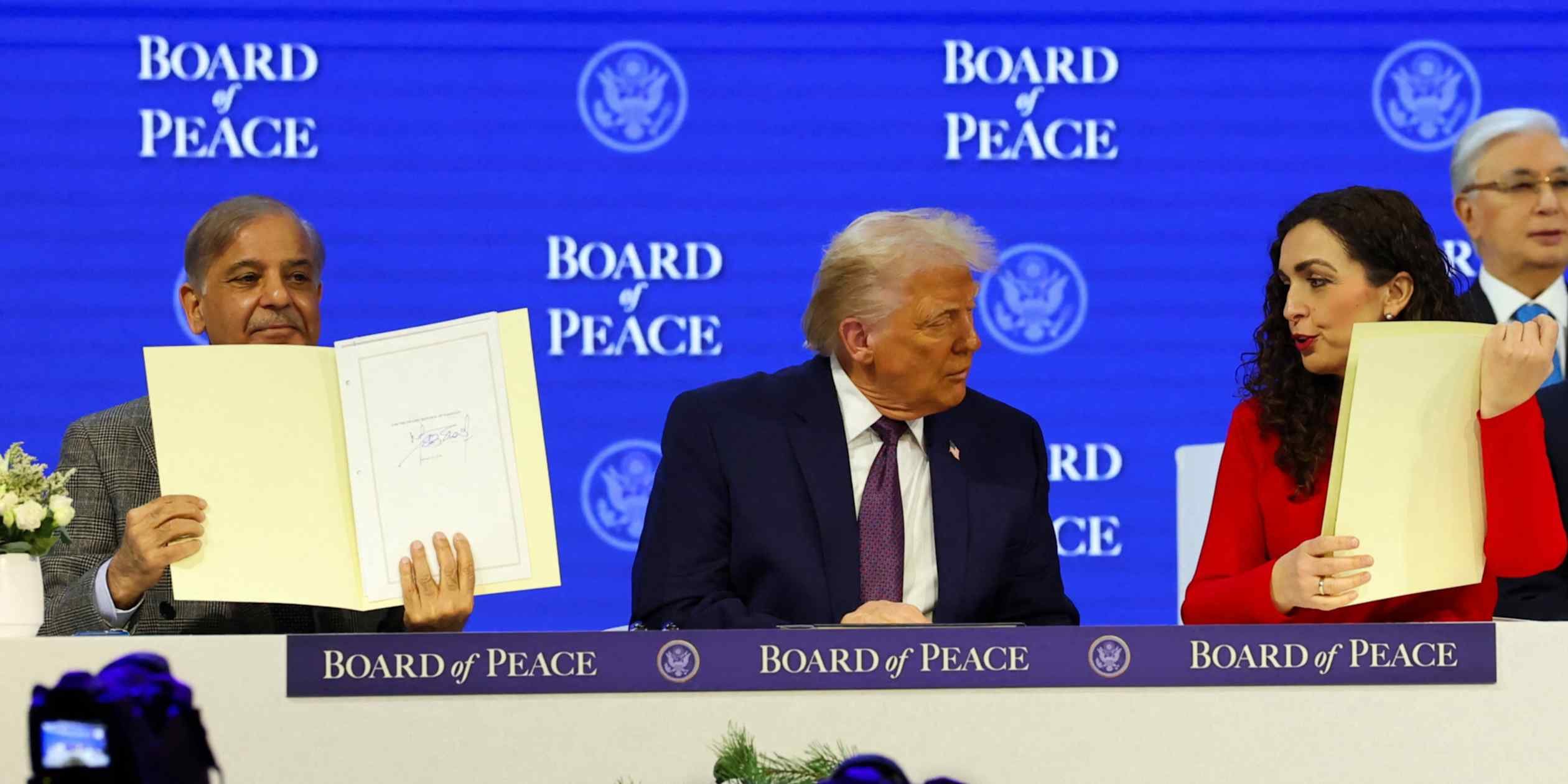
The initiative, announced at the World Economic Forum in Davos on January 22, 2026, positions Pakistan alongside Kosovo, Bahrain, and other middle powers in a U.S.-backed framework aimed at resolving the Gaza conflict. Pakistan's Prime Minister Shehbaz Sharif appeared alongside U.S. President Donald Trump and Kosovo's President Vjosa Osmani at the signing ceremony, where charters for the initiative were exchanged.
Strategic Calculus: US Relations vs. Domestic Sentiment
Pakistan's participation reflects a calculated diplomatic maneuver. The country has maintained historically close ties with the United States, particularly through military cooperation and economic partnerships. Joining the Board of Peace offers Islamabad a visible platform to demonstrate alignment with Washington's foreign policy priorities, potentially securing continued access to U.S. military aid, IMF support, and trade preferences.
However, this alignment comes at a cost. Pakistan's public and political establishment have consistently supported Palestinian causes. The country was among the first to recognize the State of Palestine in 1988 and has maintained diplomatic relations with the Palestinian Authority. Public sentiment in Pakistan remains overwhelmingly pro-Palestine, with regular protests and political statements condemning Israeli actions in Gaza.
The timing of Pakistan's decision is particularly sensitive. The Gaza conflict has intensified regional polarization, with Muslim-majority countries facing pressure to choose between Western alliances and pan-Islamic solidarity. Pakistan's participation in a U.S.-led initiative, rather than an Arab League or Organization of Islamic Cooperation (OIC) framework, could be perceived as prioritizing American interests over collective Muslim positions.
Political Implications at Home
Domestically, the opposition could come from multiple directions. Pakistan's political parties, including the ruling coalition, have historically used Palestine as a unifying issue across ideological divides. The opposition Pakistan Tehreek-e-Insaf (PTI) party, led by former Prime Minister Imran Khan, has positioned itself as pro-Palestine and anti-Western intervention, potentially using this issue to criticize the government.
Furthermore, Pakistan's powerful military establishment, which has significant influence over foreign policy, may view the initiative as a way to maintain strategic depth with the U.S. However, the military also operates within domestic political constraints and cannot ignore public sentiment entirely.
The religious and civil society sectors in Pakistan are particularly sensitive to perceived compromises on Palestine. Major religious parties and Islamic organizations have significant grassroots networks and could mobilize protests if they perceive the government's participation as a betrayal of Palestinian interests.
Regional Diplomatic Context
Pakistan's inclusion in the Board of Peace also affects its standing in the Muslim world. The country has traditionally played a leadership role in the OIC, particularly on issues related to Kashmir and Palestine. By joining a U.S.-led initiative, Pakistan risks being seen as aligning with Washington's Middle East policy, which many Muslim countries view with suspicion.
This could complicate Pakistan's relationships with countries like Turkey, Malaysia, and Iran, which have taken more independent stances on Gaza. Conversely, it might improve relations with Gulf states like Saudi Arabia and the UAE, which have maintained pragmatic ties with the U.S. while balancing their own domestic pro-Palestine sentiments.
Economic Considerations
Beyond diplomacy, economic factors likely influenced Pakistan's decision. The country faces severe economic challenges, including high inflation, foreign debt, and balance of payments issues. Maintaining favorable relations with the U.S. could facilitate IMF negotiations, access to development assistance, and potential debt relief.
The Trump administration has historically used economic incentives as diplomatic tools. Pakistan's participation might be rewarded with trade concessions or investment promises, particularly in energy and infrastructure sectors where U.S. companies have interests.
Implementation Challenges
The Board of Peace initiative itself faces significant questions about its effectiveness and implementation. While the U.S. has framed it as a multilateral effort to resolve the Gaza conflict, details about its mandate, decision-making process, and relationship with existing international frameworks remain unclear.
Pakistan's role within the initiative is also undefined. Will it have voting power? Will it contribute troops, funding, or diplomatic resources? The lack of clarity could make it difficult for the government to justify participation to domestic audiences.
Furthermore, the initiative's success depends on buy-in from key regional actors, including Israel, the Palestinian Authority, and neighboring Arab states. Without broad regional acceptance, the Board of Peace risks becoming a symbolic gesture rather than an effective conflict-resolution mechanism.
Historical Precedent
Pakistan's foreign policy has often navigated similar dilemmas. During the Cold War, it balanced U.S. alliances with non-alignment principles. In recent decades, it has maintained relations with both the U.S. and China, participating in the Belt and Road Initiative while retaining security partnerships with Washington.
This balancing act has allowed Pakistan to extract benefits from multiple powers while maintaining strategic autonomy. The Board of Peace participation could follow this pattern—securing U.S. goodwill while potentially seeking compensatory diplomatic support from other partners.
Potential Scenarios
Several outcomes are possible. If the Board of Peace gains momentum and produces tangible results in Gaza, Pakistan could claim credit for contributing to peace while defending its participation as consistent with supporting Palestinian interests. The government could frame it as a pragmatic step toward ending the conflict.
However, if the initiative fails or is perceived as a U.S. tool to normalize Israeli occupation, Pakistan could face significant domestic backlash. The government might then need to recalibrate its position, potentially withdrawing from the initiative or distancing itself from its outcomes.
A middle scenario involves the initiative remaining largely symbolic, allowing Pakistan to maintain its U.S. ties without substantive commitments. In this case, domestic opposition might be limited to vocal criticism without major political consequences.
Broader Implications for South Asia
Pakistan's decision also affects its regional dynamics, particularly with India. Both countries compete for influence in the Muslim world and maintain complex relationships with the U.S. Pakistan's participation in a U.S.-led initiative could be seen as gaining an advantage in this competition, potentially affecting bilateral relations.
India, which has developed its own strategic partnership with the U.S., might view Pakistan's inclusion with suspicion, particularly if it perceives the Board of Peace as a platform that could be used to advance Pakistan's interests on Kashmir or other issues.
Conclusion
Pakistan's participation in the Board of Peace represents a high-stakes diplomatic gamble. The potential benefits—strengthened U.S. ties, economic support, and international visibility—are significant. However, the risks of domestic backlash, damage to its standing in the Muslim world, and potential failure of the initiative itself are equally substantial.
The government's ability to navigate this challenge will depend on its diplomatic skill in managing domestic expectations and international commitments. Success requires convincing the Pakistani public that participation serves Palestinian interests while maintaining the country's traditional foreign policy principles.
As the initiative develops, Pakistan's experience will offer a case study in how middle powers balance competing alliances and domestic pressures in an increasingly polarized global environment. The outcome will likely influence not only Pakistan's foreign policy but also the broader dynamics of U.S.-Muslim world relations in the coming years.
Comments
Please log in or register to join the discussion