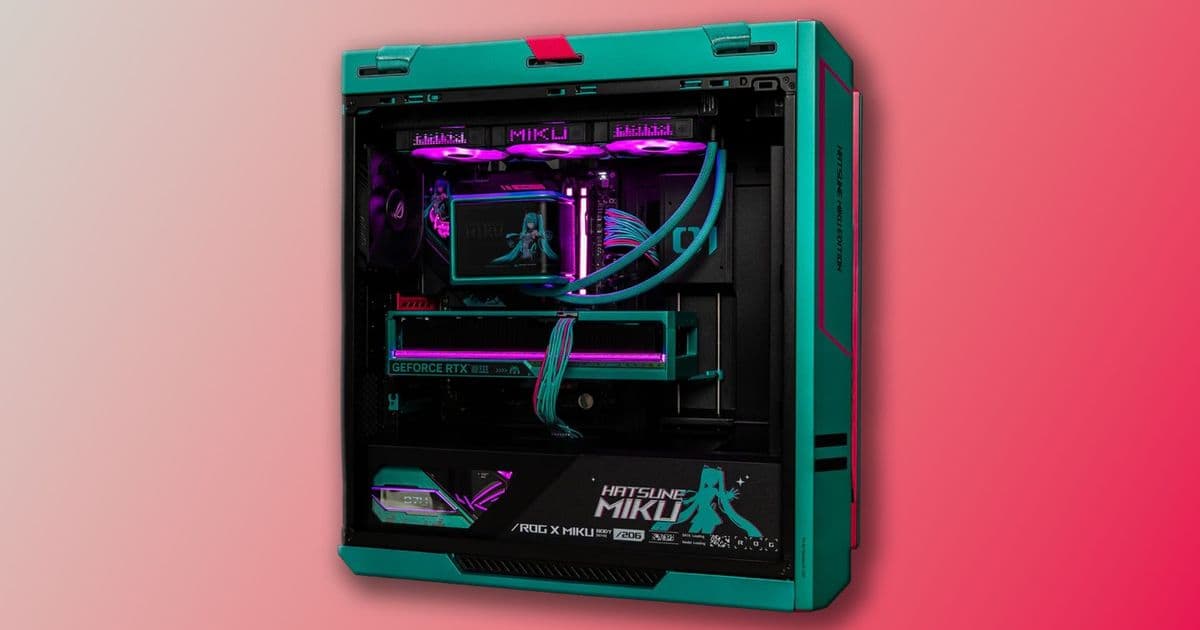
PowerGPU announces imminent price increases on gaming PCs as SSD and memory costs surge, driven by AI data center demand consuming up to 70% of global memory supply.
PowerGPU, a system integrator known for its high-performance gaming PCs, just issued a devastating price warning on social media. The company said on its X account that costs of SSDs and other parts have gone up, and that it expects to increase prices soon. This is catastrophic news for gamers and enthusiasts who have been suffering from continuous price increases on memory and storage since late last year, which has been brought by the incessant demand for memory and storage chips for AI data centers.
"We just got word that SSD and other part prices have gone up again," the company said in its post. "So what is in stock right now is the last at that price. Expect price increases by early next week. We appreciate you all supporting us and want to remain transparent through everything."
Even though data centers are expected to use up to 70% of the global supply of memory chips this year, we saw some signs that supply was stabilizing. By late January, trends showed that memory pricing had started leveling off — although, not at the prices we want. Even Japan and Germany, which were hit by supply shortages alongside the price increases, only saw a 0.1% increase last month.
Unfortunately, it seems that that was only a short respite, and apparently SSDs will now take the lead when it comes to price hikes. What's more disturbing is that PowerGPU said that other components are following suit — while it did not confirm which parts are affected, memory modules and GPUs were among the PC components that were heavily affected by the recent chip shortage.
Still, we cannot say we were surprised by this development. Industry experts and analysts have been saying that memory and storage prices are expected to continue rising in the first half of 2026, with the situation possibly lasting well into 2027. A Kingston representative even said that you should not wait for lower prices if you need a RAM or SSD upgrade as "prices will continue to go up," while a Sapphire employee said in December 2025 that prices will only begin to stabilize in the next six to eight months (likely between June and August of this year).
The current price volatility reflects a fundamental shift in the semiconductor supply chain. AI data centers, which require massive amounts of high-performance memory and storage for training large language models and running inference workloads, have become the dominant force in the memory market. This demand has created a perfect storm of supply constraints, as manufacturers prioritize higher-margin enterprise components over consumer-grade parts.
For PC builders and gamers, this means that the components that were already expensive due to pandemic-era shortages are becoming even more costly. The situation is particularly acute for SSDs, where NAND flash prices have been climbing steadily as manufacturers allocate production capacity to meet data center demands. Industry analysts estimate that enterprise SSD demand has grown by over 40% year-over-year, while consumer SSD production has remained relatively flat.
The timing couldn't be worse for consumers looking to upgrade their systems. With gaming PC prices already at premium levels due to graphics card shortages and increased component costs, the additional burden of higher memory and storage prices will push many systems beyond the reach of budget-conscious buyers. PowerGPU's warning suggests that existing inventory will be sold at current prices, but any new orders placed after the price increase will reflect the higher component costs.
This price pressure is likely to persist throughout 2026 as AI infrastructure continues to expand globally. Major cloud providers and AI companies are signing long-term contracts for memory and storage, creating a baseline demand that exceeds current manufacturing capacity. Until new fabrication facilities come online and existing ones can increase output, consumers will likely continue to feel the pinch at retail.
For those considering PC upgrades or new builds, the message from industry insiders is clear: if you need components now, buy them before the price increases take effect. Waiting for prices to drop may result in paying significantly more for the same hardware in just a few months. The semiconductor industry's shift toward prioritizing enterprise AI workloads over consumer products represents a fundamental change in how the PC component market operates, and gamers and enthusiasts will need to adapt to this new reality of sustained higher prices.
Comments
Please log in or register to join the discussion