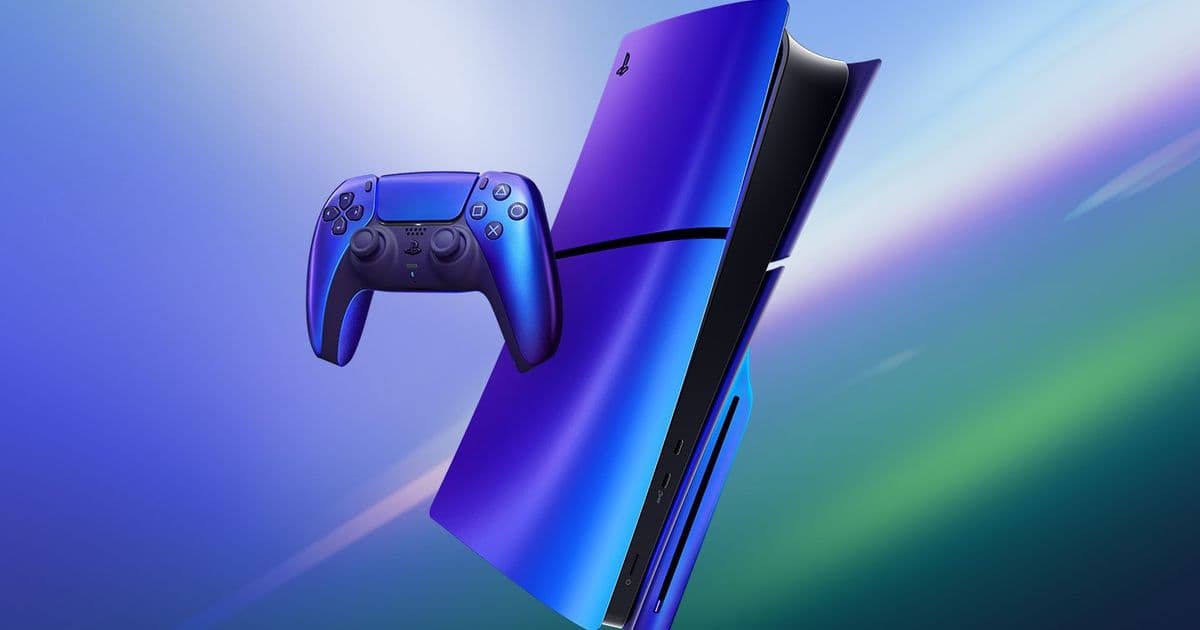
Leaked specifications suggest Sony's next-gen console could deliver unprecedented performance, with claims of 2.5-3x rasterization and 6-12x ray tracing improvements over PS5.
PlayStation 6 Rumors Suggest 4K 120 FPS with Ray Tracing Target
The rumor mill surrounding Sony's next-generation console has picked up significant momentum, with insider sources suggesting ambitious performance targets for the PlayStation 6. According to prominent leaker Moore's Law Is Dead, Sony might be targeting 4K resolution at 120 frames per second with ray tracing enabled – a substantial leap beyond current-generation capabilities.
What's New: Ambitious Performance Claims
The latest information from the well-connected tipster suggests Sony is aiming remarkably high with their next console. The claim of 4K 120 FPS with ray tracing represents a significant increase over the PlayStation 5's capabilities, which typically targets 4K 30 FPS or 1440p 60 FPS with ray tracing enabled.
"The console could deliver anywhere between 2.5x to 3x rasterization performance of the PlayStation 5," the insider noted during a recent livestream. "As for ray tracing performance, previous spec leaks suggest it will be a 6 to 12 times jump from PS5."
These numbers, if accurate, would place the PlayStation 6 in a completely different performance tier than current consoles and even high-end PCs. The rasterization improvement alone would allow for more complex scenes, higher detail assets, and smoother gameplay at equivalent resolutions.
How It Compares: Performance Benchmarks Against Current Hardware
When compared directly to the existing PlayStation 5, the rumored specifications appear almost too good to be true. The claimed 2.5-3x rasterization performance would mean games could run at 4K 120 FPS without ray tracing, or maintain 4K 60 FPS with more advanced ray tracing effects than currently possible.
The comparison becomes even more interesting when looking at the PS5 Pro, which Sony recently released as a mid-generation upgrade. According to the leaks, the PS6 would still offer approximately 2x the rasterization performance of the PS5 Pro, with ray tracing performance improvements ranging from 3 to 6 times.
"These projected gains will be made possible with Sony using the next-generation GPU based on RDNA 5, which will be paired with a Zen 6 CPU," the insider explained. This hardware combination would represent a significant architectural evolution from the current PS5's RDNA 2 GPU and Zen 2 CPU.
Technical Details: The Power Behind the Promises
The rumored hardware specifications point to substantial architectural improvements. The RDNA 5 GPU architecture would likely build upon AMD's current RDNA 3 foundation, introducing improvements in efficiency, compute capabilities, and ray tracing performance.
The Zen 6 CPU represents another generational leap, promising improvements in both single-threaded and multi-threaded performance. This combination would not only benefit gaming but also enhance the console's capabilities for other applications, including media processing and potential machine learning tasks.
Sony's proprietary technologies would likely see significant upgrades as well. The PlayStation 6 would presumably feature an enhanced version of the PlayStation's custom audio processing unit, improved I/O capabilities for faster asset streaming, and potentially next-generation haptic feedback technology.
Reality Check: Native vs. Upscaled Performance
As with any hardware leaks, these performance claims should be approached with some skepticism. It's unlikely that the PS6 will deliver native 4K 120 FPS with ray tracing turned on across all games. Instead, the console is expected to rely heavily on Sony's AI upscaling technology, PSSR (PlayStation Spatial Resolution Scaling), to achieve such high output quality.
"The console is expected to rely heavily on Sony's AI upscaling tech, PSSR, to offer output at such a resolution," the report notes. This approach mirrors current industry trends, where upscaling technologies like NVIDIA's DLSS and AMD's FSR enable higher resolutions and frame rates than raw hardware performance would typically allow.
Launch Timeline: When to Expect the Next Generation
Despite recent speculation suggesting potential delays, Moore's Law Is Dead maintains that Sony's launch timeline remains unchanged. The insider believes Sony is still targeting a late 2027 and early 2028 release window for the PlayStation 6.
This timeline would place approximately 7-8 years between the PS5 and PS6 launches, consistent with Sony's historical console release cycles. The potential inclusion of a PlayStation 6 handheld, as mentioned in the livestream, could further expand the console's market reach and functionality.
Who It's For: The Target Audience
If these specifications prove accurate, the PlayStation 6 would likely target several key market segments:
- Hardcore gamers seeking the highest possible visual fidelity and performance
- Competitive players who prioritize high frame rates for smoother gameplay
- Content creators who could leverage the console's improved processing power
- Early adopters willing to invest in the latest technology
The rumored specifications suggest Sony is positioning the PS6 not just as an incremental upgrade, but as a significant leap forward in console gaming capabilities. If successful, this could help Sony maintain its competitive position against Microsoft's Xbox and potentially emerging competitors in the gaming market.
Conclusion: Balancing Ambition with Reality
While the leaked specifications for the PlayStation 6 are certainly exciting, it's important to approach them with tempered expectations. Hardware development often involves trade-offs, and final specifications may differ from these early leaks.
What remains clear is that Sony is planning a substantial technological leap with their next console. Whether they achieve the ambitious targets of 4K 120 FPS with ray tracing remains to be seen, but the direction suggests Sony is committed to pushing the boundaries of console gaming performance.
For those interested in more details about the rumored PlayStation 6 and a potential handheld variant, Moore's Law Is Dead discusses these topics at the 29:30 and 43:00 timestamps in their recent video.
As we move closer to what could be a 2027-2028 launch window, we can expect more concrete information about Sony's next-generation plans to emerge. Until then, these leaks provide an intriguing glimpse into the potential future of console gaming.
Comments
Please log in or register to join the discussion