Netflix's principal engineer Kasia Trapszo reveals how the streaming giant's billing and payment systems evolved from simple US DVD rentals to a complex global platform supporting 130+ countries, sharing practical lessons on architectural adaptation.
At QCon London 2026, Kasia Trapszo, a principal engineer at Netflix leading architecture for the company's commerce platform, presented on how Netflix's billing and payment systems evolved from a US-based DVD rental business to a global streaming platform supporting over 130 countries. The talk, titled "From DVDs to Global Streaming: How Netflix's Commerce Architecture Actually Evolved," traced a series of pragmatic, incremental changes rather than a single clean redesign, offering practical lessons on recognizing when early architectural assumptions are no longer valid.
Trapszo explained that Netflix's original commerce system was built around straightforward assumptions: customers paid with credit cards, billing was predictable, and real-time authorization enabled immediate entitlement decisions. Payment succeeds, customer gets access; payment fails, access stops. These assumptions held while Netflix operated as a US-centric DVD-by-mail service, but began to break as the business expanded internationally.
The first major inflection point came with Brazil, where most customers used debit cards not enabled for online transactions. The primary payment method introduced asynchronous payment confirmation that could take days to validate. This forced a fundamental architectural shift from purely real-time processing to a hybrid model supporting both real-time and delayed signals, introducing new concepts such as validation windows, grace periods, and provisional access. Fraud detection also had to evolve from real-time authorization filtering to behavioral detection over time.
In 2016, Netflix launched in approximately 130 countries simultaneously. To enable the rapid rollout, the team made deliberate architectural shortcuts, dividing the world into billing zones rather than fully localizing each country. Trapszo described how this simplified model created mismatches between geography and payment reality. One example involved St. Pierre and Miquelon, a French territory near Canada, which was initially treated as Canadian and therefore payment was instructed in Canadian Dollars, causing all transactions to fail. The strategy was to launch quickly, observe real demand, and prioritize deeper localization based on production learnings.
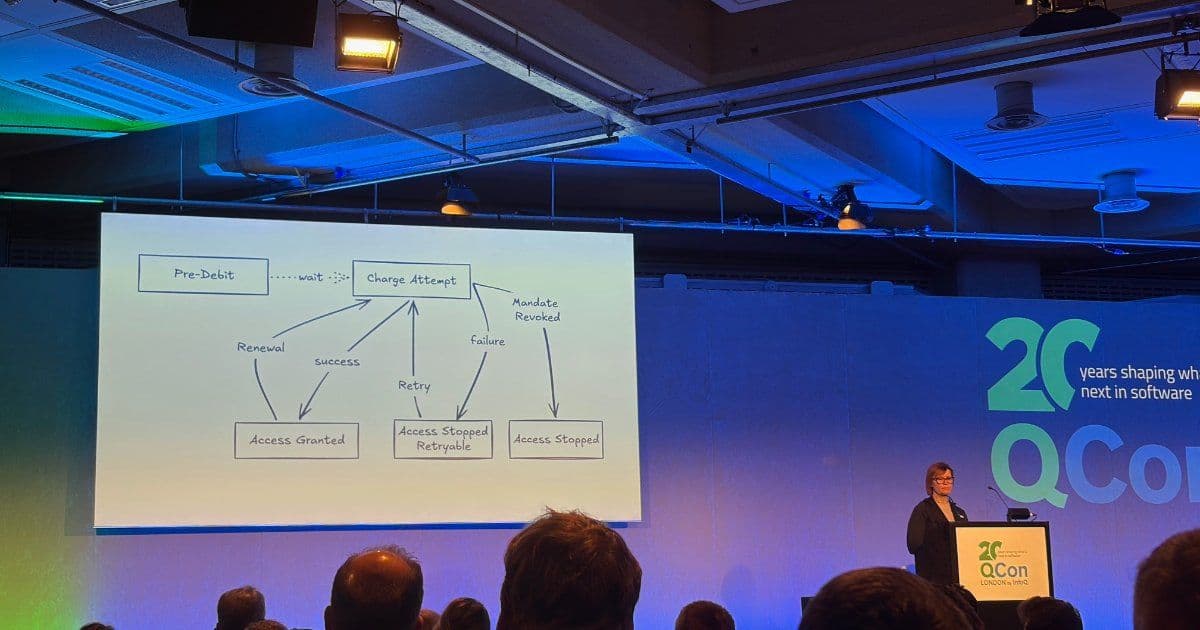
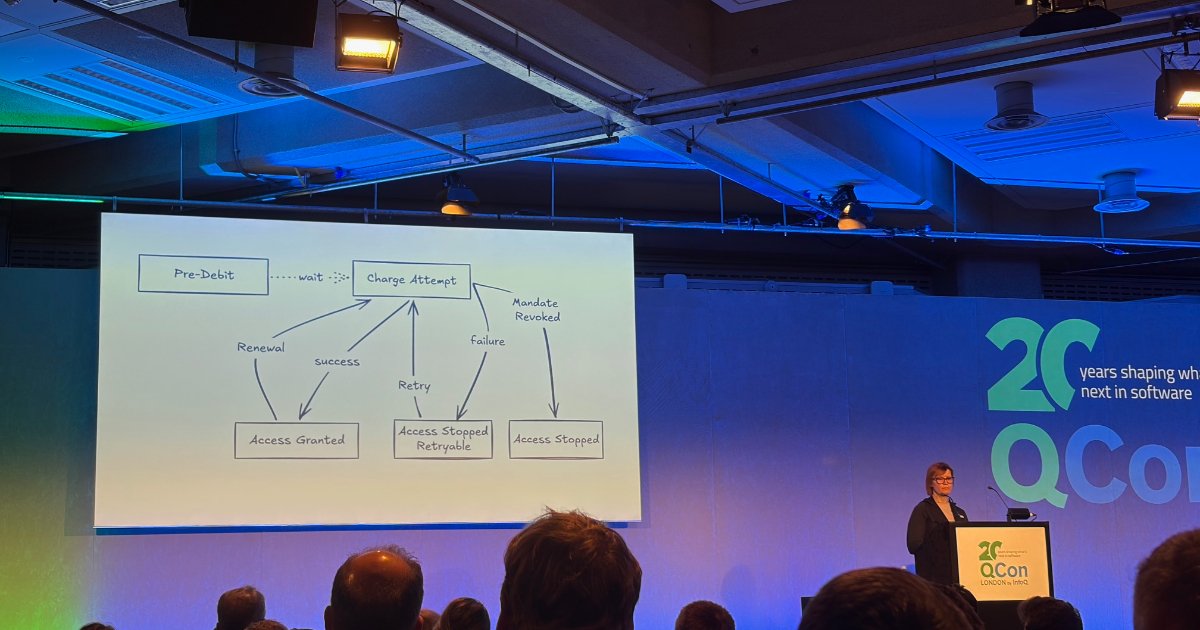
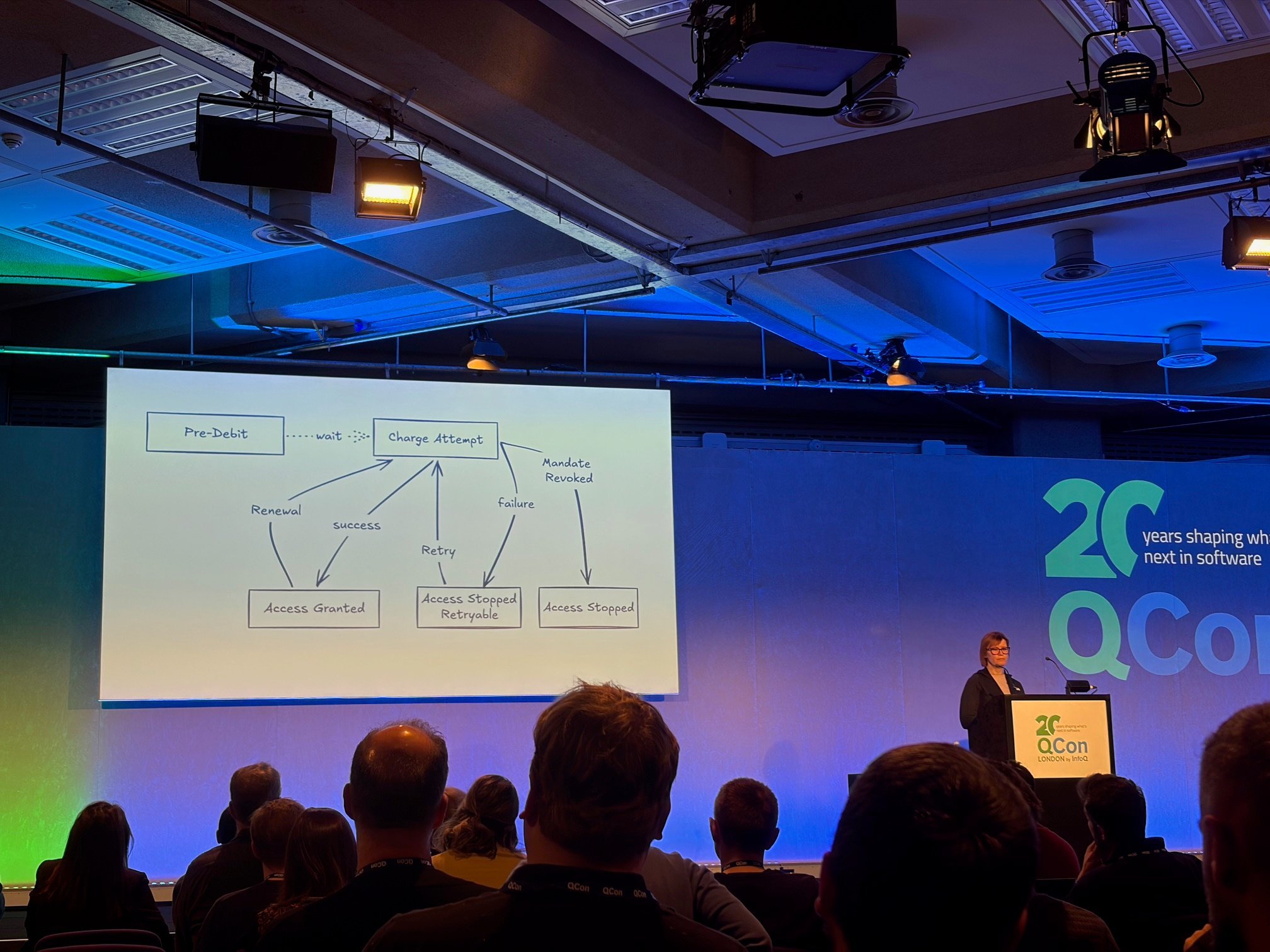
Regulatory changes in India between 2020 and 2022 presented another challenge. The Reserve Bank of India prohibited merchants from storing credit card credentials. The solution required adopting mandates with pre-approved amounts, 3D Secure authentication, and pre-debit notifications.
The introduction of multi-household subscriptions, allowing subscribers to add extra member slots for people outside their household, fundamentally changed the billing relationship from single-account to multi-account dependencies. Trapszo noted that the changes required for data systems, metrics, and dashboards were actually larger than those to the commerce system itself.
As complexity grew, the team scaled from a few engineers under a single manager to a restructured organization with clear domain boundaries. Trapszo described a deliberate decision to duplicate vendor integration code rather than create shared components, enabling each team to move independently and much faster. "Some duplication is cheaper than coordination," she noted.
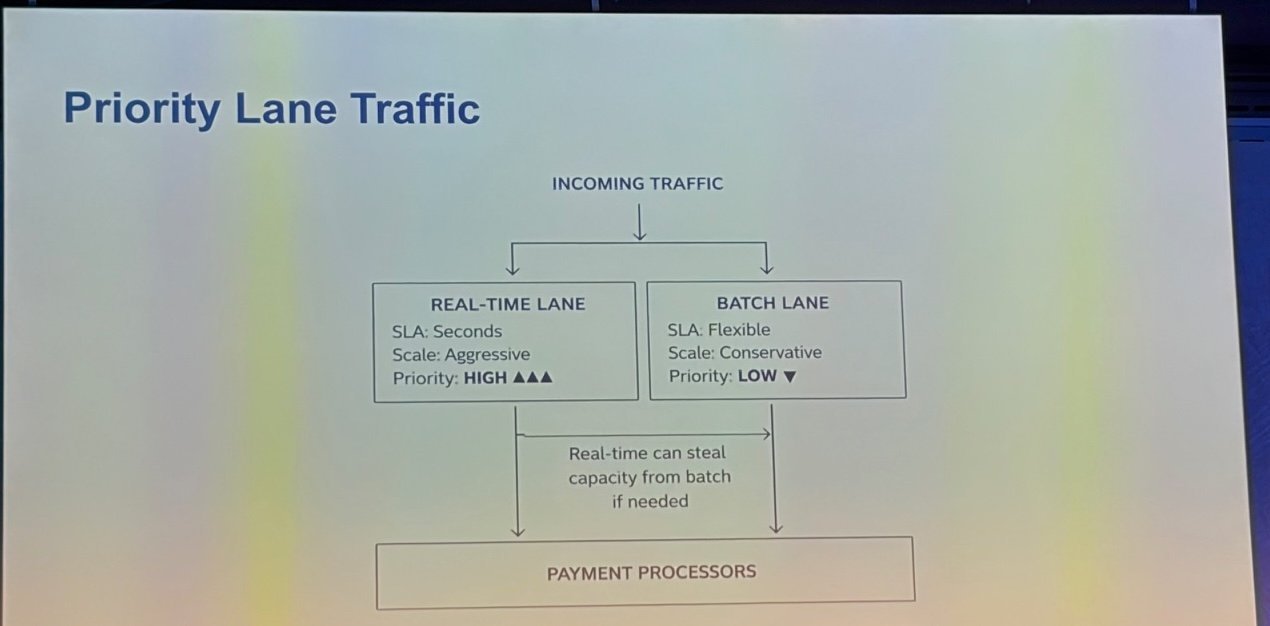
Netflix's entry into live events in 2024, including the NFL games and the Jake Paul vs. Mike Tyson fight, introduced entirely new signup patterns. Previous models assumed predictable, cyclical signups distributed across time zones, but live events created massive spikes concentrated in very short periods. The team introduced graceful degradation strategies, prioritizing customer access to live viewing over immediate financial reconciliation, which could happen later. The Jake Paul fight validated the approach (despite its delay), with signups exceeding predictions by morning before the evening event.
Trapszo ended the session with a quote: Great systems don't survive because they were perfectly designed. They survive because they keep evolving as reality changes.
The evolution of Netflix's commerce architecture offers several key insights for developers facing similar scaling challenges. First, the importance of recognizing when foundational assumptions break down - what works for a US-only DVD service fails completely in international markets with different payment infrastructures. Second, the value of pragmatic shortcuts when speed matters more than perfection, accepting that some architectural debt can be paid later based on actual usage patterns rather than predictions. Third, the counterintuitive benefit of intentional duplication over shared components when organizational independence and velocity become more important than code reuse.
For developers building systems today, Trapszo's talk serves as a reminder that the "right" architecture is temporary. The systems that survive aren't necessarily the ones with the cleanest initial design, but those that can adapt as business requirements, regulations, and user behaviors evolve. The Netflix commerce platform's journey from simple DVD rentals to supporting global streaming, live events, and complex subscription models demonstrates that successful architecture is less about getting it perfect upfront and more about building systems that can gracefully evolve through multiple, sometimes painful, transformations.
Comments
Please log in or register to join the discussion