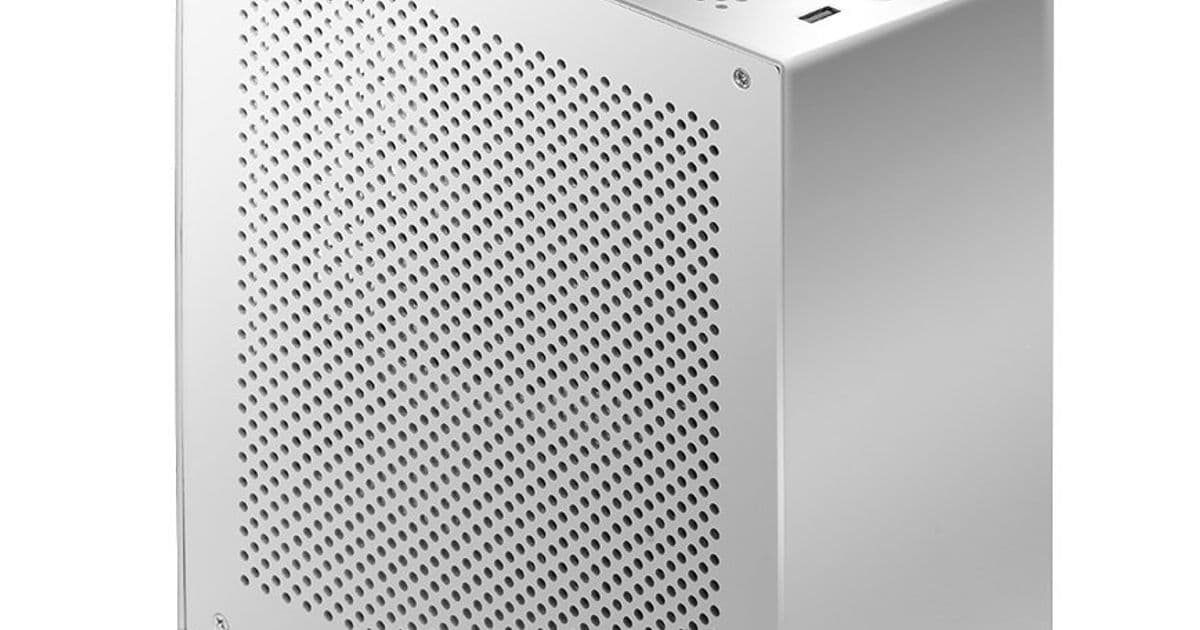
ASRock's compact AI BOX-A395 brings powerful AMD Ryzen AI Max+ processing to developers, offering a portable workstation for AI development that could impact mobile app development workflows.
The ASRock AI BOX-A395 represents an interesting development in the hardware space for mobile developers working with AI applications. This compact mini PC packs AMD's Ryzen AI Max+ 395 Strix Halo processor into a 232 x 200 x 100mm aluminum chassis, making it potentially valuable for developers who need to test and train AI models on hardware that resembles the capabilities of future mobile devices.
Hardware Specifications for AI Development
The standout feature of the AI BOX-A395 is its AMD Ryzen AI Max+ 395 Strix Halo processor, which combines a 16-core, 32-thread CPU with a 50 TOPS NPU and Radeon 8060S 40-core GPU. This trifecta of processing power is particularly relevant for mobile developers who need to:
- Test AI models that will eventually run on mobile devices
- Develop applications that leverage on-device AI processing
- Create cross-platform AI solutions that need to perform well across different hardware configurations
The system supports up to 128GB of LPDDR5x-8000 memory with 256 GB/s bandwidth, with up to 96GB available to the GPU. This memory configuration is particularly important for AI development workloads that often require substantial memory resources for model training and inference.
Developer Impact and Use Cases
For mobile developers maintaining applications on both iOS and Android platforms, the AI BOX-A395 offers several potential advantages:
On-device AI testing: The 50 TOPS NPU provides processing capabilities similar to what we're seeing in flagship mobile devices, allowing developers to test how their AI applications will perform on actual hardware rather than relying solely on emulators.
Cross-platform compatibility: The Radeon 8060S GPU with 40 cores can help developers optimize their AI models for different graphics APIs, including Vulkan, Metal, and OpenGL ES, which are critical for cross-platform mobile development.
Portable development environment: The compact size and optional handle make it easy for developers to move between workspaces, offices, or even client sites without sacrificing computational power.
Multi-display support: The ability to connect up to four 8K displays simultaneously is valuable for developers working with complex AI visualizations or who need multiple screens for debugging and monitoring purposes.
Migration Considerations
For development teams considering adopting the AI BOX-A395, several migration factors should be considered:
Software compatibility: The system runs standard x86 architecture, meaning most existing development tools will work without modification. However, developers targeting mobile platforms will still need to use platform-specific SDKs and testing tools.
Power requirements: With a TDP of up to 120 watts and an internal 400W power supply, this system offers substantial processing power but requires more power than typical mobile devices. Developers will need to account for power differences when optimizing their applications.
Development workflow integration: The AI BOX-A395 could serve as an intermediate step between development and deployment, allowing teams to test AI models on hardware that more closely approximates mobile device capabilities than traditional desktop workstations.
Cost considerations: While pricing hasn't been announced, the combination of high-end processor and substantial memory suggests this will be a premium product. Development teams should evaluate whether the capabilities justify the cost compared to other options in the market.
Cross-Platform Development Opportunities
The AI BOX-A395's hardware specifications make it particularly interesting for cross-platform development scenarios:
AI model optimization: Developers can test how their models perform across different hardware configurations, helping to create applications that deliver consistent experiences across iOS and Android devices.
Framework compatibility: The system's capabilities allow testing with various AI frameworks including TensorFlow, PyTorch, and ONNX, which are commonly used in mobile application development.
Edge computing scenarios: For applications that leverage edge computing, the AI BOX-A395 provides a development environment that more closely mimics real-world deployment conditions than cloud-based solutions.
As mobile devices continue to integrate more powerful AI capabilities, tools like the ASRock AI BOX-A395 will become increasingly valuable for development teams. The ability to test and optimize AI applications on hardware that approximates future mobile devices could help accelerate development cycles and improve the quality of AI-powered mobile applications.
For developers interested in learning more about the hardware specifications, ASRock's product page should provide additional details when the product becomes officially available. Additionally, AMD's Ryzen AI documentation offers insights into the capabilities of the Strix Halo processor that power this mini PC.
Comments
Please log in or register to join the discussion