Ivan Zarea from Netlify explores how AI tooling is democratizing web development, transforming who builds for the web, and what this means for developer tools, frameworks, and platform architecture.
At QCon London 2026, Ivan Zarea, Director of Platform Engineering at Netlify, presented "Tools That Enable the Next 1B Developers," exploring how AI tooling is transforming who builds for the web and what that means for developer tools, frameworks, and platform architecture.
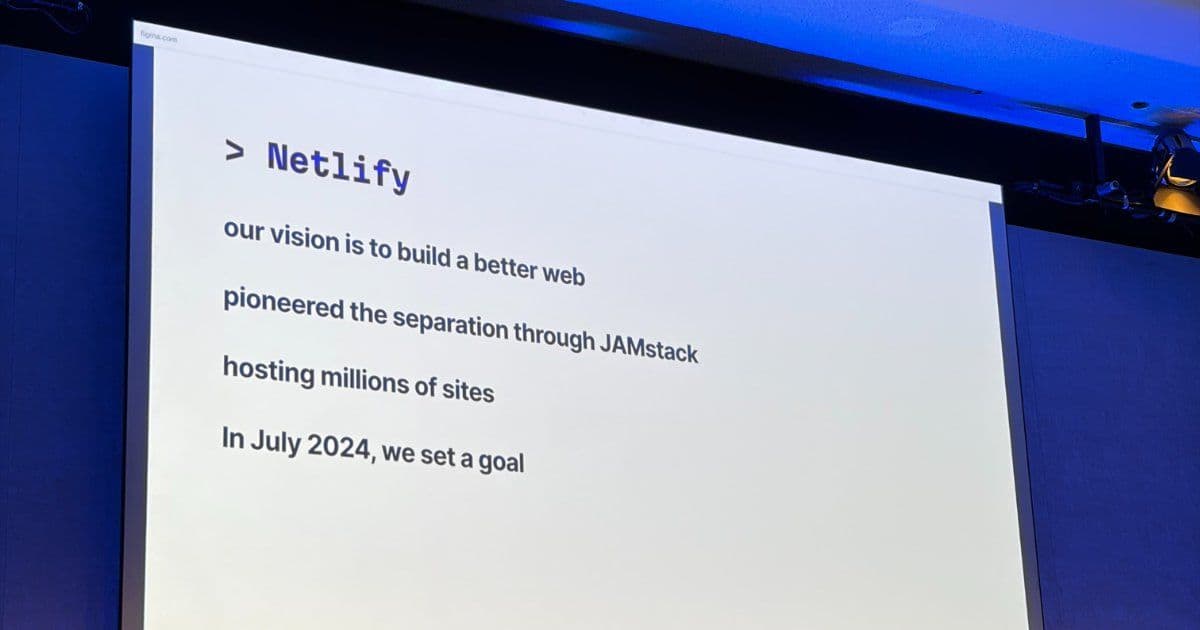
Zarea opened by highlighting Netlify's rapid growth, noting the platform has expanded from 6 million to 11 million developers in under a year. Similar growth patterns have been observed across platforms like Vercel, Supabase, and Replit. However, a paradox is emerging: while developer numbers are surging, the percentage of users who self-identify as "developers" is declining. Many new builders are domain experts creating internal tools, personal applications, and SaaS replacements, such as an HR team that built their own employee survey tool.
Netlify celebrated reaching 10 million developers on Christmas Eve 2025, writing that "agents are now writing the code and this opens up the web as a platform to build on to millions, maybe even billions of new users."
The talk was structured around three pillars for building better tools in this evolving landscape.
Developing Expertise: Architecture Over Code Production
Zarea argued that code production matters less while architecture and fundamental choices matter more. He highlighted how projects like SQLite and TLDraw have moved to proprietary test suites to prevent easy replication by AI tools. Forward compatibility was presented as essential, with deprecation strategies needing to account for faster adoption cycles.
Honing Taste: Designing for Both Humans and Agents
The second pillar focused on understanding which design choices serve both human and agent users. Zarea described how the Netlify CLI was redesigned to show full commands alongside interactive prompts, enabling AI agents to parse and use commands effectively. He also referenced the community-rebuilt NPM interface, npmx, noting it was completed in months, a sign that the cost of rewrites has changed significantly.
Practicing Clairvoyance: Anticipating an Agentic Future
The third pillar called on tool builders to anticipate an agentic future. Next.js was highlighted as a framework explicitly building for agents, shipping with agents.md files, MCP support, and actionable error formatting. Vercel has described this direction in a blog post titled Building Next.js for an agentic future, outlining how the framework is evolving to serve AI agents as first-class consumers. TanStack was also cited as a growing force, with its published TanStack Intent designed to help library maintainers build compatible tooling.
Zarea presented data showing significant growth in Vite adoption, a decline in Webpack usage, and a weakening incumbency advantage as the cost of rewriting between frameworks like React, Svelte, and Solid decreases.
The presentation concluded with a set of questions for engineering teams to consider: what happens with 10x more users, 10x more developers, or if everyone in the company starts shipping at their current skill level? "We are all becoming architects," Zarea stated, arguing that organizations must establish guardrails for non-traditional developers around security, data exposure, and consistent patterns.
This shift represents a fundamental change in how we think about developer tools. The barrier to entry is collapsing, but with that comes new responsibilities for tool builders to create systems that are both accessible to beginners and robust enough for production use. As Zarea noted, the question isn't whether this transformation will happen—it's already underway—but how quickly organizations can adapt to serve the next billion developers who may never have written a line of code themselves.
Comments
Please log in or register to join the discussion