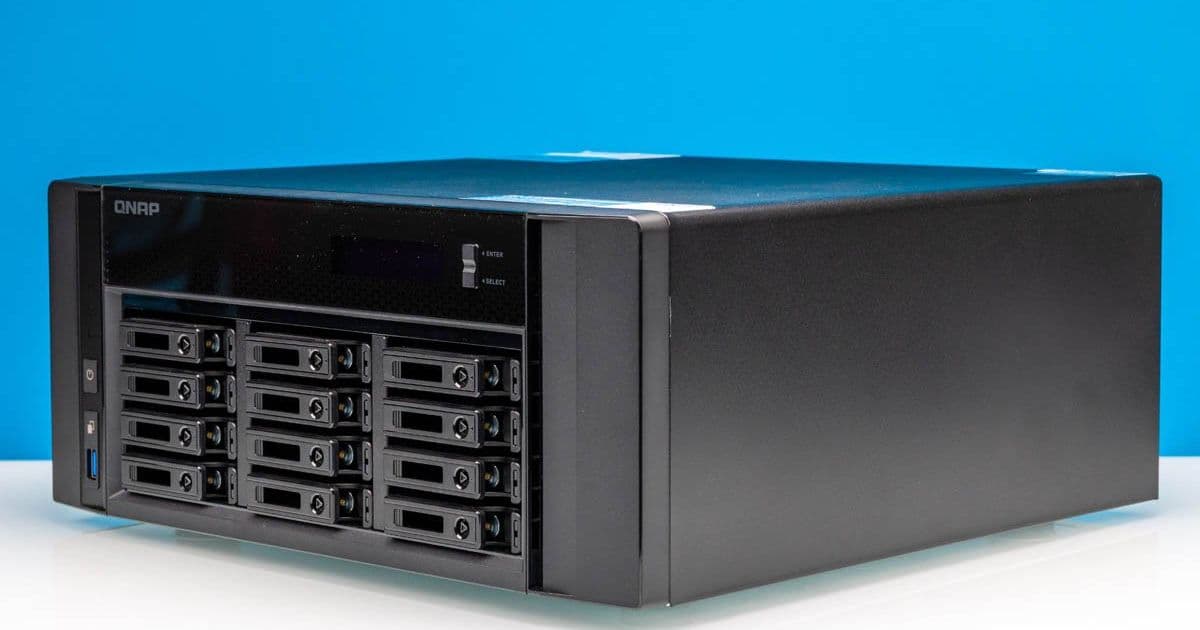
The QNAP TS-h1290FX delivers massive flash storage capacity and PCIe Gen4 performance in a tower form factor, targeting video production and AI workloads with its 12-bay U.2 design and AMD EPYC processing power.
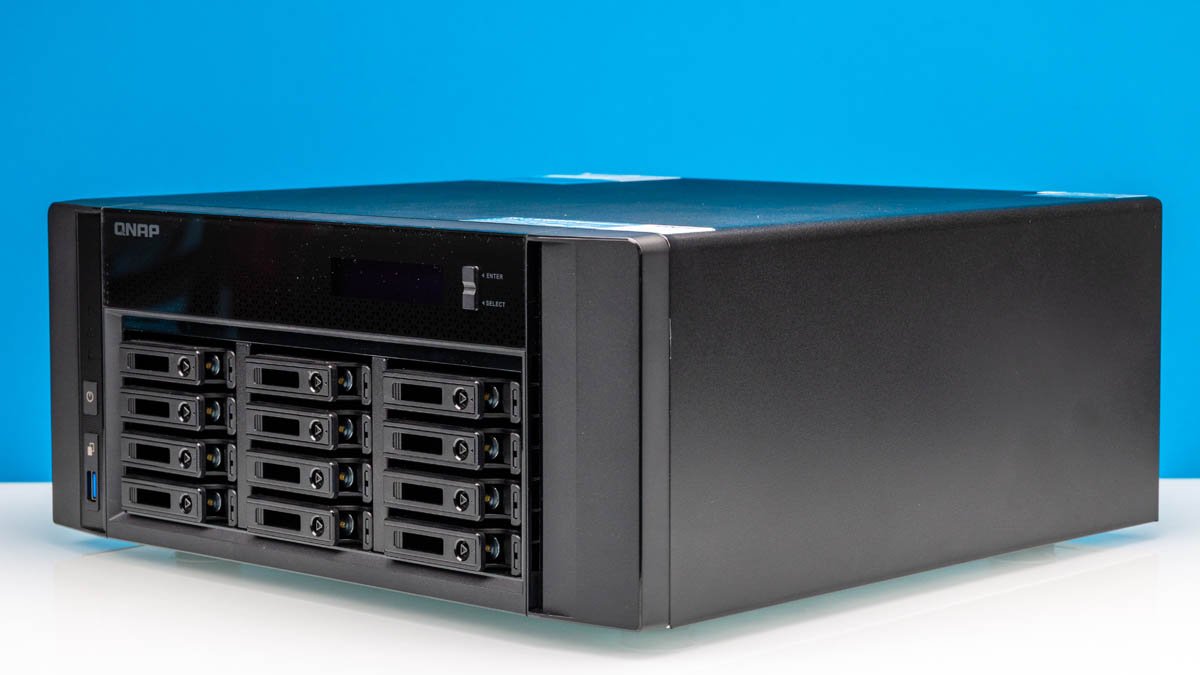
The QNAP TS-h1290FX represents a significant leap in network-attached storage technology, combining enterprise-grade hardware with workstation-level performance in a surprisingly quiet tower chassis. Built around an AMD EPYC 7232P processor and equipped with twelve PCIe Gen4 U.2/SATA drive bays, this NAS targets professionals needing massive flash storage throughput without rack-mount constraints.
Hardware Specifications
- Processor: AMD EPYC 7232P (8C/16T, 3.2GHz)
- Memory: 64GB ECC DDR4-3200 (8x8GB)
- Drive Bays: 12x 2.5" U.2 PCIe Gen4 x4 / SATA
- Networking: Dual 25GbE SFP28 + Dual 2.5GbE RJ45
- Power Supply: 750W ATX
- Physical: 150 x 368 x 362mm (19.82 lbs)
External Design & Cooling
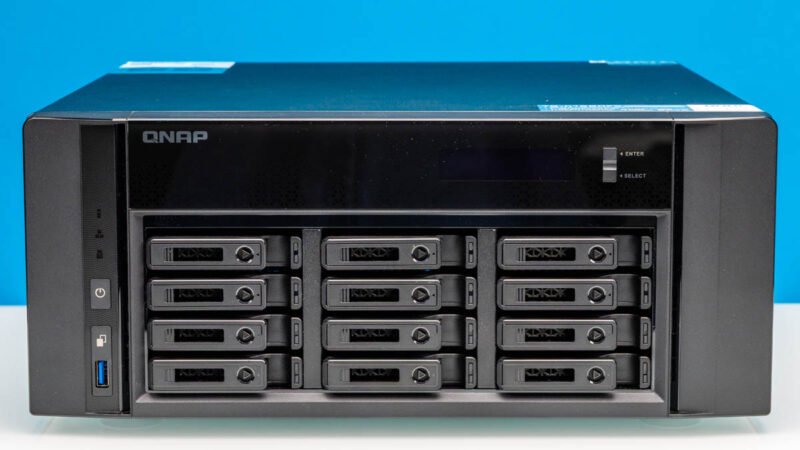
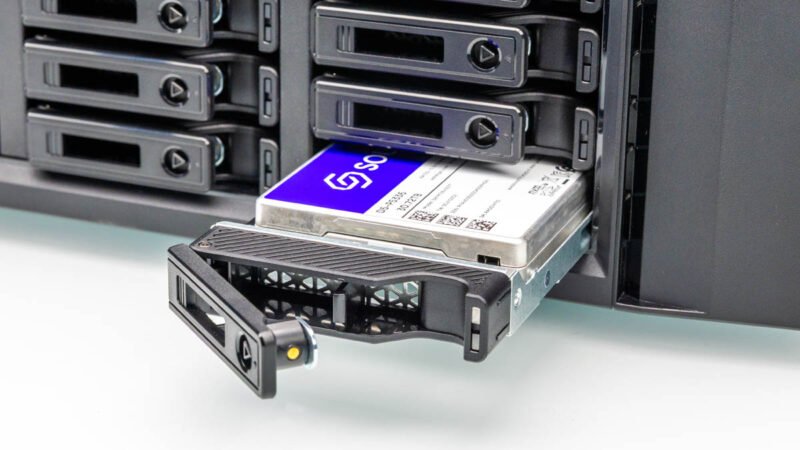
Dominating the front panel, twelve tool-less drive trays serve dual purposes: hosting U.2/SATA SSDs and functioning as the primary air intake. Each tray supports drives up to 15mm tall and features individual locking mechanisms—a critical detail for high-availability environments where accidental removal could disrupt workflows. The chassis prioritizes thermal management, with side and rear vents accommodating the substantial heat output of twelve U.2 drives (each capable of 24W TDP under load).
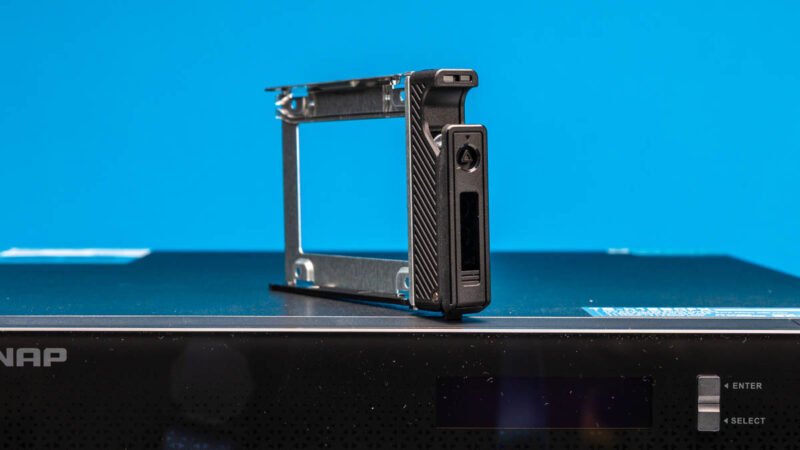
Drive installation exemplifies thoughtful engineering: trays accommodate both SATA and U.2 interfaces without adapters, and the secure latching system prevents accidental ejection during maintenance. When populated with thick NVMe drives, clearance is minimal but sufficient, demonstrating QNAP's focus on density.
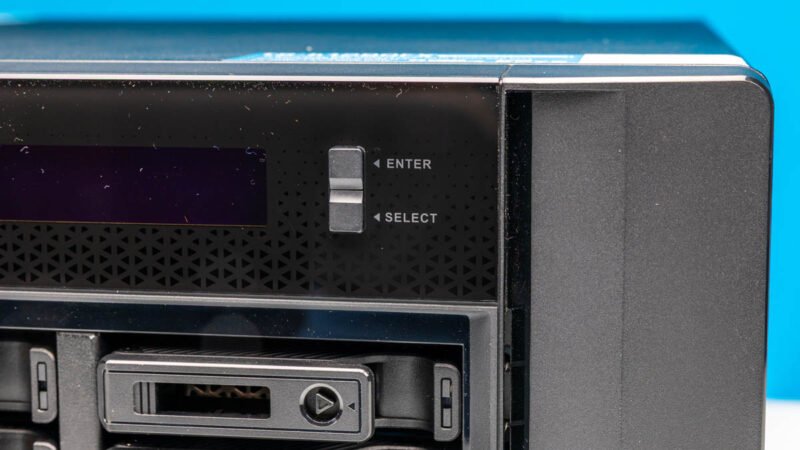
Front-panel controls include a monochrome LCD for basic system monitoring and configuration, plus physical buttons for power and USB backups. While network connectivity remains essential for full management, these controls provide essential status visibility during deployment.
Networking & Expansion
Rear connectivity highlights include:
- Dual 25GbE SFP28 ports (Mellanox ConnectX-6)
- Dual 2.5GbE RJ45 ports
- Three USB 3.2 Gen1 (5Gbps) ports
- Four PCIe Gen4 expansion slots
The 25GbE interfaces are non-negotiable for maximizing throughput—aggregate SSD performance exceeds 14GB/s, requiring high-bandwidth networking to avoid bottlenecks. While the 2.5GbE ports feel outdated for a premium NAS, they provide backward compatibility with existing infrastructure.
Performance Considerations
With PCIe Gen4 connectivity per drive bay, theoretical throughput reaches:
- Sequential Read: ~14GB/s (12x PCIe 4.0 x4 lanes)
- IOPS: 1.5M+ (with enterprise NVMe drives)
Power consumption varies dramatically based on drive selection:
| Configuration | Idle (W) | Full Load (W) |
|---|---|---|
| Empty Chassis | 65 | 85 |
| 12x U.2 NVMe | 120 | 350+ |
Real-world video editing benchmarks show 8K video streams handling 3-5 simultaneous streams without dropped frames when paired with 25GbE workstations.
Build Recommendations
Ideal For:
- Video production studios editing 8K RAW footage
- AI/ML development requiring fast model loading
- High-frequency database applications
- ZFS-based storage (QuTS Hero OS)
Avoid If:
- Budget constraints (system starts at ~$3,500 without drives)
- Noise-sensitive environments (despite quiet fans, 350W load generates audible airflow)
- Basic home use (overkill for media streaming)
Configuration Tips:
- Prioritize PCIe 4.0 U.2 drives like Kioxia CD7 or Samsung PM9A3
- Add a 100GbE NIC via PCIe slot for cluster deployments
- Use ZFS mirroring for critical workloads
- Allocate 1GB RAM per 1TB storage for optimal ZFS caching
Conclusion
The TS-h1290FX fills a unique niche between workstation and data center, delivering unprecedented all-flash density in a tower form factor. While priced for professionals, its combination of EPYC processing, PCIe Gen4 throughput, and 25GbE networking makes it a compelling solution for high-bandwidth creative and technical workloads. The omission of 10GbE RJ45 ports feels like a missed opportunity, but overall this represents QNAP's most compelling high-performance NAS to date.
Comments
Please log in or register to join the discussion