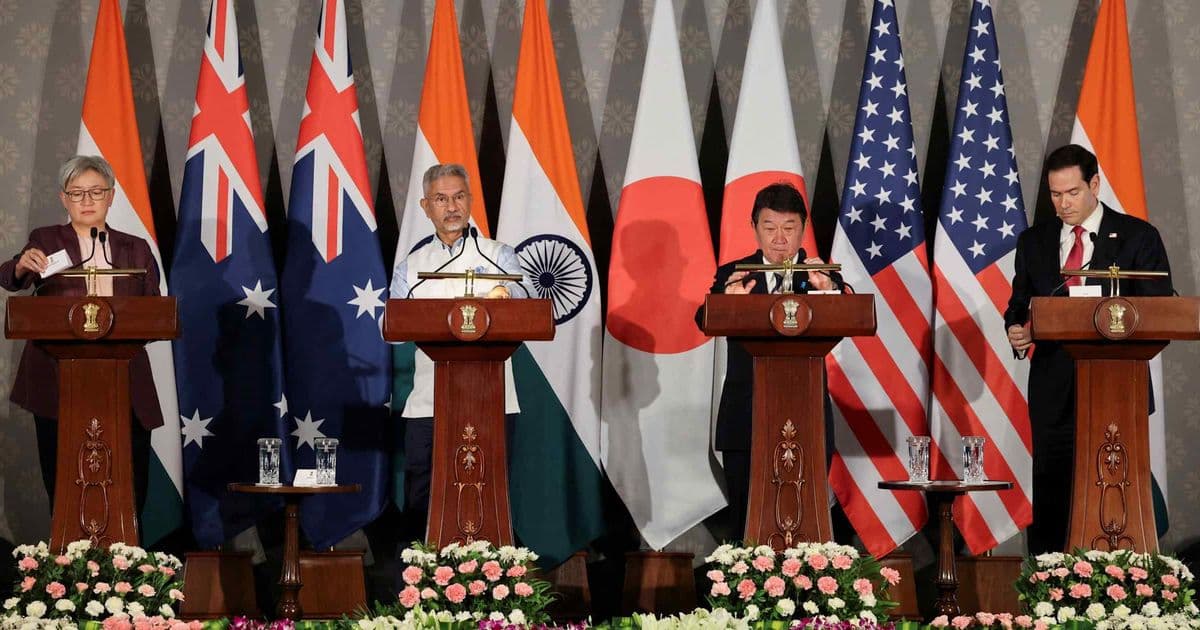
Australia, India, Japan and the United States announced coordinated maritime surveillance, energy‑security, and critical‑mineral initiatives in New Delhi, aiming to reduce reliance on China and attract $30 billion of private investment over the next five years.
Quad ministers unveil joint energy and mineral roadmap in New Delhi
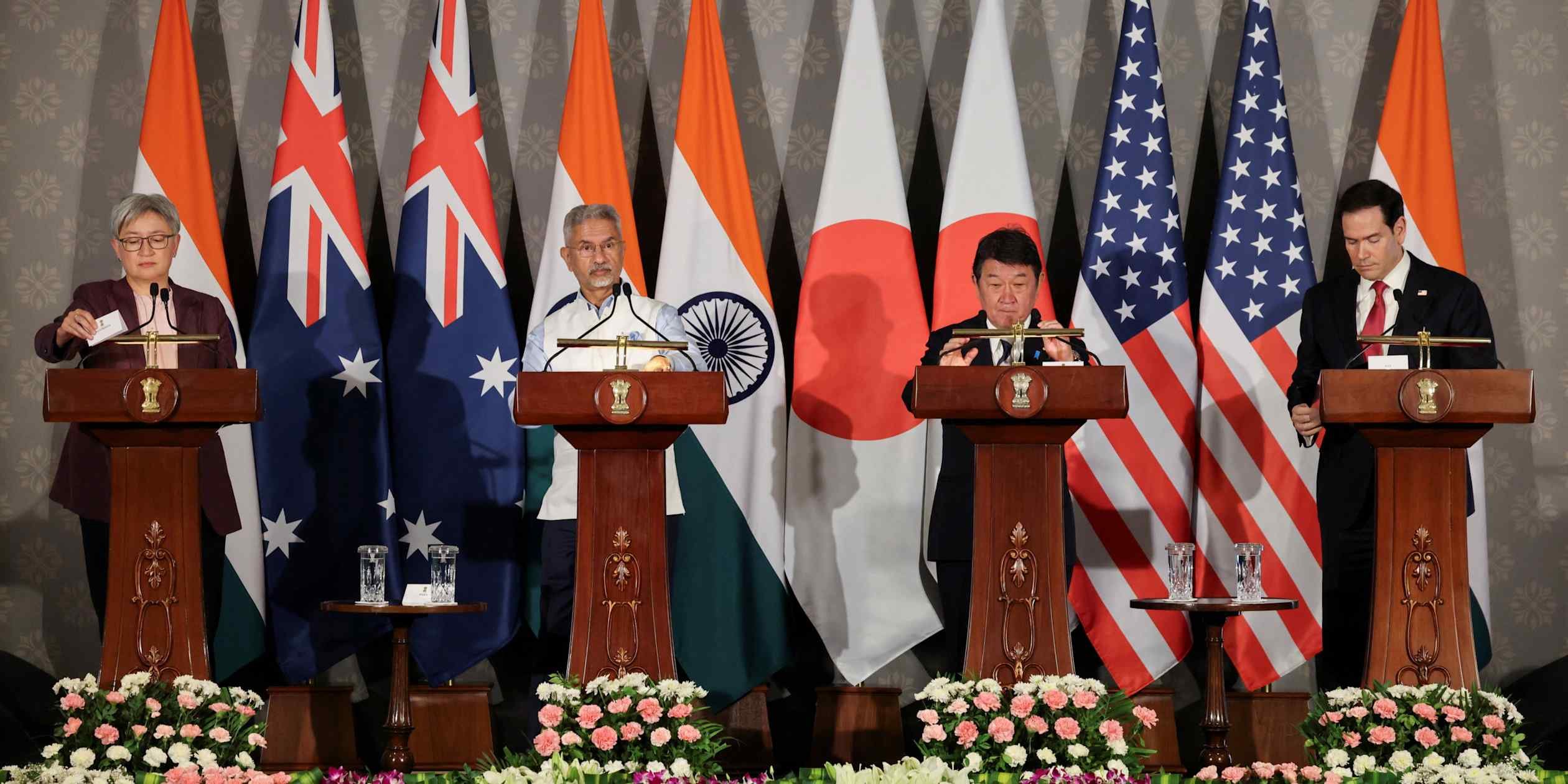
The foreign ministers of Australia, India, Japan and the United States gathered at Hyderabad House on 26 May 2026 and unveiled a suite of projects designed to tighten Indo‑Pacific supply chains for energy and critical minerals. The announcements covered three pillars – maritime domain awareness, clean‑energy cooperation, and a coordinated approach to rare‑earth and battery‑metal sourcing.
Market context
- Energy imports – India’s net oil import bill hit $115 billion in FY 2025, while its liquefied petroleum gas (LPG) demand outstripped domestic production by 400,000 bbl/day. The country’s strategic reserves sit at 5 million bbl, barely 4 % of annual consumption, leaving it vulnerable to price spikes.
- Critical minerals – In 2025 the global market for lithium, cobalt and rare‑earth oxides reached $140 billion, with China accounting for 68 % of processing capacity. The International Energy Agency (IEA) warned that a 30 % disruption in rare‑earth supply could raise electric‑vehicle (EV) battery costs by $1,800 per vehicle.
- Investment flow – Private‑sector capital into Indo‑Pacific renewable projects grew 22 % YoY in 2025, reaching $18 billion, but analysts estimate a funding gap of $30 billion to meet the region’s 2030 net‑zero targets.
What the Quad announced
| Initiative | Lead Country | Funding & Timeline | Expected Impact |
|---|---|---|---|
| Maritime Surveillance Network (MSN) | Japan | $1.2 bn joint investment, operational by 2028 | 30 % increase in real‑time vessel tracking across the Indian Ocean, reducing illegal fishing and smuggling risks |
| Indo‑Pacific Clean‑Energy Hub (ICHEH) | United States | $8 bn private‑sector pledge, 5‑year rollout | 12 GW of offshore wind and solar capacity added, cutting India’s coal‑generated electricity share from 55 % to 42 % by 2032 |
| Critical Mineral Partnership (CMP) | Australia & India | $5 bn seed fund, 2027‑2032 | Development of two lithium‑brine projects in Western Australia and a rare‑earth processing plant in Gujarat, targeting 25 % of India’s EV battery material needs by 2030 |
| Strategic Petroleum Reserve (SPR) Expansion | United States (technical assistance) | $2 bn US‑India joint program, 2026‑2031 | Increase India’s strategic crude oil reserve to 10 million bbl, equivalent to 8 % of annual demand |
Strategic implications
- Diversification of supply – By establishing processing capacity for rare‑earths and lithium within the Quad, member states aim to cut China’s share of the value chain from 68 % to below 40 % by 2035. The Gujarat plant, projected to process 150 kt of rare‑earth oxides annually, will feed domestic electronics and defense manufacturers, reducing import exposure valued at $3.5 bn in FY 2025.
- Energy security buffering – The SPR expansion, coupled with the ICHEH’s renewable rollout, is expected to lower India’s net oil import bill by $7 billion per year once the new reserves become operational. Modelling by the Energy Ministry suggests a 15 % reduction in price volatility for LPG, translating into lower consumer inflation.
- Geopolitical signaling – The coordinated maritime surveillance effort sends a clear message to Beijing about the Quad’s willingness to protect sea lanes that carry over 60 % of global trade. Enhanced AIS data sharing will improve response times to incidents in the Strait of Malacca, a chokepoint handling 25 million TEU annually.
- Private‑capital mobilisation – The $30 billion investment pipeline announced today aligns with the International Finance Corporation’s target of $100 billion in clean‑energy financing for emerging markets by 2030. Early commitments from firms such as Shell, Tata Power, and Rio Tinto suggest the Quad framework is already unlocking financing that was previously stalled by regulatory uncertainty.
Outlook
If the Quad can keep its projects on schedule, the region could see a 10‑15 % reduction in the cost of EV batteries by 2032, making electric mobility more affordable for the sub‑continent’s 1.4 billion consumers. Energy‑security analysts also project that the combined effect of the SPR boost and renewable additions will shave 0.3 percentage points off India’s current account deficit each year.
The initiatives mark a shift from ad‑hoc diplomatic statements to concrete, financially backed programs. Their success will depend on sustained coordination among the four capitals, the ability to attract private investors, and the resilience of supply chains to geopolitical shocks. For now, the Quad’s roadmap offers a measurable path toward a more diversified, secure, and low‑carbon Indo‑Pacific economy.
Comments
Please log in or register to join the discussion