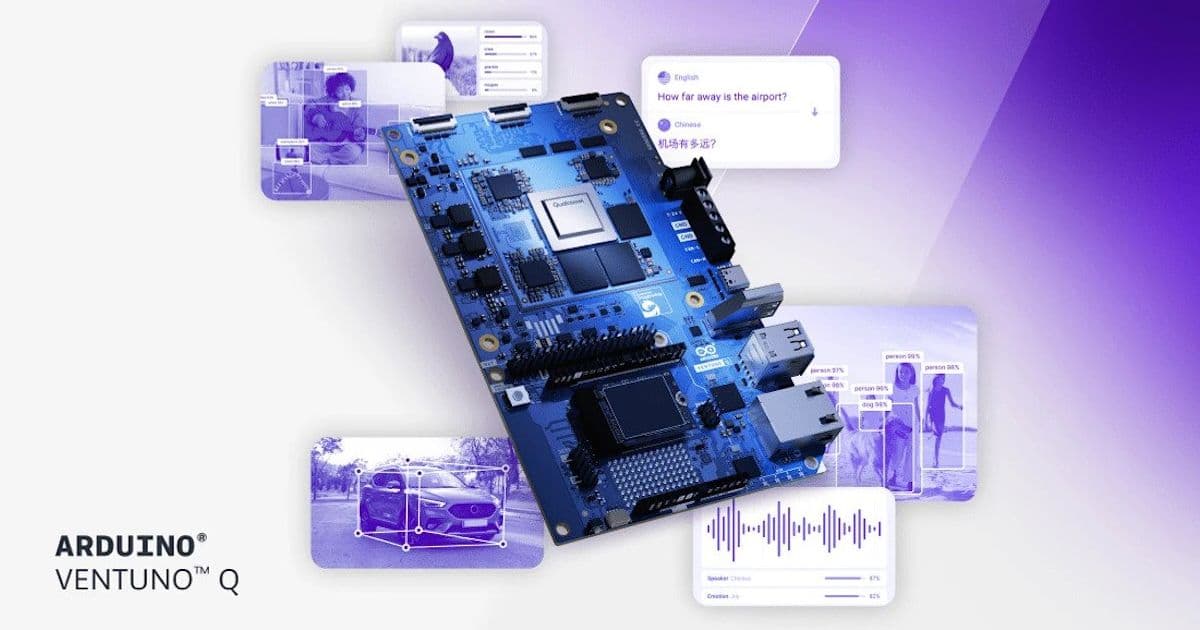
Qualcomm unveils the Arduino Ventuno Q, a single-board computer powered by Dragonwing IQ8 processor with 16GB RAM, targeting AI and robotics applications.
Qualcomm has unveiled the Arduino Ventuno Q, a new single-board computer designed specifically for AI and robotics applications. The device combines Qualcomm's Dragonwing IQ8 processor with Arduino's microcontroller expertise, creating a powerful platform for developers working on intelligent systems.
The Ventuno Q features 16GB of RAM, making it one of the more memory-capable single-board computers available for AI workloads. This substantial memory allocation allows the device to handle larger neural network models and more complex processing tasks without the bottlenecks that often plague smaller boards.
At the heart of the system is Qualcomm's Dragonwing IQ8 processor, which brings mobile-class AI acceleration to the single-board form factor. The processor is paired with Arduino's microcontroller, creating a hybrid architecture that can handle both high-level AI processing and low-level control tasks simultaneously. This combination is particularly useful for robotics applications where real-time sensor processing and motor control must work alongside more computationally intensive AI algorithms.
Arduino, which Qualcomm acquired in 2023, brings its extensive ecosystem of sensors, shields, and development tools to the platform. The Ventuno Q maintains compatibility with many existing Arduino components while adding the processing power needed for modern AI applications. This integration allows developers to leverage their existing Arduino knowledge while accessing more advanced capabilities.
The single-board computer targets several key markets:
Robotics Development: The combination of powerful processing and real-time control makes it suitable for autonomous robots, drones, and industrial automation systems. Developers can run computer vision algorithms, sensor fusion, and path planning while maintaining precise control over actuators.
Edge AI Applications: With 16GB of RAM and AI-optimized processing, the Ventuno Q can run sophisticated models locally without requiring cloud connectivity. This makes it ideal for applications where latency, privacy, or connectivity are concerns.
Educational and Prototyping: The Arduino ecosystem's accessibility combined with Qualcomm's processing power creates an attractive platform for universities and research institutions teaching AI and robotics.
The device represents a growing trend in the single-board computer market toward more powerful, AI-focused platforms. While traditional boards like the Raspberry Pi have dominated the market for years, newer devices are incorporating specialized AI accelerators and larger memory capacities to meet the demands of modern applications.
Pricing and availability details were not immediately disclosed in the initial announcement. However, given the specifications and target market, the Ventuno Q is likely positioned as a premium offering compared to more general-purpose single-board computers.
The launch comes amid increasing demand for edge AI hardware as developers seek to deploy machine learning models closer to where data is generated. This approach reduces latency, improves privacy, and can operate independently of network connectivity.
For developers already working in the Arduino ecosystem, the Ventuno Q offers a path to more advanced AI capabilities without abandoning familiar tools and workflows. The integration of Qualcomm's technology with Arduino's user-friendly approach could accelerate adoption of AI in robotics and embedded systems.
Qualcomm's acquisition of Arduino appears to be bearing fruit with this product, combining the strengths of both companies to address emerging market needs. The Ventuno Q demonstrates how traditional microcontroller platforms are evolving to meet the demands of AI-driven applications while maintaining the accessibility that made them popular in the first place.
The single-board computer market continues to expand as AI becomes more prevalent in embedded systems. Devices like the Ventuno Q show how manufacturers are responding to developer needs for more powerful, specialized hardware that can handle the computational demands of modern AI applications while maintaining the flexibility and accessibility of traditional development platforms.
Comments
Please log in or register to join the discussion