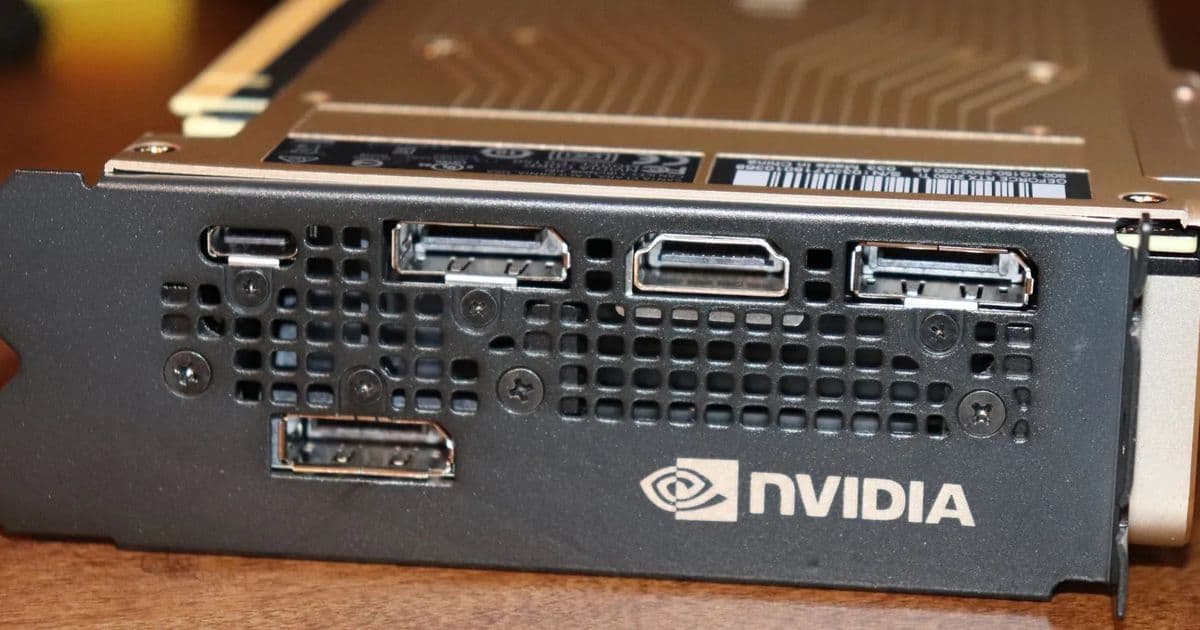
The open-source Nouveau driver now supports HDMI Fixed Rate Link (FRL) for NVIDIA GPUs, enabling higher refresh rates and resolutions through the GPU System Processor firmware.
In a significant development for Linux graphics, open-source Nouveau driver now supports HDMI Fixed Rate Link (FRL) for NVIDIA GPUs, bringing higher refresh rates and resolutions to Linux users with NVIDIA hardware. This achievement comes as the AMDGPU open-source driver continues to face challenges with HDMI 2.1 support due to restrictions from the HDMI Forum.
Technical Background: HDMI FRL and Its Significance
HDMI Fixed Rate Link (FRL) is a key feature of the HDMI 2.1 specification that enables higher bandwidth connections between devices. Unlike traditional TMDS (Transition Minimized Differential Signaling) used in earlier HDMI versions, FRL provides a more efficient way to transmit video data, supporting higher resolutions and refresh rates such as 4K at 120Hz, 8K at 60Hz, and beyond.
The implementation of FRL in the Nouveau driver represents a significant advancement for Linux users with NVIDIA hardware who want to take advantage of modern high-refresh-rate displays and televisions without relying on proprietary NVIDIA drivers.
The HDMI Forum Challenge
The HDMI Forum has historically created obstacles for open-source implementations of HDMI 2.1 features. This has particularly affected the AMDGPU open-source driver, which has struggled to implement full HDMI 2.1 support due to these restrictions. The forum's requirements have made it difficult for open-source developers to implement certain features without access to proprietary specifications or code.
NVIDIA's GSP Firmware: Enabling Open-Source Implementation
The key to Nouveau's success with HDMI FRL lies in NVIDIA's GPU System Processor (GSP) firmware. Unlike previous approaches that required more implementation in the kernel driver itself, the GSP firmware handles most of the complex HDMI FRL functionality in a binary blob. This separation allows the open-source driver to interface with the firmware without needing to implement the proprietary aspects of the technology.
David Airlie at Red Hat, who implemented this functionality, explained in the patch series cover letter: "With GSP the firmware handles most of the hard work, just need to send things in the correct order and handle the link training at the right points."
Implementation Details
Airlie's implementation consists of four patches that add HDMI FRL support to the Nouveau kernel driver. These patches enable HDMI-connected displays to achieve higher refresh rates and resolutions than were previously possible with the open-source driver.
The implementation required careful sequencing of commands and proper handling of link training at specific points. Airlie noted that he used Claude Code to help iterate on the implementation, solving ordering issues and aligning with NVIDIA's programming sequences.
Testing and Validation
The implementation has been successfully tested with an Ampere GPU and an HDMI 2.1 capture card, confirming that the technology works as expected. This testing is crucial for ensuring that the implementation doesn't just work in theory but functions correctly with real-world hardware.
Future Integration and Linux Kernel Timeline
The patches are expected to be in a suitable state for upstreaming during the Linux v7.2 kernel cycle, which is scheduled for summer 2026. If all goes according to plan, this functionality will be available to users running recent Linux kernels with Nouveau driver support.
Implications for Linux Desktop Experience
This development has several important implications for Linux users:
Better High-Refresh-Rate Support: Users with high-refresh-rate monitors and televisions will be able to take full advantage of their hardware without switching to proprietary drivers.
Improved 4K/8K Display Support: The ability to drive higher resolutions at acceptable frame rates will benefit users with ultra-high-definition displays.
Reduced Driver Dependency: With more functionality available in the open-source driver, users will have less need to rely on NVIDIA's proprietary drivers, which can sometimes lag behind in features or have compatibility issues.
Broader Hardware Support: This implementation could potentially be extended to other NVIDIA GPU architectures beyond Ampere, depending on the GSP firmware capabilities.
Comparison with Other Approaches
This implementation contrasts with the approach taken by Intel, which has also been handling more of its graphics implementation in binary firmware. However, NVIDIA's approach with GSP appears to be more comprehensive, enabling complex features like HDMI FRL to be implemented in the open-source driver.
The AMDGPU driver continues to face challenges with HDMI 2.1 support, highlighting how NVIDIA's architecture with GSP firmware provides a more viable path for open-source implementation of advanced display technologies.
Technical Challenges and Solutions
Implementing HDMI FRL support wasn't without its challenges. The main difficulty was ensuring proper sequencing of commands between the kernel driver and the GSP firmware. As Airlie noted, "the firmware handles most of the hard work, just need to send things in the correct order and handle the link training at the right points."
The link training process is particularly critical for HDMI FRL, as it establishes the optimal connection parameters between the GPU and the display. This involves negotiating the correct bandwidth, color depth, and other parameters to ensure a stable, high-quality connection.
The Role of Open-Source in Display Technology
This development underscores the importance of open-source implementations in advancing display technology on Linux platforms. While proprietary drivers often have the advantage of early access to new technologies, open-source drivers like Nouveau are increasingly finding ways to implement these features through firmware partnerships and clever engineering.
The success of HDMI FRL implementation in Nouveau could pave the way for other advanced display features to be implemented in open-source drivers, benefiting the entire Linux ecosystem.
Conclusion
The implementation of HDMI FRL support in the Nouveau driver represents a significant achievement for Linux graphics. By leveraging NVIDIA's GSP firmware, David Airlie and the Nouveau development team have overcome the challenges that have hindered HDMI 2.1 support in other open-source drivers.
As this code makes its way into the mainline Linux kernel, users with NVIDIA hardware will gain access to higher refresh rates and resolutions without sacrificing the benefits of open-source drivers. This development not only improves the Linux desktop experience but also demonstrates how open-source and firmware partnerships can enable advanced features that might otherwise remain out of reach.
For those interested in following the development, the patches are expected to be submitted for inclusion in Linux v7.2, with potential availability in late 2026 or early 2027, depending on the kernel release schedule.
Comments
Please log in or register to join the discussion