A new Mesa 26.0 merge transitions Radeon RDNA3/RDNA4 GPUs from Wave64 to Wave32 execution for ray-tracing workloads, delivering measurable performance improvements in titles like Cyberpunk 2077 and Portal RTX.
Valve-contributed developer Natalie Vock has merged a significant update into Mesa 26.0's RADV Vulkan driver that fundamentally changes how Radeon RDNA3 and RDNA4 GPUs process ray-tracing workloads. The change transitions these graphics processors from Wave64 to Wave32 execution mode for ray-tracing shaders, aligning them with existing RDNA1/RDNA2 implementations and unlocking measurable performance improvements.
Technical Implementation Details Wave32 mode executes 32 threads per clock cycle compared to Wave64's 64 threads. While both modes are supported on RDNA architectures, Wave32 offers inherent advantages for graphics workloads due to lower latency and improved resource utilization efficiency. This transition was previously impossible for RDNA3/RDNA4 GPUs due to compiler limitations, but recent improvements to ACO (the AMD Compiler Backend) enabled efficient VOPD instruction handling in Wave32 mode.
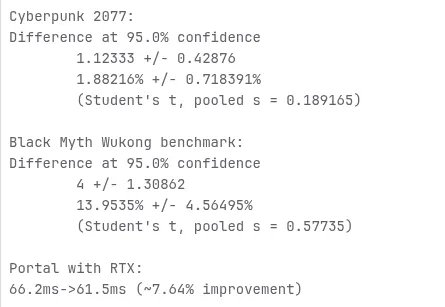
Benchmarked Performance Gains Rigorous testing on Navi31 (RDNA3) hardware revealed consistent improvements across multiple ray-traced titles:
| Game Title | Performance Improvement | Statistical Significance |
|---|---|---|
| Cyberpunk 2077 | 1.88% ± 0.72% | 95% confidence |
| Black Myth Wukong Benchmark | 13.95% ± 4.56% | 95% confidence |
| Portal with RTX | ~7.64% | Frame time reduction (66.2ms→61.5ms) |
The results demonstrate particularly substantial gains in computationally intensive scenes where ray-tracing workload distribution benefits from Wave32's lower-latency characteristics.
Comments
Please log in or register to join the discussion