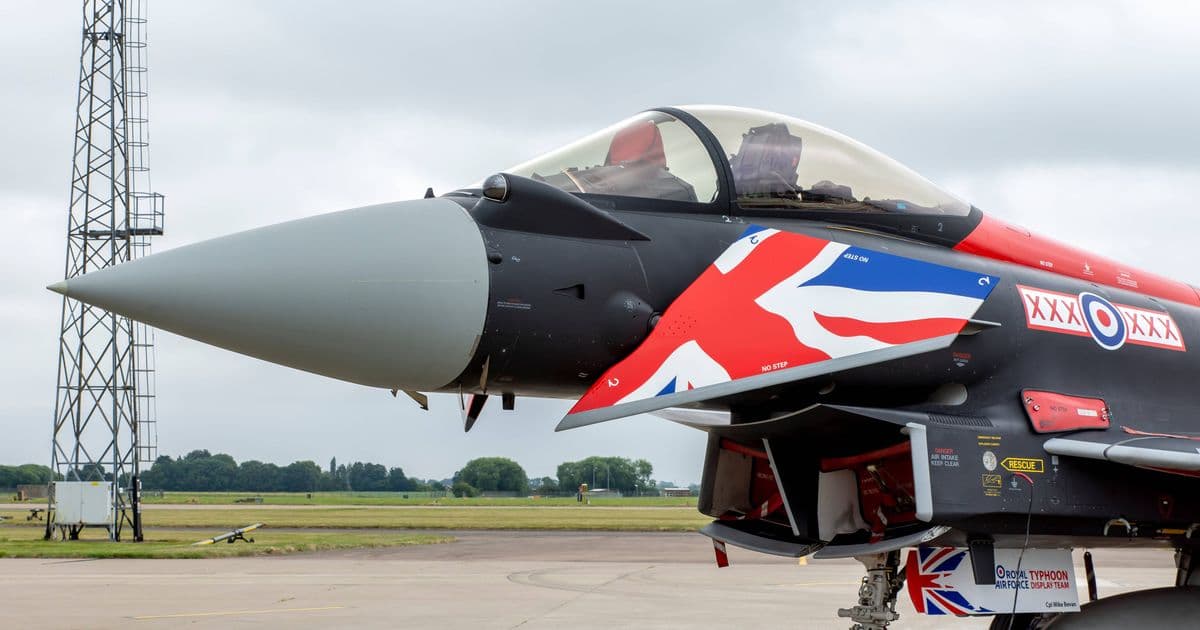
BAE Systems has successfully tested laser-guided rockets with a Typhoon fighter jet as a potential low-cost anti-drone weapon, following earlier US trials with F-15E aircraft.
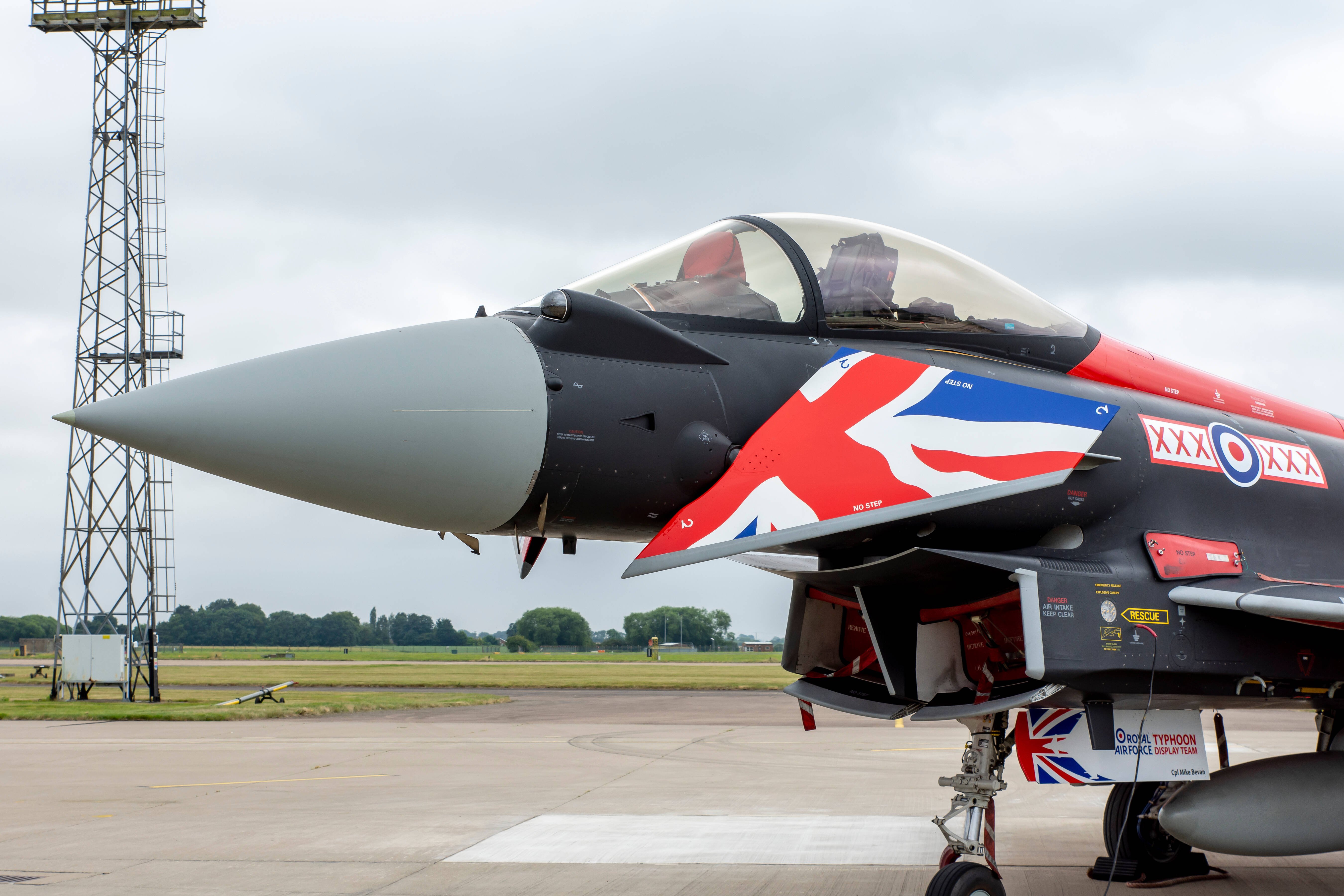
The Royal Air Force has conducted successful trials of laser-guided rockets with its Typhoon fighter jets as a potential low-cost solution for countering the growing threat of uncrewed aerial systems. BAE Systems, working with the RAF, tested the Advanced Precision Kill Weapon System (APKWS) using a Typhoon evaluation aircraft at its development center in Lancashire, England.
The APKWS system represents a cost-effective approach to drone defense by converting existing unguided Hydra 70 rockets into precision-guided munitions. The system works by adding a mid-section between the rocket motor and warhead that contains canard fins for steering. Laser seekers mounted on the leading edge of these fins lock onto a laser-designated target when the rocket is fired.
According to BAE Systems, the tests achieved a successful strike against a ground-based target at a military testing range. The defense firm emphasizes that this technology could provide valuable insights into how low-cost precision weapons could be integrated with Typhoon aircraft, particularly for scenarios requiring affordable interception options against drones.
Cost considerations driving adoption
The economic advantage of APKWS is significant. While exact figures for the UK trials weren't disclosed, the system typically costs less than $40,000 per unit. This represents a fraction of the cost of traditional air-to-air missiles, and possibly comparable to the cost of the Iranian Shahed drones that have become increasingly prevalent in modern conflicts.
This cost differential has driven renewed interest in the technology. The Pentagon reportedly ordered thousands of laser-guided rockets in a deal worth $322 million at the end of last year. The system has already seen operational use, with F-16 fighters understood to have deployed APKWS against Houthi drones attacking shipping in the Red Sea.
Historical context and development
Despite the current focus on drone defense, APKWS is not a new weapon system. It was developed well over a decade ago and reached initial operating capability in 2012. The technology has been tested previously with F-15E Strike Eagle aircraft in the US, demonstrating its versatility across different fighter platforms.
The RAF's interest in APKWS forms part of broader capability enhancements planned for the Typhoon to increase its effectiveness in current and future combat air operations. This testing represents a pragmatic approach to addressing modern threats while managing defense budgets.
UK's multi-layered drone defense
The APKWS trials are just one element of the UK's anti-drone strategy. Late last year, the Royal Navy's Wildcat helicopters were cleared to carry the Lightweight Multirole Missile, also known as Martlet, which is similarly laser-guided. Some of these systems have already been deployed to RAF Akrotiri airbase in Cyprus to help defend against Iranian drones.
This multi-layered approach reflects the serious threat that drones now pose to military installations and operations. The deployment of various anti-drone systems across different platforms demonstrates the UK's commitment to developing comprehensive countermeasures.
Historical echoes
The RAF's Typhoon jets were named in homage to the Second World War's Hawker Typhoon, which also carried rockets but for ground attack purposes. The original Typhoon proved highly effective against tanks during fighting after the Normandy landings, demonstrating how rocket technology has long been a part of British air power.
As drone threats continue to evolve, the UK military appears to be taking a pragmatic approach by adapting existing technologies like APKWS rather than developing entirely new systems. This strategy allows for rapid deployment of effective countermeasures while managing costs in an era of constrained defense budgets.
Future implications
The success of these trials could lead to the integration of APKWS rockets across the RAF's Typhoon fleet, providing a cost-effective capability for drone defense. However, questions remain about the system's effectiveness against different types of drones and in various operational scenarios.
As the Ministry of Defence considers whether to deploy APKWS rockets to frontline jets, the trials represent an important step in adapting legacy platforms like the Typhoon to meet modern threats. The balance between cost, effectiveness, and rapid deployment will likely determine whether this technology becomes a standard part of the UK's anti-drone arsenal.
Comments
Please log in or register to join the discussion