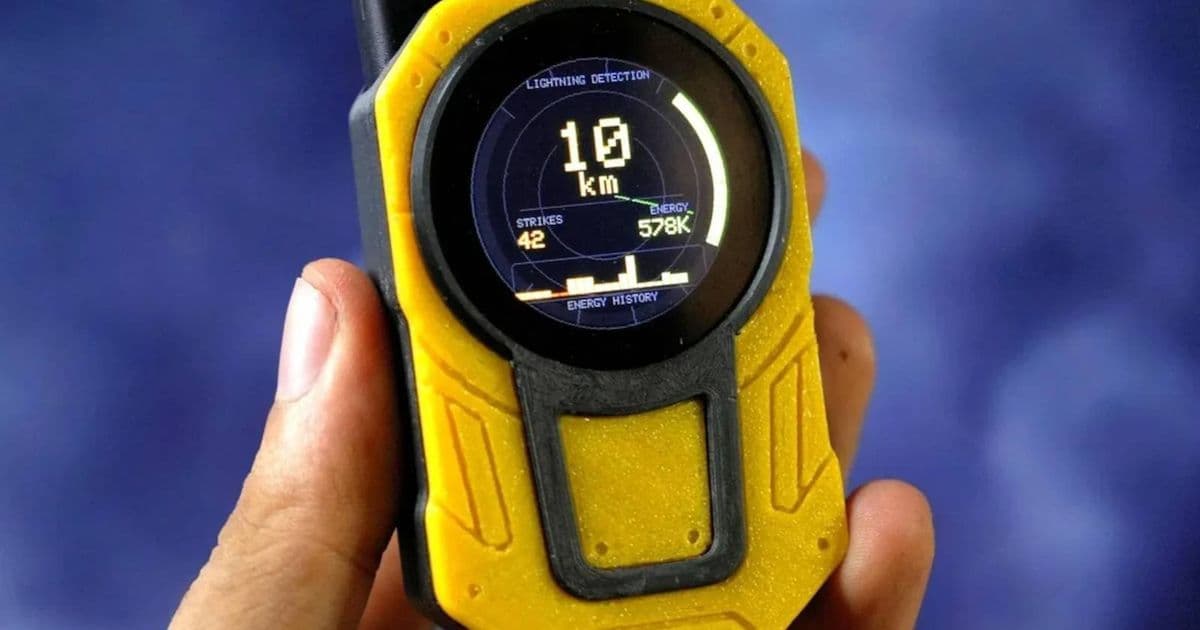
The Flash Bee combines an AS3935 lightning sensor with an ESP32-C3 to create a portable device that detects lightning strikes within 25 miles with impressive accuracy.
The ESP32 Flash Bee is a fascinating DIY electronics project that transforms a handful of components into a portable lightning detection device. Created by Reddit user Choice_Border_8904 and shared on the ESP32 subreddit, this palm-sized gadget can detect lightning strikes within a 25-mile radius with a margin of error of approximately half a mile.
How the Flash Bee Works
The magic behind the Flash Bee lies in its clever use of the AS3935 lightning sensor chip. When lightning strikes, it generates electromagnetic waves, particularly in the low-frequency range around 500 kHz. The AS3935 uses a small inductor (essentially an antenna coil) to capture these electromagnetic signals from the air.
Once the sensor detects these signals, it analyzes their strength to estimate the distance to the lightning strike. The chip can differentiate between actual lightning and other sources of electromagnetic interference, making it surprisingly accurate for a consumer-grade sensor. This processed information is then sent to the XIAO ESP32-C3 microcontroller, which handles the display and user interface.
The Build
The Flash Bee's hardware consists of several key components:
- AS3935 Lightning Sensor: The core detection component that senses electromagnetic pulses
- XIAO ESP32-C3: A compact microcontroller that processes the sensor data and manages the display
- XIAO Round Display: Shows lightning strike information in a user-friendly format
- 3D-Printed Enclosure: A sleek, portable shell that houses all the electronics
The entire project is open-source, with complete instructions available on Instructables. The guide includes detailed wiring diagrams, code examples, and 3D printing files for the enclosure. There's also an instructional YouTube video that walks through the assembly process step by step.
Why Build Your Own?
While commercial lightning detectors exist, building your own Flash Bee offers several advantages:
- Educational Value: Learn about electromagnetic sensing, signal processing, and embedded systems
- Customization: Modify the code and hardware to suit your specific needs
- Cost-Effectiveness: Often cheaper than commercial alternatives
- Portability: The compact design makes it easy to carry anywhere
- No Subscriptions: Unlike some commercial weather services, this is completely free to use
Technical Deep Dive
The AS3935 sensor is particularly interesting because it operates by detecting the specific electromagnetic signature of lightning strikes. Unlike simple static electricity detectors, the AS3935 can distinguish between lightning and other sources of electromagnetic noise like motors, appliances, or even other electronic devices.
The sensor measures the signal strength and uses this to calculate distance. It can detect lightning at various distances:
- Storm Warning: 25-40 km (15-25 miles)
- Lightning Detected: 10-25 km (6-15 miles)
- Nearby Lightning: 3-10 km (2-6 miles)
- Very Close: <3 km (<2 miles)
This graduated detection system allows users to gauge the severity and proximity of approaching storms.
Getting Started
If you're interested in building your own Flash Bee, you'll need:
- AS3935 Lightning Sensor Module
- XIAO ESP32-C3 Development Board
- XIAO Round Display (or compatible display)
- 3D Printer (or access to one)
- Basic Electronics Tools: Soldering iron, wire, etc.
- MicroUSB Cable for Programming
The complete build guide on Instructables provides step-by-step instructions, including code that you can upload to the ESP32. The project is suitable for intermediate electronics enthusiasts who have some experience with microcontrollers and soldering.
Applications
Beyond being a cool gadget, the Flash Bee has practical applications:
- Outdoor Activities: Hikers, campers, and boaters can monitor storm activity
- Agriculture: Farmers can protect livestock and equipment
- Construction Sites: Monitor weather conditions for worker safety
- Education: Teach students about electromagnetic phenomena and weather patterns
- Weather Enthusiasts: Add to a personal weather station setup
The Flash Bee represents the best of the DIY electronics movement: combining accessible components, open-source design, and practical functionality into something genuinely useful. Whether you're a weather enthusiast, a tinkerer, or just someone who wants to understand more about how lightning detection works, this project offers an engaging way to explore the intersection of electronics and meteorology.
For those interested in similar ESP32 projects, the ESP32 ecosystem continues to grow with innovative applications ranging from home automation to environmental monitoring. The Flash Bee stands out as a particularly creative use of the platform's capabilities.
Comments
Please log in or register to join the discussion