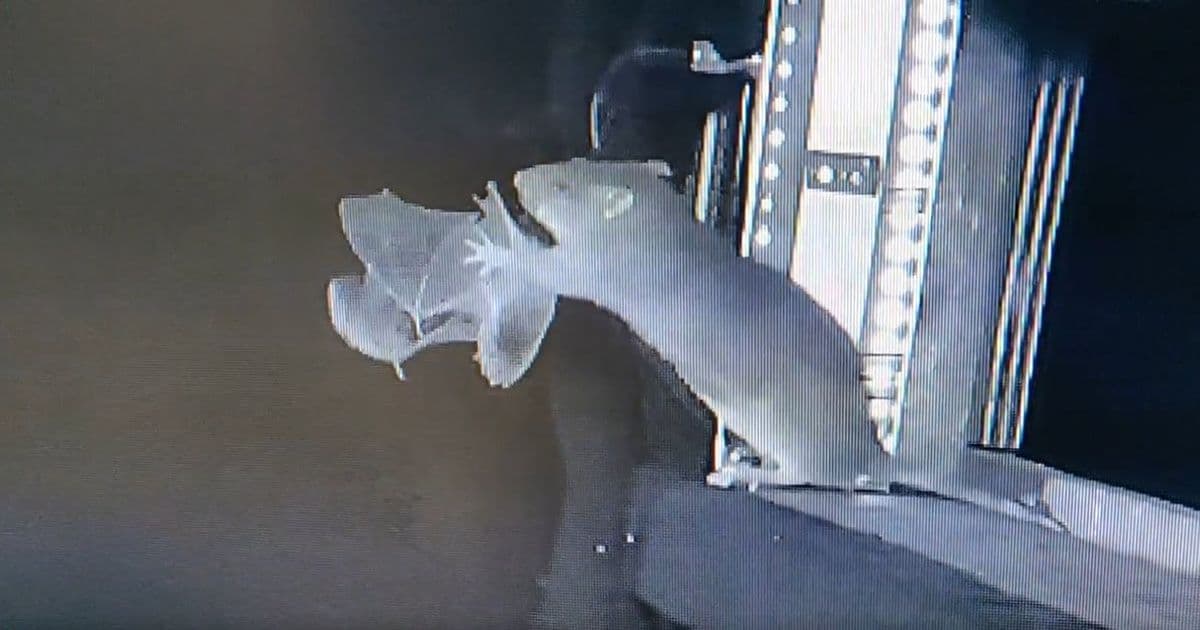
Infrared cameras in a German cave captured brown rats leaping from ledges to snatch bats from mid-flight, revealing an unexpected hunting adaptation in a common urban scavenger.
A limestone cave in northern Germany has yielded a behavioral observation that challenges our assumptions about one of the most familiar urban animals. Researchers filming at the Segeberg Kalkberg cave system captured brown rats (Rattus norvegicus) leaping from cave ledges to intercept flying bats in mid-air—a hunting strategy never before documented in rodents.
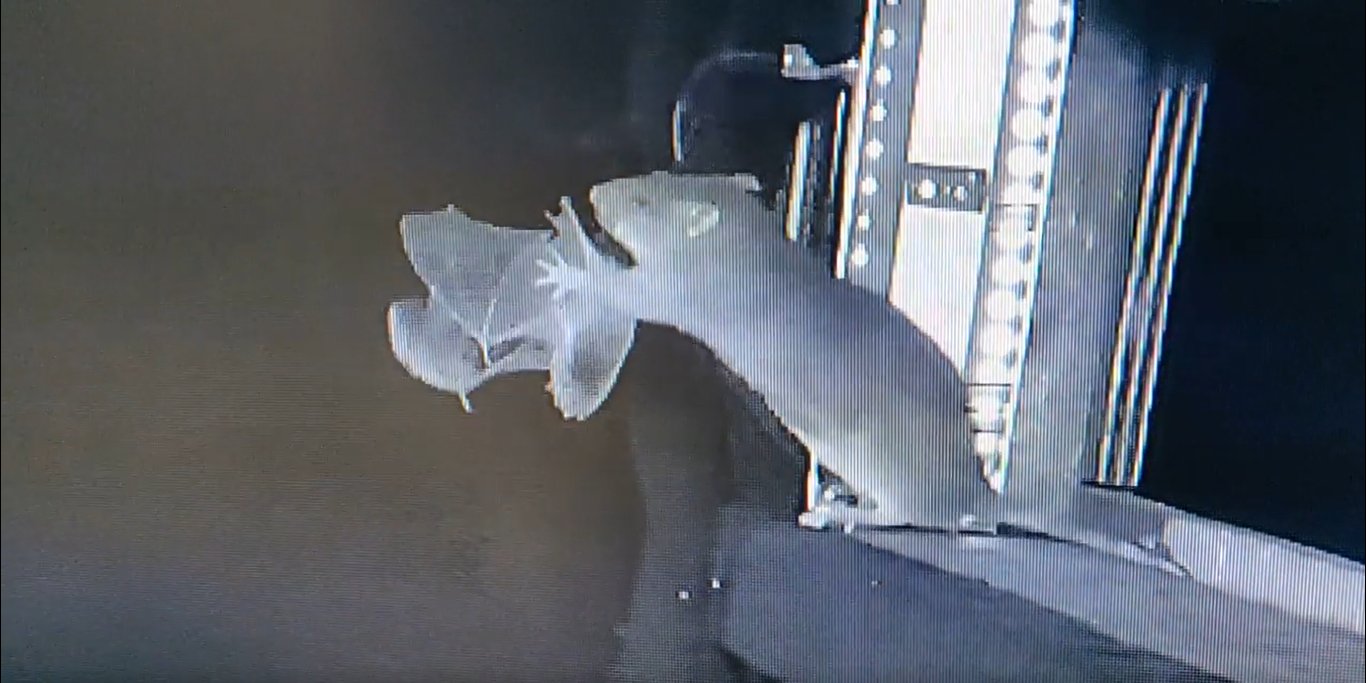
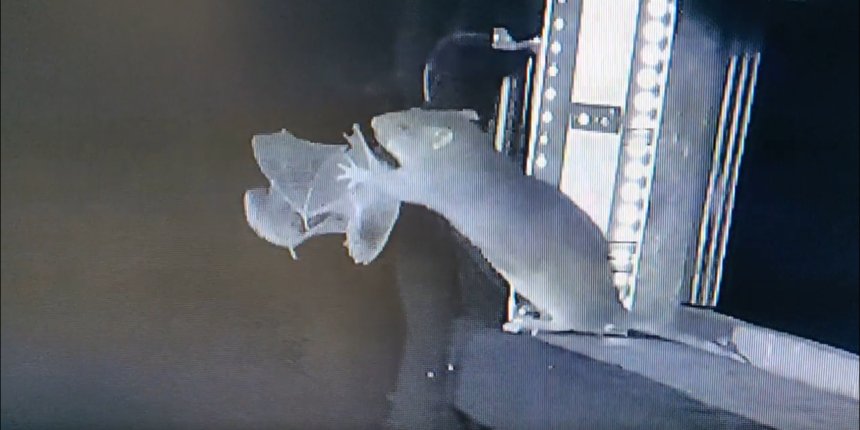
The footage, published in Global Ecology and Conservation by Florian Gloza-Rausch and colleagues, shows rats balancing on their hind legs at cave entrances, apparently sensing wing movements in near-total darkness before springing upward to seize bats from the air. The behavior was recorded using infrared video over five weeks in autumn 2020 and thermal cameras from 2021 to 2024.
The Evidence
The researchers confirmed 13 successful kills during their monitoring period and discovered a hidden cache containing 52 bat carcasses. This cache, combined with the deliberate hunting behavior observed, indicates the rats were not merely scavenging but actively hunting. The kill rate suggests that even a small group of rats could reduce the local bat population by approximately 7% in a single season.
The Segeberg Kalkberg cave hosts around 30,000 hibernating bats each winter, creating a dense stream of targets that appears to have enabled this behavioral innovation. The cave's narrow geometry and the predictable flow of bats emerging or entering likely provided the perfect ambush zone for a patient predator to develop a new technique.
Two Hunting Strategies
The study documents two distinct hunting approaches:
- Aerial interception: Rats position themselves at cave entrances and leap to catch bats in flight
- Ground attacks: Rats attack bats that are crawling on the cave floor to reach roosts
Brown rats are omnivorous scavengers typically known for raiding refuse and preying on slow-moving or immobile targets. This represents a significant departure from their usual behavior and demonstrates remarkable behavioral plasticity.
Sensory Adaptations
How rats locate bats in near-darkness remains partially unclear. The researchers hypothesize that the rats rely primarily on auditory cues and vibrissal (whisker) sensing rather than vision. The sound of bat wings and the air movement they create may provide sufficient information for a rat to time its leap accurately.
This sensory adaptation is particularly impressive given that bats are highly maneuverable fliers. Intercepting a bat requires precise timing and spatial awareness—capabilities not typically associated with brown rats.
Conservation Implications
European bat populations already face multiple threats, including habitat loss, wind turbine collisions, and white-nose syndrome. The emergence of rats as active predators adds another stressor to these vulnerable populations.
Brown rats are invasive throughout much of Europe and have access to many major hibernation sites. The authors suggest that managing rat populations near large roosts should be considered a conservation priority. Traditional pest control methods may need to be adapted for cave environments where bats congregate.
Broader Ecological Context
This discovery exemplifies how behavioral adaptations can emerge rapidly when environmental conditions create new opportunities. The dense bat populations and cave structure at Segeberg provided a unique learning environment where rats could develop and refine a novel hunting technique.
Similar behavioral innovations have been observed in other urban-adapted species. Crows have learned to use traffic to crack nuts, and urban foxes have developed new foraging strategies. However, the rat-bat predation represents something different: a fundamental shift from scavenging to active pursuit hunting.

Challenging Assumptions
The observation forces us to reconsider the cognitive and physical capabilities of brown rats. These animals are often dismissed as simple scavengers, yet the footage shows deliberate, calculated hunting behavior that requires sensory integration, timing, and motor control.
The study also highlights how much we still don't know about common species. Even in an age of ubiquitous surveillance cameras and widespread scientific observation, animals can still surprise us with behaviors that were previously undocumented.
Research Methods
The team used infrared-sensitive cameras that could record in near-total darkness, essential for capturing nocturnal bat activity. Thermal imaging deployed in later years provided additional confirmation and allowed monitoring during winter months when bats are hibernating but still active enough to be targeted.
The multi-year monitoring approach was crucial because rat hunting behavior appears to be seasonal, likely peaking when bat populations are densest during migration and hibernation periods.
Future Research Directions
Several questions remain open:
- How widespread is this behavior across other rat populations?
- Do individual rats specialize in bat hunting, or is it a general population behavior?
- What learning mechanisms enable rats to develop this technique?
- Are there genetic components to this behavioral plasticity?
The researchers suggest that similar behavior might occur at other major hibernacula across Europe, but has simply never been documented. The combination of infrared monitoring and long-term observation may be necessary to detect these fleeting hunting events.
Urban Wildlife Adaptation
This finding fits into a broader pattern of urban wildlife adapting to human-modified environments. Brown rats thrive in cities because they exploit human waste and infrastructure. The cave hunting behavior represents an extension of this adaptability—using natural structures (caves) and biological resources (bats) that happen to be near human settlements.
The study serves as a reminder that evolution and behavioral adaptation don't only occur in remote ecosystems. They happen in our basements, alleys, and the caves beneath our cities, often in ways we never thought to look for.
Source: Gloza-Rausch, F., et al. (2025). "Active predation by brown rats (Rattus norvegicus) on bats at urban mass hibernacula in Northern Germany: Conservation and one health implications." Global Ecology and Conservation. DOI: 10.1016/j.gecco.2025.e03894. Licensed under CC BY 4.0.
Related Research: Brain-Wamp How Prior Knowledge Guides Mouse Decisions
Comments
Please log in or register to join the discussion