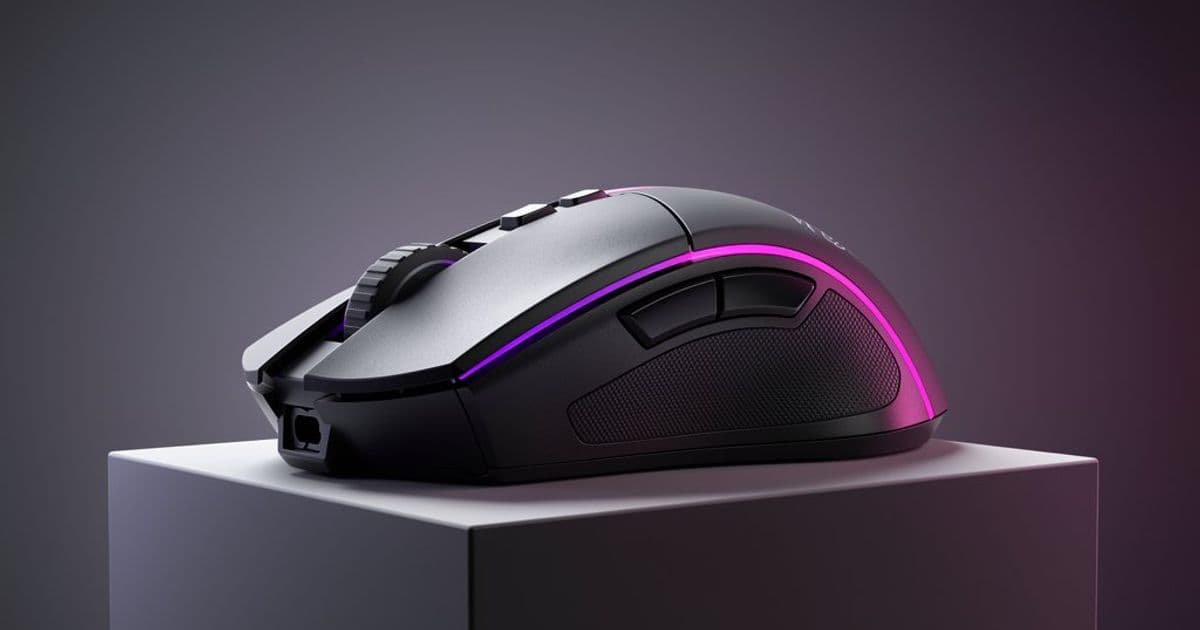
Razer's flagship wireless gaming mouse, the Viper V3 Pro, has hit its lowest price on Amazon at $109.99, a 31% discount from its $159.99 MSRP. This deal highlights the ongoing tension in the gaming peripheral market between cutting-edge performance metrics like 8,000 Hz polling rates and practical considerations such as battery life and cost.
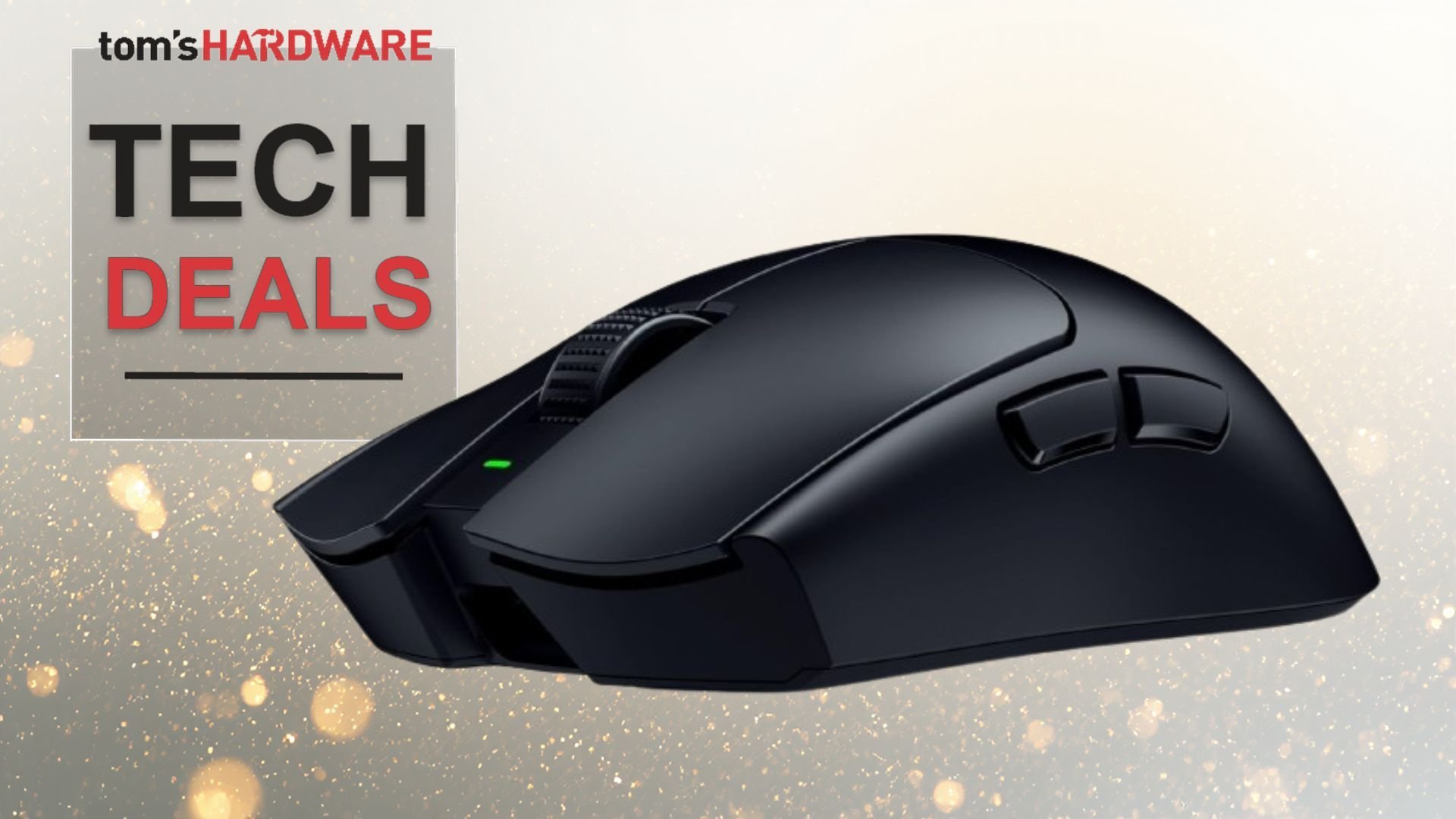
The Razer Viper V3 Pro wireless gaming mouse is now available at its lowest-ever price on Amazon, dropping to $109.99 from its original $159.99 MSRP. This 31% discount brings a high-performance peripheral into a more accessible price bracket, but it also serves as a case study in the trade-offs inherent in modern gaming hardware.
Technical Specifications and Performance Metrics
The Viper V3 Pro is built around Razer's Focus Pro 35K optical sensor (Gen-2), which provides a maximum sensitivity of 35,000 DPI, a tracking speed of 750 inches per second (IPS), and the ability to handle up to 70G of acceleration. These figures position it at the top end of the consumer market, targeting competitive FPS players who require extreme precision and responsiveness.
The mouse's standout feature is its wireless polling rate capability. When paired with Razer's proprietary HyperPolling Wireless Dongle, it can achieve an 8,000 Hz polling rate. This means the mouse reports its position to the computer 8,000 times per second, compared to the standard 1,000 Hz found in most gaming mice. In theory, this reduces input latency to approximately 0.125 milliseconds, down from 1 millisecond at 1,000 Hz.
However, this performance comes with significant caveats. The 8K polling rate is exclusive to the wireless 2.4GHz connection via the included dongle. When using the wired USB-C connection, the polling rate is capped at 1,000 Hz. This creates an unusual scenario where the wireless connection offers superior technical specifications to the wired one—a reversal of traditional performance hierarchies.
Power Management and Practical Considerations
The pursuit of ultra-high polling rates has a direct impact on battery life. At 8,000 Hz, the Viper V3 Pro's battery drains significantly faster than at lower polling rates. Razer's specifications indicate that with 8K polling enabled, users can expect approximately 40 hours of continuous use, compared to over 100 hours at 1,000 Hz. This necessitates more frequent charging cycles, which may disrupt extended gaming sessions.
The mouse itself weighs 54 grams (1.9 ounces), placing it in the ultra-light category favored by many professional FPS players. This weight is achieved through a honeycomb shell design and minimal internal components, though the battery capacity is a limiting factor in how light the device can be while maintaining reasonable battery life.
Market Context and Competitive Landscape
The price drop to $109.99 reflects broader trends in the gaming peripheral market. High-end wireless gaming mice have seen increasing competition from brands like Logitech, Glorious, and Lamzu, all offering lightweight designs with competitive sensors. The $100-150 price segment has become particularly crowded, forcing manufacturers to either innovate on features or adjust pricing strategies.
Razer's decision to include the HyperPolling Dongle with the Viper V3 Pro is noteworthy. Many manufacturers sell high-polling-rate dongles as separate accessories, adding $30-50 to the total cost. By bundling it, Razer reduces the barrier to experiencing the full capability of the mouse, though the practical benefits remain debated within the gaming community.
The 8K Polling Rate Debate
The effectiveness of 8,000 Hz polling is a subject of ongoing discussion among hardware analysts and competitive gamers. While the mathematical reduction in latency is clear, the human perceptual threshold for such improvements is debated. Most players cannot consciously detect the difference between 1,000 Hz and 8,000 Hz polling in real-world gameplay, though some professional players report a subjective "feel" of increased smoothness and responsiveness.
The real-world benefit may be more pronounced in specific scenarios: high-DPI settings where micro-adjustments are critical, or in games with extremely fast camera movements. However, the increased CPU load from processing 8,000 reports per second can impact system performance, particularly on lower-end processors. This creates a system-level trade-off that extends beyond the mouse itself.

Supply Chain and Manufacturing Context
The Viper V3 Pro's pricing and availability reflect the current state of semiconductor supply chains. The Focus Pro 35K sensor is a custom ASIC designed by Razer, manufactured on a mature process node (likely 28nm or similar) to balance performance with cost. The wireless dongle uses a proprietary RF chip that must be produced in sufficient quantities to meet demand while maintaining competitive pricing.
The mouse's construction uses standard lithium-polymer batteries, which have seen price fluctuations due to raw material costs. The lightweight design requires careful component selection to maintain structural integrity while minimizing weight—a challenge that impacts both manufacturing complexity and final cost.
Value Proposition at $109.99
At the discounted price, the Viper V3 Pro presents a compelling value proposition for specific user segments:
Competitive FPS Players: Those who prioritize sensor accuracy and low latency will find the 35K DPI sensor and 8K polling rate valuable, especially if they already have a high-refresh-rate monitor (240Hz or higher) where reduced input lag can be more noticeable.
Wireless Gaming Enthusiasts: The combination of lightweight design, high polling rate, and wireless freedom addresses the core demands of modern gaming setups, where cable management and desk space are considerations.
Peripheral Collectors/Upgraders: For users upgrading from older wireless mice (typically 1,000 Hz polling), the difference in responsiveness may be more tangible, particularly when moving from wired to wireless gaming.
However, for casual gamers or those with limited budgets, the benefits may not justify the cost, even at a discount. A standard 1,000 Hz wireless gaming mouse at $50-70 often provides 90% of the performance for 50% of the cost.
Long-term Considerations
The Viper V3 Pro's architecture represents a specific design philosophy: maximizing performance metrics while accepting trade-offs in battery life and cost. This approach mirrors trends in other hardware categories, where peak specifications are marketed heavily, but practical usability requires user adaptation.
The mouse's firmware and software ecosystem also play crucial roles. Razer Synapse software allows extensive customization of DPI stages, button mapping, and polling rates. The ability to toggle between 8K and 1K polling through software provides flexibility, though it requires users to actively manage settings based on their current needs.
Conclusion
The Razer Viper V3 Pro's price drop to $109.99 makes it an attractive option for gamers seeking cutting-edge wireless performance. However, the decision to purchase should be based on a clear understanding of the trade-offs involved: superior wireless polling rates come at the cost of battery life, and the mouse's full potential requires a compatible system and willingness to manage power settings.
For those who value the absolute lowest latency and are willing to accept the associated compromises, this deal represents a significant saving on a top-tier peripheral. For others, a more conventional wireless mouse may offer better overall value. The market's response to this pricing strategy will likely influence future product development and pricing across the gaming peripheral industry.
Comments
Please log in or register to join the discussion