
The ReactOS project marks three decades of development, with over 88,000 commits from 300+ developers. While still a work in progress, its roadmap includes modern features like WDDM GPU drivers and ASLR, highlighting the immense complexity of replicating Windows' architecture.
The ReactOS project has reached a significant milestone: 30 years since its first code commit. This open-source initiative, which aims to be a binary-compatible, drop-in replacement for Windows, has accumulated over 88,000 commits from more than 300 developers throughout its history. The project's longevity underscores the monumental challenge of reverse-engineering and reimplementing one of the world's most complex proprietary operating systems.
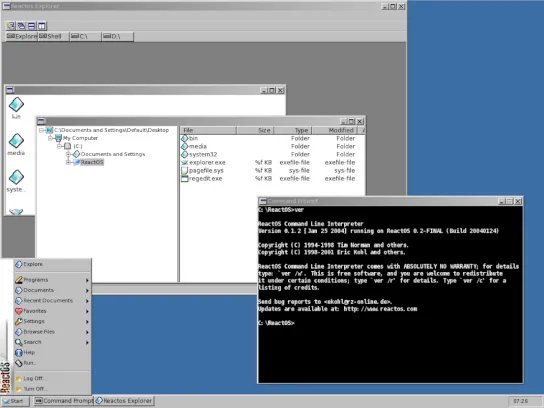
A 30-Year Journey of Reverse Engineering
ReactOS began in 1998 with a singular goal: to create an operating system that could run Windows applications and drivers without requiring a Windows license. The project's foundation is built on the Windows NT architecture, the same kernel that powers modern Windows versions. Achieving binary compatibility means ReactOS must replicate not just the user interface but the intricate internal APIs, system calls, and driver models that Windows uses.
The project's progress has been methodical but slow, a reflection of the sheer scale of the task. Each component—from the kernel and hardware abstraction layer (HAL) to the Win32 subsystem—requires meticulous implementation. The development team has had to navigate undocumented APIs, proprietary file systems, and complex hardware interactions, all while ensuring stability and security.
The Future Roadmap: Modernization and Compatibility
In its 30th-anniversary blog post, ReactOS outlined several key development areas that represent a significant push toward modernity and usability. These initiatives are not just incremental improvements but foundational changes needed to keep pace with contemporary computing demands.
1. New RosBE Build Environment: The ReactOS Build Environment (RosBE) is being overhauled to streamline development. A modern, efficient build system is crucial for attracting new contributors and accelerating iteration cycles. This toolchain update aims to reduce the barrier to entry for developers looking to contribute to the project.
2. NTFS File-System Driver: While ReactOS has historically relied on its own file system drivers, a robust NTFS driver is essential for true Windows compatibility. NTFS is the default file system for modern Windows, supporting features like journaling, encryption, and access control lists. A reliable NTFS driver would allow ReactOS to read and write Windows partitions seamlessly, a critical step for dual-boot scenarios or system migration.
3. ATA Storage Driver: An updated ATA driver improves compatibility with a wider range of storage hardware, particularly older systems and specific configurations. This ensures ReactOS can boot and operate on diverse hardware, a key requirement for an operating system intended for real-world use.
4. SMP (Symmetric Multi-Processing) Support: ReactOS is working on adding full symmetric multi-processing support, which is necessary for leveraging modern multi-core CPUs. Without SMP, the operating system cannot efficiently distribute tasks across multiple processor cores, severely limiting performance on contemporary hardware. This feature is a prerequisite for any serious desktop or server use.
5. Class 3 UEFI Systems: Support for UEFI (Unified Extensible Firmware Interface) Class 3 systems is another modernization effort. UEFI has largely replaced the legacy BIOS, and Class 3 specifically refers to systems that do not include a Compatibility Support Module (CSM) for legacy BIOS booting. ReactOS must adapt to boot natively on these modern firmware interfaces, which is a complex task involving new bootloaders and firmware interaction protocols.
6. Address Space Layout Randomization (ASLR): Implementing ASLR for both the kernel and user-space is a critical security enhancement. ASLR randomizes the memory locations of program components, making it harder for attackers to exploit memory corruption vulnerabilities. While Windows has had ASLR for years, integrating it into ReactOS requires deep changes to the memory management subsystem and executable formats.
7. Modern GPU Drivers on WDDM Model: Perhaps the most ambitious item on the list is the development of modern GPU drivers built on Microsoft's Windows Display Driver Model (WDDM). WDDM is the driver architecture used by Windows Vista and later, providing features like GPU virtualization, advanced memory management, and DirectX support. Creating a WDDM-compatible driver stack is a massive undertaking, as it involves reverse-engineering proprietary hardware interfaces and complex graphics pipelines. Success here would enable ReactOS to support modern graphics acceleration, a necessity for any contemporary desktop experience.
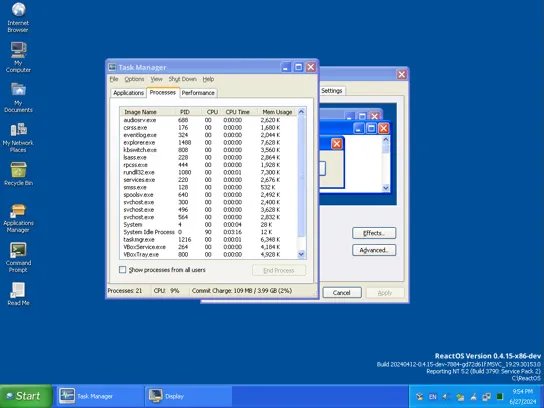
The Scale of the Challenge
Despite these advancements, ReactOS remains far from a production-ready desktop replacement. The project's own blog post acknowledges that "they still got a lot of work to go in really being a usable platform." This honesty reflects the reality that even after three decades, the gap between ReactOS and Windows is substantial. The Windows ecosystem is a moving target, with each new version introducing changes to APIs, security models, and hardware support.
Comparisons to other projects like GNU Hurd are telling. Hurd, the GNU project's microkernel-based operating system, has also been in development for decades with limited adoption. Both projects highlight the immense difficulty of building a general-purpose OS from scratch, especially one targeting compatibility with a dominant, proprietary platform.
The Value of the Project
While ReactOS may not yet be a daily driver for most users, its value extends beyond its current usability. It serves as a critical educational resource for understanding operating system internals. Developers and students can study its code to learn about Windows architecture, driver development, and system programming. Additionally, ReactOS provides a fallback for users in environments where Windows licensing is prohibitive or where open-source principles are paramount.
The project's progress also demonstrates the power of collaborative open-source development. With over 300 contributors, ReactOS is a testament to what dedicated volunteers can achieve over time, even when tackling a problem of this magnitude.
For those interested in following the project's journey or contributing, the ReactOS official website and its blog offer detailed updates and resources. The 30th-anniversary post provides a comprehensive look at both the past and future of this ambitious project.
As ReactOS enters its fourth decade, the focus remains on incremental progress. Each new driver, each supported API, and each security feature brings the project closer to its ultimate goal. The road ahead is long, but the commitment of its community ensures that the work will continue.
Comments
Please log in or register to join the discussion