A 15-year-old modder has successfully emulated Windows 95, Minecraft, and classic consoles inside Hytale just days after its launch, showcasing the game's surprising flexibility for creative programming projects.
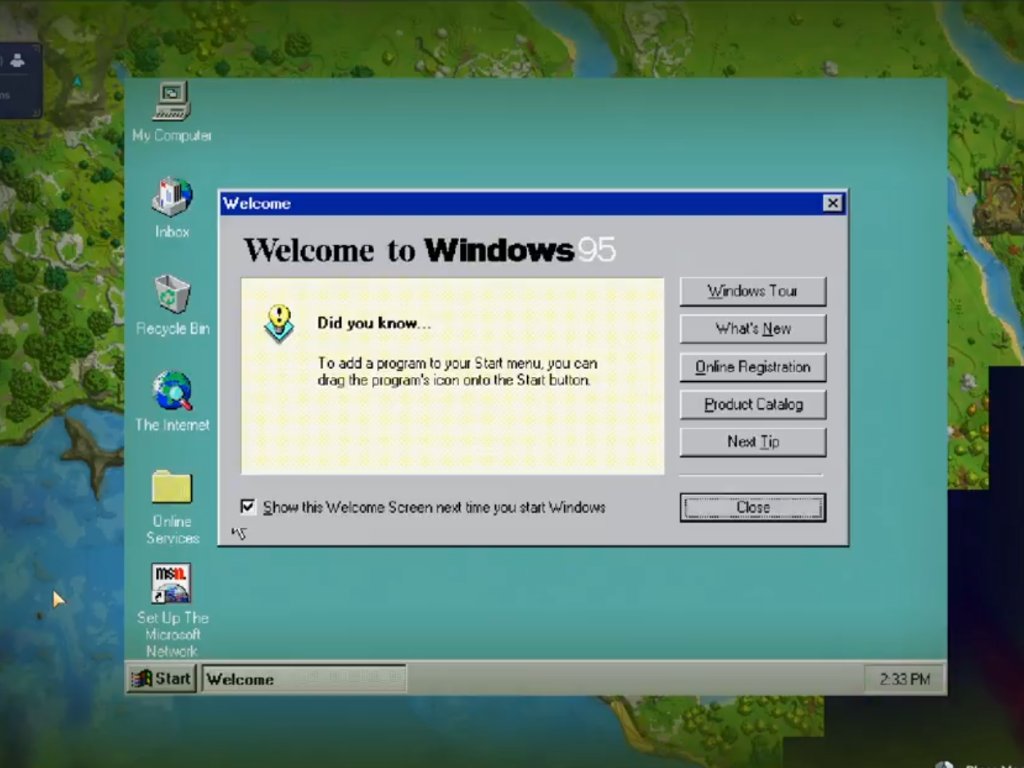
Just five days after Hytale's official launch on January 13, 2026, a 15-year-old modder known as iamcxv7 (real name Sadat Sahib) has accomplished what many thought impossible: running a full Windows 95 operating system inside the game. This isn't just a simple overlay or visual trick—the modder has created a functional emulator that runs entirely within Hytale's engine, demonstrating the game's unexpected potential as a platform for software experimentation.
What's New: A Teenager's Technical Marvel
Sahib, who describes himself as a multidisciplinary engineer, shared a video through the HytaleModding X account showing Windows 95 booting and running smoothly inside Hytale. The implementation uses software rendering running on the server side, meaning the emulation doesn't rely on GPU acceleration or OpenGL calls. Instead, Sahib wrote a custom software renderer from scratch that computes each pixel frame-by-frame and streams the output through Hytale's world map system.
The mod isn't limited to Windows 95. Sahib has also managed to run Minecraft Classic 0.30 inside Hytale, achieving a stable 35 FPS at 320x420p resolution using pure CPU-based 3D rendering. He's even tackled the classic "Can it run Doom?" challenge, successfully emulating the iconic game within Hytale's environment.
Perhaps most impressively for retro gaming enthusiasts, Sahib has emulated both the Game Boy and Game Boy Color consoles, turning Hytale into a multi-platform emulator that spans from 1990s PC operating systems to handheld gaming devices.
How It Compares: Traditional Emulation vs. In-Engine Implementation
What makes Sahib's work remarkable is that he's not using traditional emulation methods that rely on external software or hardware acceleration. Most emulators require significant computational resources and often struggle with compatibility. Sahib's approach is fundamentally different—he's essentially rebuilding the rendering pipeline within Hytale's own systems.
The technical explanation he provided reveals the depth of his work: "I'm running Minecraft Classic 0.30 entirely on the server with a custom software renderer I wrote from scratch. No GPU, no OpenGL calls—just pure CPU-based 3D rendering. Every frame, I compute the pixels myself and stream them to players through Hytale's world map system."
This method has significant trade-offs. The interaction can feel clunky—Sahib used a controller instead of mouse and keyboard input for Windows 95, likely due to input mapping limitations. The performance, while functional, isn't optimized for modern gaming standards. However, the achievement lies in the fact that it works at all, and works well enough to be recognizable and functional.
For comparison, traditional emulators like DOSBox or RetroArch are highly optimized, often using GPU acceleration and specialized code to achieve near-perfect performance. Sahib's in-engine approach is more of a proof-of-concept, demonstrating flexibility rather than aiming for practical daily use.
Who It's For: Modders, Developers, and Curious Minds
This type of modification appeals to several groups within the gaming community:
Modders and Creators: Sahib's work showcases Hytale's scripting and rendering capabilities. The game, developed by Hypixel Studios as a spiritual successor to Minecraft, appears to offer robust tools for custom content creation. For developers interested in game modding or procedural generation, Hytale presents an interesting case study.
Retro Computing Enthusiasts: The ability to run vintage software inside a modern game creates unique nostalgia experiences. While not practical for actual work, it's a fascinating way to interact with computing history.
Educational Context: For students learning about emulation, operating systems, or computer graphics, Sahib's project provides a tangible example of how software rendering works. His approach of computing pixels manually and streaming them through a game's world map system illustrates fundamental concepts in computer graphics.
Hytale Players: The modding community's rapid innovation suggests Hytale will have a vibrant ecosystem of custom content. Players interested in unique experiences—not just traditional gameplay—will find value in these experimental projects.
Technical Implications and Future Potential
Hypixel Studios co-founder Philippe Touchette acknowledged the achievement, stating: "Hytale modder ran Windows 95 in-game, just 5 days after launch, what the hell is going on lol." This reaction from the game's creators highlights how unexpected and impressive the modding community's capabilities are.
The technical implications extend beyond Hytale itself. Sahib's work demonstrates that modern game engines, when designed with sufficient flexibility, can become platforms for entirely different types of software. This aligns with broader trends in gaming where engines like Unity and Unreal are increasingly used for non-gaming applications, from architectural visualization to film production.
However, there are limitations. The server-side rendering approach means performance depends heavily on CPU power, and the input lag can be noticeable. For practical emulation, traditional methods remain superior. But as a demonstration of what's possible with creative programming and game engine flexibility, it's an impressive feat.
The Bigger Picture: Hytale's Modding Ecosystem
Hytale's early success with modders like Sahib suggests the game may develop a strong creative community. The game's tools appear to offer enough depth for complex projects while remaining accessible enough for a 15-year-old to achieve significant results within days of launch.
For those interested in exploring Hytale's modding capabilities, the Hytale website provides information about the game's features and development. The modding community is already active on platforms like X (formerly Twitter), where creators share their work and technical insights.
Sahib's projects represent just the beginning of what's likely to emerge as Hytale's modding ecosystem matures. As more creators experiment with the game's tools, we can expect to see increasingly sophisticated custom content, from new game modes to entirely different software implementations.
The rapid pace of innovation—achieving functional emulation just days after launch—suggests that Hytale may become a significant platform for creative programming projects, much like how Minecraft's modding community spawned countless innovations and even influenced professional game development.
For now, Sahib's work stands as a testament to what's possible when a game provides powerful, flexible tools and a community of curious, talented creators is ready to push boundaries.
Comments
Please log in or register to join the discussion