MIT researchers discover that hitchhiking bacteria dissolve marine snow's calcium carbonate ballast, potentially slowing the ocean's ability to sequester atmospheric carbon.
In the vast, dark depths of the ocean, a gentle "snowfall" occurs daily—not of ice crystals, but of organic detritus slowly drifting downward from the sunlit surface. This "marine snow," composed of dead plankton, fecal pellets, and other organic debris, serves as the ocean's primary mechanism for pulling carbon dioxide from the atmosphere and locking it away in the deep sea for centuries. However, new research from MIT reveals that this crucial carbon sequestration process may be significantly compromised by an unexpected culprit: bacteria.
The Ocean's Biological Pump Under Threat
The ocean acts as Earth's largest carbon sink, absorbing roughly 30% of human-produced carbon dioxide emissions. At the heart of this process is marine snow, which transports carbon from the surface to the deep ocean. As phytoplankton at the ocean's surface convert atmospheric CO2 into organic matter and calcium carbonate (the same material found in shells and coral), their remains form particles that sink through the water column. When these particles reach the deep ocean—typically below 1,000 meters—the carbon they carry can be buried in seafloor sediments for millennia.
But what if this downward journey is being interrupted?
The Bacterial Hitchhiker Problem
Researchers at MIT and their collaborators have discovered that bacteria hitching rides on marine snow particles may be dissolving the very material that allows these particles to sink. Their study, published in the Proceedings of the National Academy of Sciences, shows that bacteria consume the organic components of marine snow and excrete acidic waste products that dissolve the particles' calcium carbonate ballast.
"What we've shown is that carbon may not sink as deep or as fast as one may expect," explains Andrew Babbin, associate professor in MIT's Department of Earth, Atmospheric and Planetary Sciences. "As humanity tries to design our way out of the problem of having so much CO2 in the atmosphere, we have to take into account these natural microbial mechanisms and feedbacks."
A Microscale Process with Macroscale Consequences
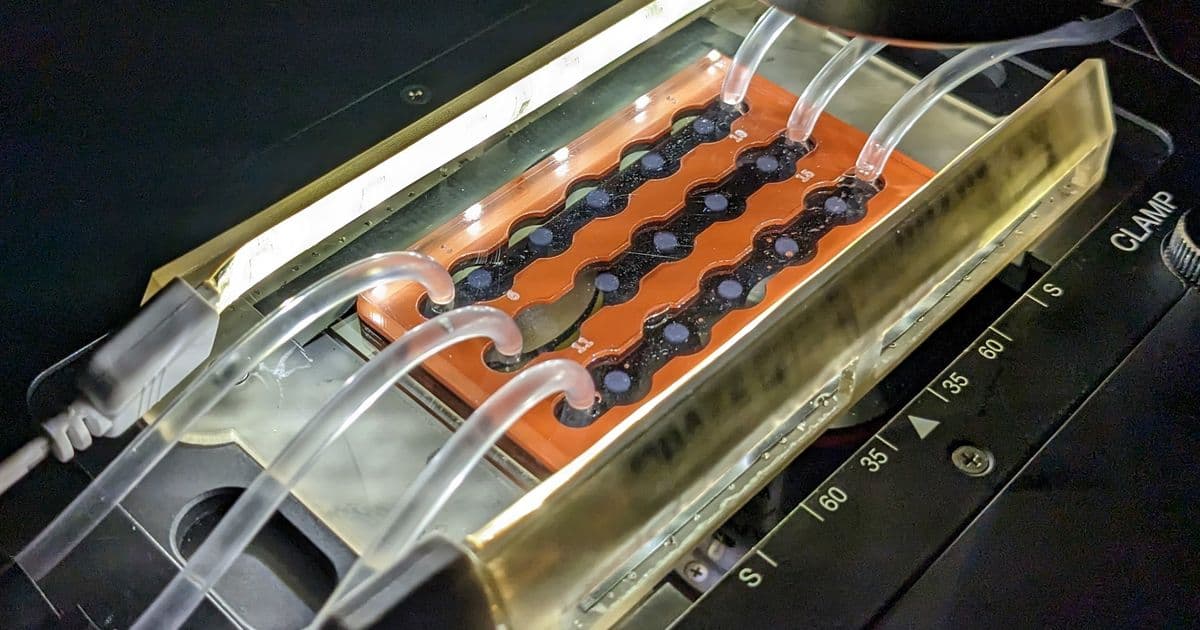
The discovery emerged from experiments using a microfluidic system that simulated sinking marine snow particles in controlled conditions. The team created synthetic particles containing varying concentrations of calcium carbonate and bacteria, then flowed seawater around them at different speeds to mimic various sinking rates in the ocean.
Their findings revealed a surprising "sweet spot" for dissolution: particles sinking at intermediate speeds experienced the most calcium carbonate loss. At very slow speeds, bacteria become oxygen-starved and less active. At very fast speeds, waste products are flushed away before they can dissolve the calcium carbonate. But at moderate speeds, bacteria are sufficiently oxygenated and can accumulate enough acidic waste to efficiently dissolve the mineral ballast.
Challenging Long-Held Assumptions
This research fundamentally challenges previous understanding of ocean chemistry. Scientists had assumed that calcium carbonate should remain stable in the ocean's upper layers based on temperature and pH conditions alone. The observation of dissolved calcium carbonate in shallow waters had been a mystery—until now.
"Most oceanographers think about the macroscale, and in this instance what's happening in microscopic particles is what is actually controlling bulk seawater chemistry," says Benedict Borer, the study's primary author and now an assistant professor at Rutgers University.
Implications for Climate Solutions
The findings have profound implications for proposed climate interventions that aim to enhance the ocean's biological pump. Many geoengineering proposals involve fertilizing the ocean to increase phytoplankton growth, thereby increasing marine snow production and carbon sequestration. However, if bacteria are simultaneously working to dissolve this carbon-carrying material, such interventions may be less effective than anticipated.
"Insights from this work are vital to predict how ecosystems will respond to marine carbon dioxide removal attempts, and overall how the oceans will change in response to future climate scenarios," Borer notes.
The Scale of the Challenge
Marine snow is responsible for drawing down billions of tons of carbon annually, making it one of Earth's most important carbon sequestration mechanisms. The calcium carbonate within these particles provides the dense ballast necessary for rapid sinking—without it, particles may linger in the upper ocean where carbon is more likely to be released back to the atmosphere.
The research suggests that bacteria, ubiquitous throughout the ocean but particularly abundant in shallower regions, may be creating a natural feedback mechanism that limits the ocean's carbon storage capacity. This microbial activity could explain why oceanographers have observed dissolved calcium carbonate in regions where thermodynamic models predicted it should remain stable.
Looking Forward
As humanity grapples with the urgent need to reduce atmospheric carbon dioxide levels, understanding these natural processes becomes increasingly critical. The study underscores the complexity of Earth's carbon cycle and the importance of considering microbial processes when designing climate solutions.
The research was supported by the Simons Foundation, the National Science Foundation, and the Climate Project at MIT, highlighting the interdisciplinary nature of this work that bridges microbiology, oceanography, and climate science.
While marine snow will continue to play a vital role in Earth's carbon cycle, this research suggests that nature's carbon sequestration system may be more fragile than previously understood—and that bacteria, those tiny hitchhikers on falling particles of marine snow, may be quietly working against one of our planet's most important climate regulation mechanisms.
Comments
Please log in or register to join the discussion