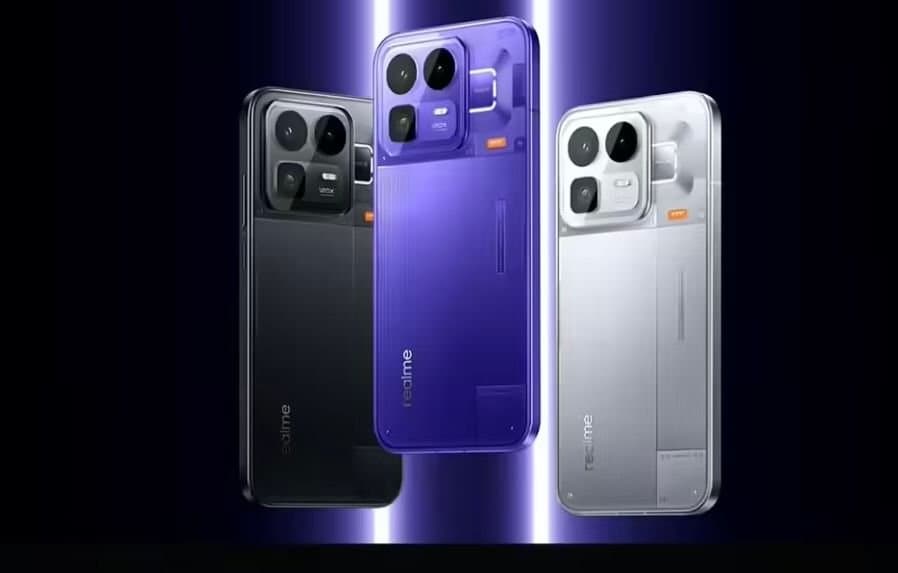
realme's Neo8 smartphone launches with a Snapdragon 8 Gen5 processor, a 165Hz Samsung display, and an 8,000mAh battery, starting at $348. We examine the specs, benchmark claims, and what this means for the mid-range market.
realme has officially launched the Neo8, a smartphone that positions itself in the competitive mid-range segment with a flagship processor at its core. Starting at $348 for the 12GB+256GB model, the device is powered by the Qualcomm Snapdragon 8 Gen5 chipset, a processor that typically powers more expensive flagship phones. The launch, announced on January 22, 2026, comes with a promotional sale period running through January 28.
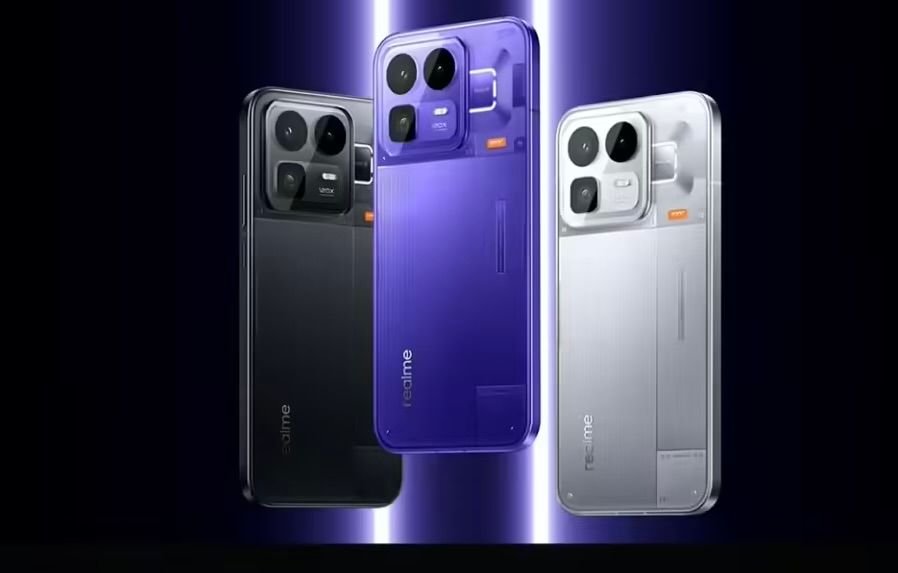
The pricing structure is straightforward, scaling with memory and storage:
- 12GB + 256GB: $348
- 16GB + 256GB: $391
- 12GB + 512GB: $419
- 16GB + 512GB: $463
- 16GB + 1TB: $536
What's Claimed: The Spec Sheet
The Neo8's marketing focuses heavily on performance and display technology. The Snapdragon 8 Gen5 is claimed to achieve over 3.58 million points in AnTuTu, a popular benchmark suite. This score would place it near the top of the current performance charts if accurate. The chip is paired with UFS 4.1 storage and LPDDR5X RAM, which are the fastest available standards for mobile devices, ensuring the hardware can keep up with the processor.
The display is a 165Hz Samsung "Sky Screen" using what realme calls M14 flagship luminous material. It boasts a peak brightness of 6,500 nits and a 3,800Hz instantaneous touch sampling rate. The high brightness figure is notable, as it suggests excellent outdoor visibility, though it's important to note that sustained brightness is typically much lower than peak brightness. The 165Hz refresh rate is higher than the standard 120Hz found on most phones, and the 3,800Hz touch sampling rate aims to reduce input lag for gaming.
For cooling, realme has implemented an "airflow cooling system" and a "GT Performance Engine" that claims to enable 165Hz gameplay on over 30 native titles. Furthermore, the company is introducing a "PC handheld mode," which it says can run over 50 PC games. This suggests a form of game streaming or emulation, but the specifics of how this works are not detailed in the initial announcement.
Battery life is addressed with an 8,000mAh battery, a capacity well above the industry average. The device supports "all-scenario bypass charging," which typically means the phone can draw power directly from the charger for intensive tasks like gaming, reducing battery wear and heat generation. It also claims compatibility with multiple fast-charging protocols.
The camera system includes an IMX896 main sensor and a 50MP periscope telephoto lens, both with OIS (Optical Image Stabilization). The IMX896 is a known sensor, but its performance will depend heavily on realme's image processing software. The inclusion of a periscope telephoto lens at this price point is a significant differentiator, as it usually appears in more expensive phones.
What's Actually New: Context and Reality
While the Snapdragon 8 Gen5 is the headline feature, its presence in a $348 phone is the real story. This represents a rapid trickle-down of flagship silicon into the mid-range market. For context, last year's flagship phones using the Snapdragon 8 Gen 3 often started at $600 or more. The Neo8's price suggests Qualcomm is producing the Gen5 in volume, and realme is leveraging its supply chain to undercut competitors.
However, a benchmark score alone doesn't define real-world performance. The AnTuTu figure of 3.58 million is a composite score. The CPU, GPU, and memory performance all contribute. Without seeing sustained performance under load, it's hard to judge if the cooling system is adequate. High-performance processors can throttle quickly if thermal management is poor, especially in a thin phone body.
The display specifications are impressive on paper. A 165Hz refresh rate is smooth, but it also consumes more power. The 3,800Hz touch sampling rate is an instantaneous measurement, not a sustained one, and its real-world impact on gaming responsiveness is debatable. The 6,500 nit peak brightness is likely for HDR content only; typical full-screen brightness for daily use will be much lower.
The "PC handheld mode" is the most intriguing but also the most ambiguous feature. Running 50+ PC games on a smartphone could refer to cloud gaming services like NVIDIA GeForce Now or Xbox Cloud Gaming, which stream games from remote servers. Alternatively, it could involve local emulation or streaming from a local PC. The lack of detail here means we need to wait for hands-on reviews to understand its utility and latency.
The 8,000mAh battery is a major selling point for users prioritizing longevity. Combined with a high-efficiency processor like the Snapdragon 8 Gen5, the Neo8 could offer exceptional battery life. The bypass charging feature is a practical addition for gamers, as it prevents the battery from heating up during long sessions.
The camera hardware is promising, but the IMX896 sensor is not the latest flagship sensor from Sony. It's a capable sensor, but the final image quality will depend on realme's software tuning. The periscope telephoto lens is a welcome addition, but its optical zoom range and low-light performance are unknown.
Limitations and Considerations
Several key questions remain unanswered. The software experience is crucial; realme UI 7.0 is based on Android, but its update policy and bloatware levels will affect long-term usability. The device's build quality, while described as having a metal frame and glass back, needs to be tested for durability. The IP69 rating is for high-pressure, high-temperature water jets, which is more stringent than the common IP68 rating for submersion.
The Snapdragon 8 Gen5's power efficiency is also unknown. A powerful chip paired with a large battery is good, but if the chip is inefficient, it could still lead to shorter battery life than expected. The cooling system's effectiveness under sustained load, such as 30 minutes of gaming, will be a critical test.
For potential buyers, the Neo8 presents a compelling value proposition on paper. It brings near-flagship performance, a high-refresh-rate display, and a large battery to a sub-$400 price point. However, the marketing claims around the PC mode and the real-world performance of the cooling system require verification through independent reviews.
In summary, the realme Neo8 is a bold attempt to democratize high-end smartphone features. Its success will depend not just on its spec sheet, but on how well realme has executed the integration of these components into a cohesive, reliable device. The promotional pricing during its first sale week will likely be the deciding factor for many consumers.
For more information, you can visit the official realme website or check the product page for detailed specifications and availability in your region.
Comments
Please log in or register to join the discussion