
Dutch developers create open-source Mail Transfer Agent with Kubernetes architecture to provide EU-hosted email delivery alternative.

European organizations increasingly seek alternatives to US-based cloud services, particularly for fundamental infrastructure like email delivery. Remails, a new Mail Transfer Agent (MTA) developed by Dutch engineers, addresses this gap by offering a fully European-hosted solution for transactional emails like password resets and order confirmations.
Unlike marketing email platforms, Remails specializes in high-reliability delivery for essential system communications. The service operates as both an open-source project on GitHub and a managed platform at remails.net, currently supporting up to 3,000 monthly emails on its free tier.
From Simple Beginnings to Kubernetes
The development journey began with a minimalist approach: a single binary running alongside PostgreSQL in a Docker container on a European VPS. This proof-of-concept efficiently handled SMTP protocols and basic database operations.
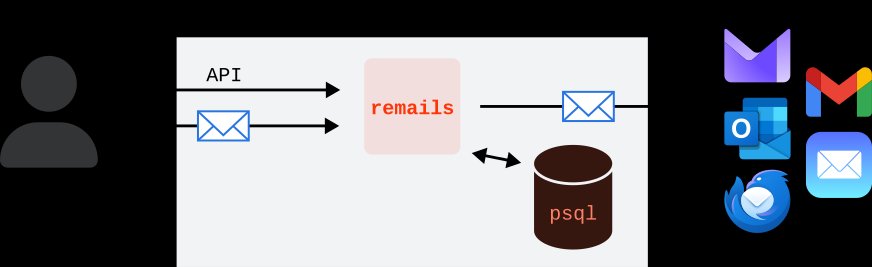
Simple VPS deployment during initial development
As requirements grew for high availability, the team migrated to Kubernetes. The first production architecture featured:
- Managed PostgreSQL database
- Separate deployments for web API and SMTP components
- Load-balanced traffic distribution
- Periodic task pods for email retries
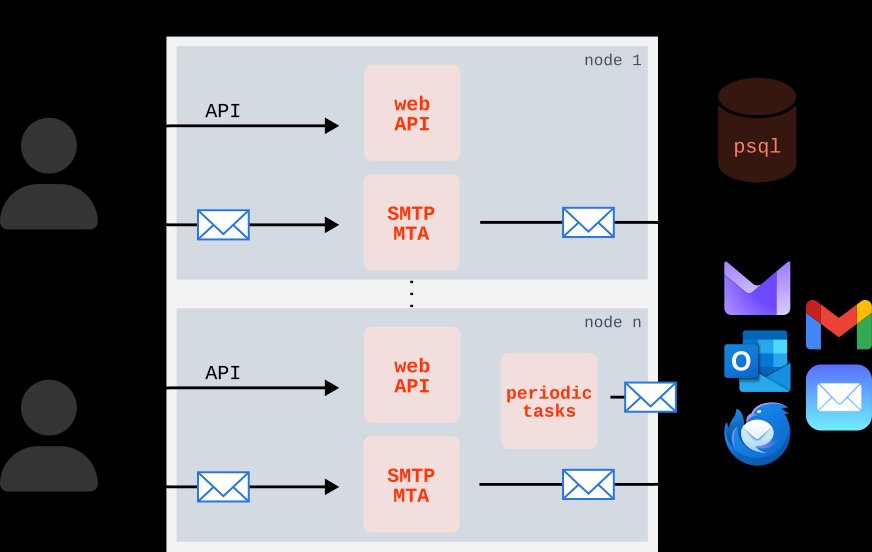
Initial Kubernetes architecture before IP management refinements
This setup ensured service continuity through node redundancy but faced limitations in controlling outbound IP addresses—a critical factor for email deliverability.
Solving the IP Reputation Challenge
Email providers aggressively filter messages based on sender IP reputation. To ensure inbox placement, Remails needed:
- Dedicated IP blocks (BYOIP) instead of shared cloud IPs
- Per-customer IP assignment for reputation isolation
Finnish cloud provider UpCloud fulfilled the BYOIP requirement. The technical solution required architectural changes:
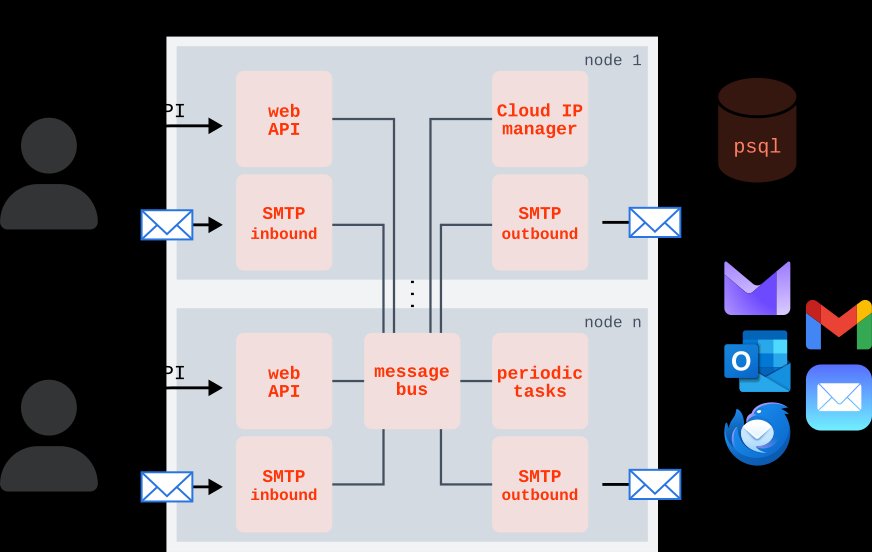
Refined Kubernetes architecture enabling IP control
Key innovations include:
- DaemonSets for SMTP outbound: Runs one pod per node with host-network access, enabling direct IP selection
- Cloud IP Manager: Dynamically assigns IP blocks to nodes via cloud API
- Lightweight message bus: Coordinates sending instructions between components
The message bus operates on a best-effort delivery model without guaranteed delivery. Resilience comes from the database acting as source of truth—failed notifications trigger retries via periodic tasks, ensuring eventual delivery despite temporary bus failures.
Trade-offs and Future Development
The architecture prioritizes:
- Data availability (managed DB + cross-region backups)
- Inbound email reception (load-balanced redundancy)
- Outbound delivery (with tolerance for minor delays)
Current limitations include focus on transactional emails rather than bulk marketing. The roadmap includes:
- Email notifications for DNS issues
- Configurable data retention periods
- Bounced message handling
- Audit logs for administrators
Remails demonstrates how specialized infrastructure can emerge by combining Kubernetes flexibility with cloud APIs. The public beta offers European organizations an immediate alternative to US-based email services while maintaining open-source transparency for self-hosting scenarios.
Comments
Please log in or register to join the discussion