A new report reveals SpaceX employees in Redmond were exposed to hazardous chemicals during Starlink satellite production, raising questions about workplace safety practices in the commercial space industry.
Report: Workers at Redmond SpaceX lab exposed to toxic chemicals
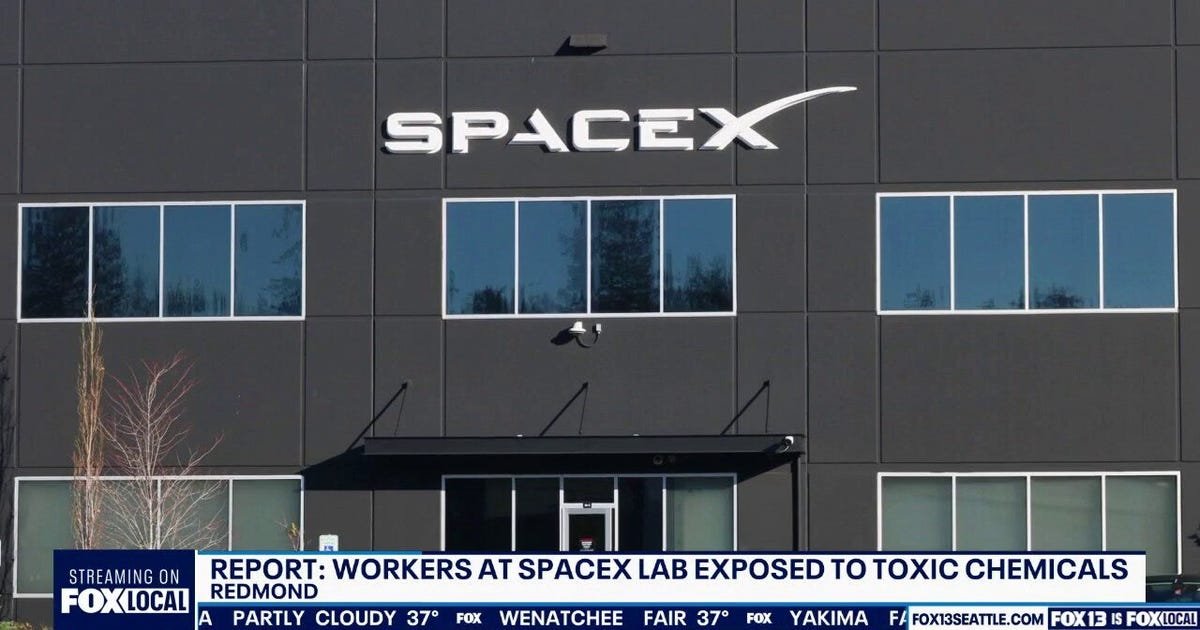
A report from Washington's Department of Labor & Industries has revealed that SpaceX employees at its Redmond facility were exposed to toxic chemicals during Starlink satellite manufacturing operations. The findings point to systemic safety oversights at a facility that represents the company's push into internet-from-space services.
What happened
The investigation found that workers at the Redmond lab were exposed to hazardous materials including fiberglass dust and chemical vapors during satellite assembly processes. According to the report, the facility lacked proper ventilation systems and personal protective equipment protocols that would normally be required for handling such materials. Workers reported respiratory issues and skin irritation, symptoms consistent with prolonged exposure to composite materials and solvents used in aerospace manufacturing.
The Redmond facility serves as a key development site for Starlink, SpaceX's satellite internet constellation. Unlike the company's rocket manufacturing in Hawthorne or engine production in McGregor, this location focuses on the satellite side of the business—building the thousands of user terminals and satellites needed to create a global broadband network.
Why this matters
This incident highlights a growing tension in the commercial space sector: rapid innovation cycles colliding with established workplace safety frameworks. SpaceX's "move fast and break things" ethos, which has served rocket development well, may not translate cleanly to manufacturing environments where workers face daily exposure to industrial chemicals.
The commercial space industry is experiencing explosive growth, with companies like Blue Origin, Rocket Lab, and Relativity Space expanding operations. Yet many of these facilities operate in regulatory gray areas—part tech startup, part heavy manufacturing, and part aerospace. Washington L&I's findings suggest that existing industrial safety regulations may not be adequately tailored to these hybrid environments.
For SpaceX specifically, this represents a potential reputational hit as the company prepares for future public markets or regulatory scrutiny. Starlink is positioned as a critical revenue generator for Mars ambitions, and any disruption to satellite production could ripple through the company's financial planning.
Counter-perspectives and context
SpaceX has pushed back on some findings, noting that the Redmond facility underwent safety audits and that the company has since implemented improved ventilation systems and expanded PPE requirements. The company argues that early satellite production phases involved process refinement where safety protocols evolved alongside manufacturing techniques.
Some industry observers note that aerospace manufacturing has always involved hazardous materials. Traditional defense contractors like Boeing and Lockheed Martin have decades of experience managing these risks, but newer space companies face a learning curve. The question becomes whether this represents a unique incident or a broader pattern across the emerging space industry.
Worker safety advocates point to this case as evidence that OSHA standards need updating for modern space manufacturing. The composite materials and battery technologies used in satellites differ from traditional aircraft manufacturing, requiring new safety baselines.
The bigger picture
This report lands as SpaceX continues aggressive Starlink deployment, with over 4,000 satellites already launched and plans for tens of thousands more. The Redmond facility's production capacity directly impacts how quickly the service can expand globally, particularly in underserved markets.
The incident also raises questions about labor practices in high-profile tech companies that blur lines between Silicon Valley culture and industrial manufacturing. Workers at the intersection of these worlds—software engineers designing satellite systems alongside technicians assembling hardware—may face unexpected workplace hazards that don't fit neatly into existing safety categories.
For the broader space economy, this serves as a cautionary tale. As more companies move from prototype to production, the safety infrastructure needs to scale alongside manufacturing capacity. The industry's rapid growth may require new regulatory frameworks that address the unique risks of space hardware manufacturing.
Washington L&I has not indicated whether fines or additional enforcement actions will follow. The report's findings are likely to influence how other states regulate emerging space manufacturing facilities, particularly as companies like Rocket Lab expand production in Virginia and Relativity Space grows in Mississippi.
The Redmond case ultimately represents a maturation moment for the commercial space sector—acknowledging that innovation speed must balance with worker protection, especially as the industry transitions from engineering experiments to industrial-scale production.
Comments
Please log in or register to join the discussion