
The rise of AI agentic development threatens low-code platforms by inverting their ROI proposition, as Cloud Capital's migration from Retool demonstrates.

The rapid advancement of AI agentic development poses an existential challenge to low-code platforms, fundamentally altering the economic calculus that fueled their growth. While analysts like Forrester project the low-code market to reach $50 billion by 2028, the core value proposition of these tools is being undermined by new development paradigms.

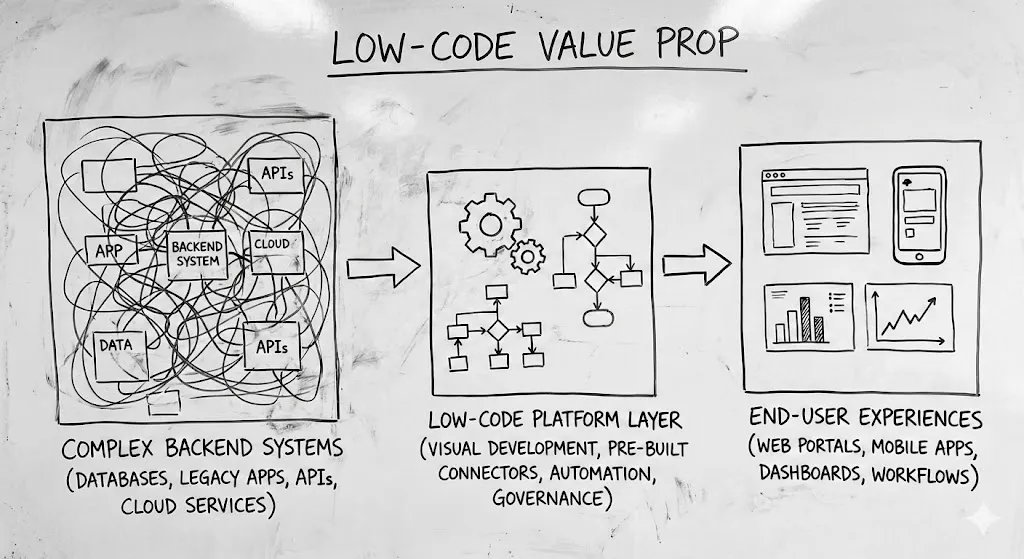
The Original Value Proposition
Low-code platforms emerged to solve a critical bottleneck: enabling non-technical stakeholders to build software without extensive developer resources. By providing visual interfaces and pre-built components, tools like Retool, OutSystems, and Mendix promised to accelerate development while freeing engineers for complex tasks. Companies invested significant resources integrating these platforms with their data systems, authentication protocols, and custom components - costs justified by downstream efficiency gains.
The AI Disruption
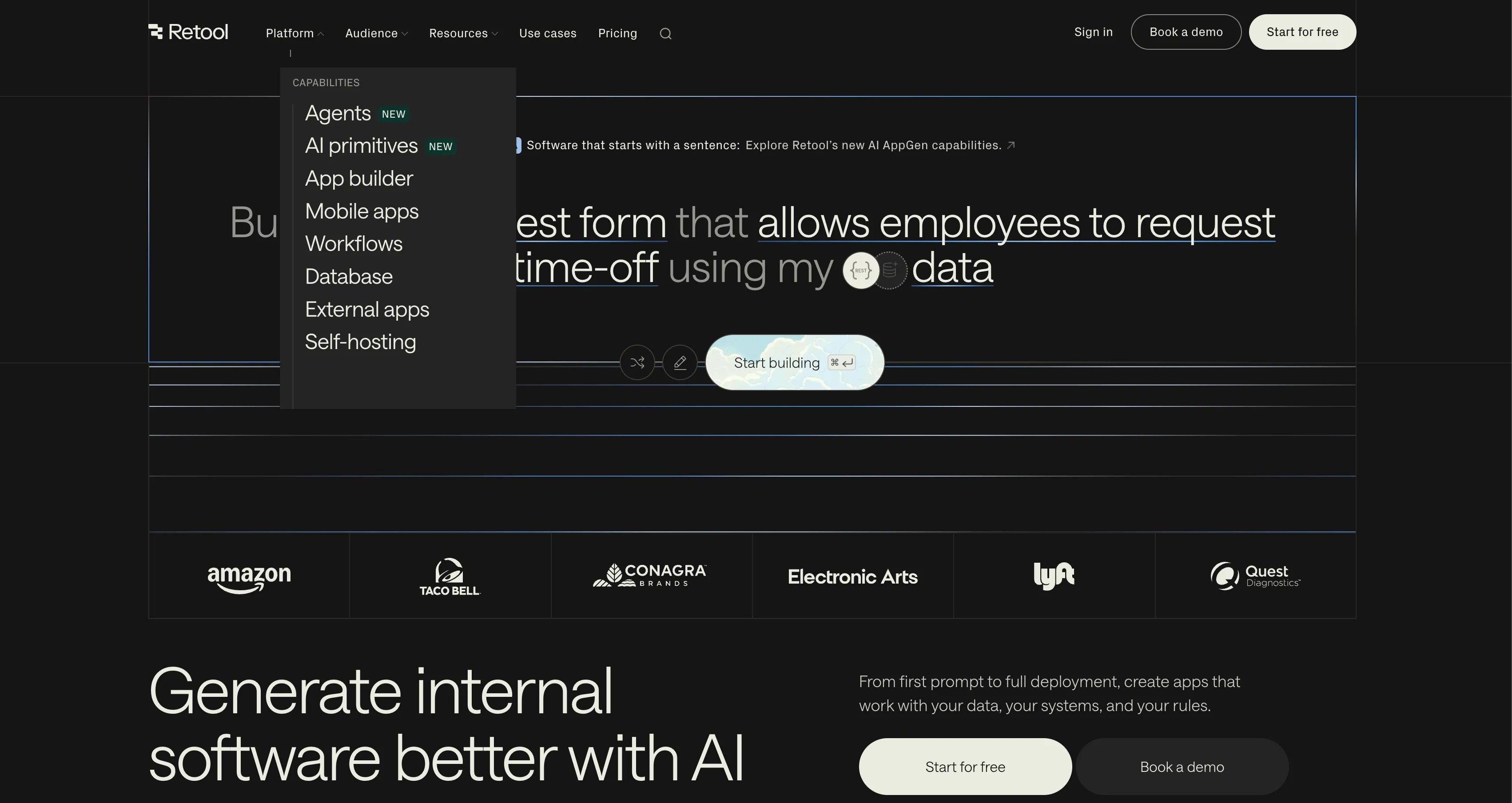
Agentic development tools have inverted this equation. When Cloud Capital prototyped an internal tool using AI-assisted coding instead of their Retool platform, they discovered several advantages:
- Velocity: Building standalone tools became faster than configuring low-code workflows
- Integration: Native code leveraged existing systems without translation layers
- Quality: UI consistency improved without WYSIWYG constraints
- Ownership: Eliminated vendor lock-in and platform maintenance overhead
The shift was decisive: Within months, Cloud Capital migrated all internal tooling from Retool to AI-assisted native development, citing superior developer experience and end-user results.
The New ROI Calculation
Three factors drive the changing economics:
- Near-zero coding costs: AI dramatically reduces time spent on boilerplate and transformations
- Workflow continuity: Developers stay within familiar environments instead of context-switching
- Total cost: Licensing fees and platform maintenance outweigh perceived benefits
Adaptation or Obsolescence?
Incumbent platforms are responding with AI features, but their fundamental architecture faces challenges:
- Agentic limitations: Low-code platforms struggle to accommodate AI agents' dynamic code generation
- Competition: Pure AI coding tools offer more flexibility at lower complexity
- Shifting users: Non-technical stakeholders increasingly use AI directly for complex tasks
As Cloud Capital's experience shows, the transition can happen rapidly in agile organizations. While enterprises with entrenched low-code investments may move slower, the trajectory suggests a significant market contraction by 2025. The question isn't whether low-code platforms will disappear entirely, but how much territory they'll cede to AI-native alternatives that make traditional coding dramatically more accessible.
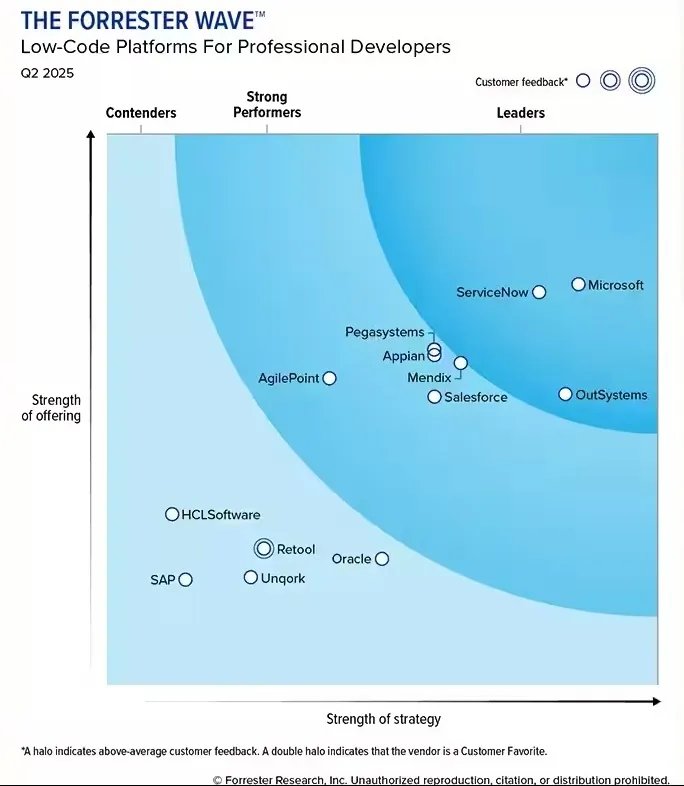
Image: Forrester's low-code market projection faces new uncertainty amid AI disruption
For technical teams evaluating their toolchain, the decision matrix has changed: The build-vs-buy analysis now favors in-house development augmented by AI, delivering both cost savings and velocity gains without sacrificing quality or control.
Comments
Please log in or register to join the discussion