MIT researchers present a voxel‑based robotic assembly system that can reduce the embodied carbon of building construction by up to 82 % while remaining competitive in cost and build time. The approach uses modular inchworm robots to snap together high‑strength lattice blocks made from steel or plywood, offering a reversible and incremental alternative to conventional methods.
Introduction
The construction industry seeks ways to lower its environmental impact without sacrificing speed or affordability. A team from MIT’s Center for Bits and Atoms explored whether discrete lattice subunits, called voxels, could be assembled by robots to meet those goals. Their study evaluated mechanical performance, carbon emissions, and practical considerations for a simple one‑story building.
Voxel design
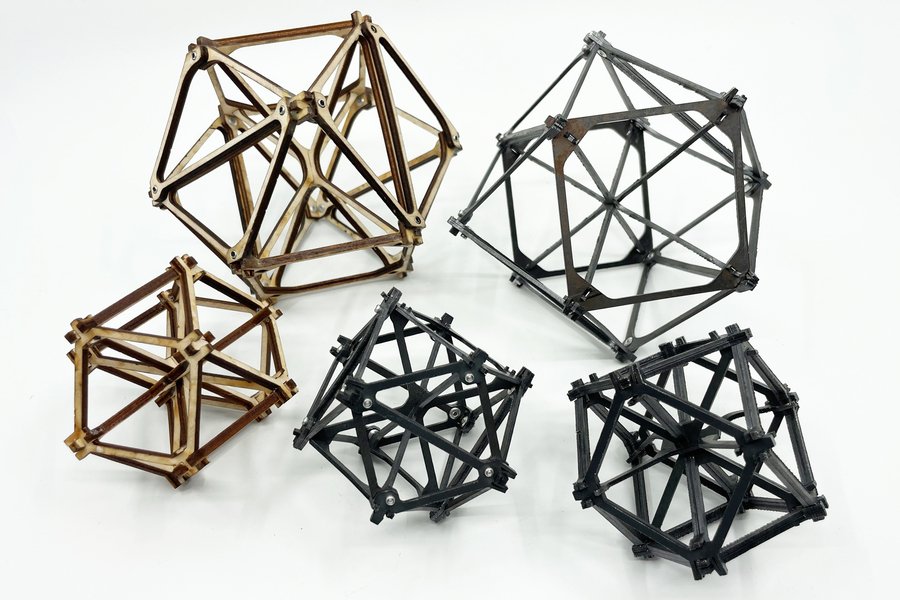
Over several years the lab has produced voxels for aerospace structures such as wings and turbine blades. For building applications the researchers first tested eight existing voxel geometries, including a glass‑reinforced nylon cuboctahedron and a steel Kelvin lattice. Based on those results they created three new designs rooted in a high‑strength octet lattice. The new voxels self‑align when snapped together, which reduces the need for extra fasteners and speeds up assembly.
The team examined three candidate materials: plastic, plywood, and steel. Embodied carbon analyses showed that steel and plywood voxels performed far better than plastic versions. Steel voxels required only 36 % of the carbon emitted by 3D concrete printing and 52 % of that from precast concrete. Plywood voxels dropped the figure to roughly 17 % and 24 % of those benchmarks, respectively.
Robotic assembly system
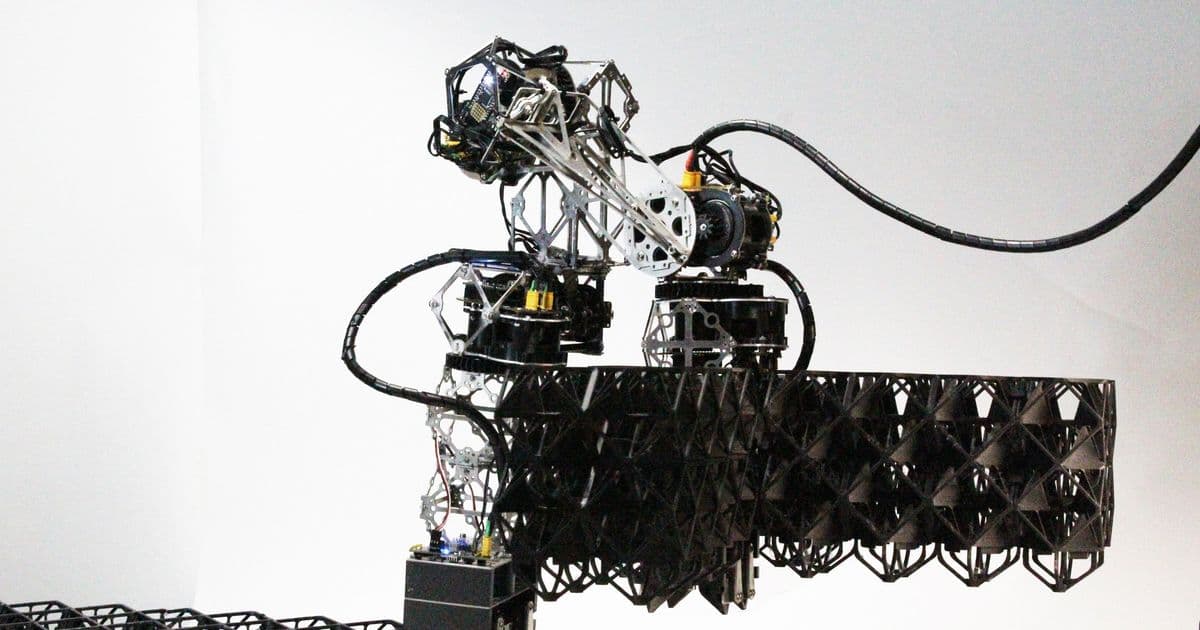
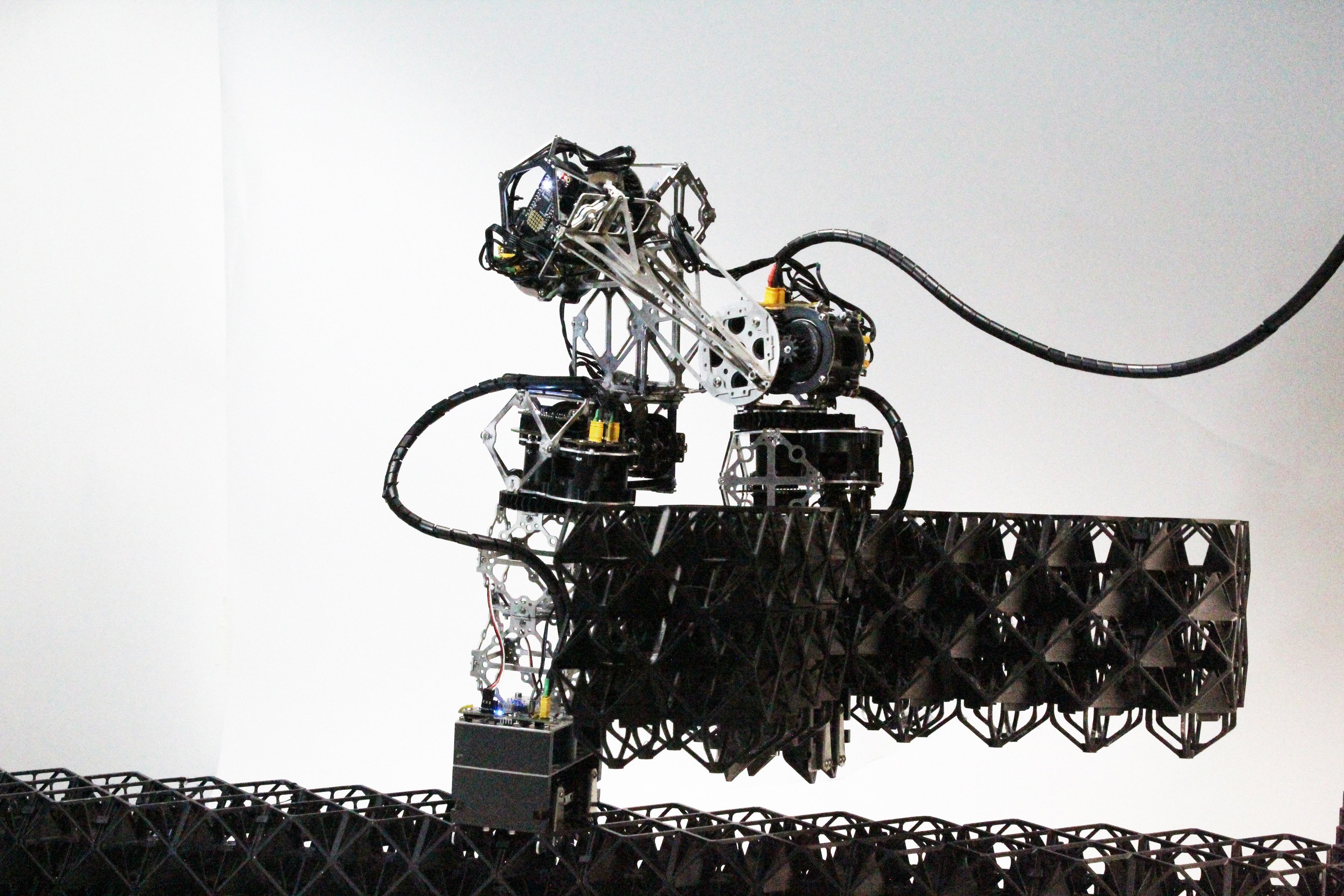
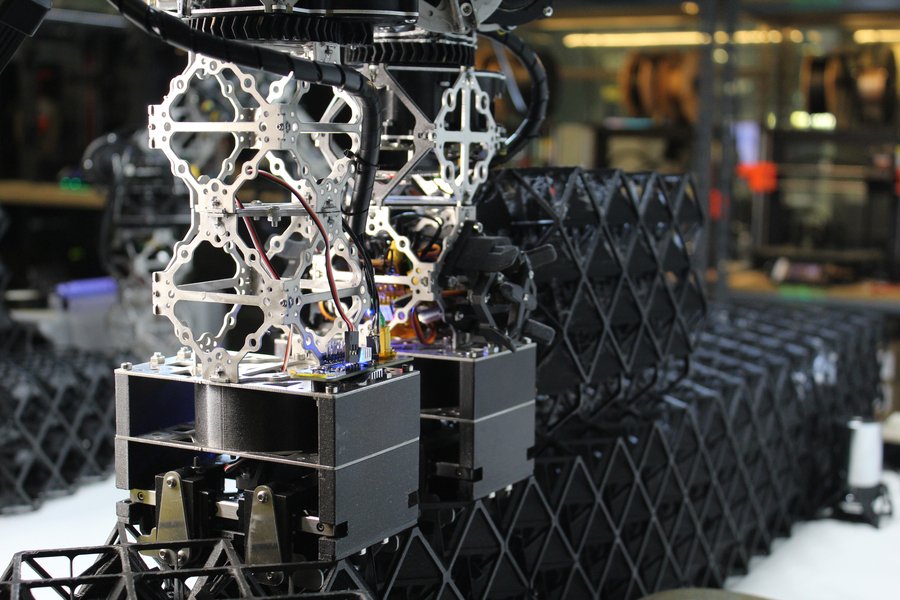
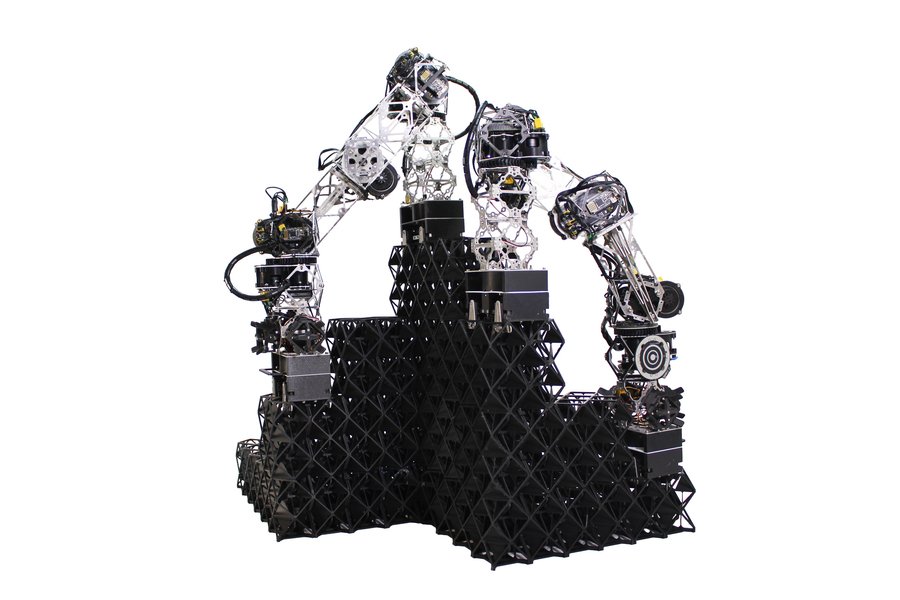
To place the voxels the researchers built Modular Inchworm Lattice Assembler robots, or MILAbots. Each robot has grippers on both ends and moves by anchoring one end, extending its body, then repeating the motion—much like an inchworm. The grippers pick up a voxel, drop it into position, and then press down to engage the snap‑fit connection.
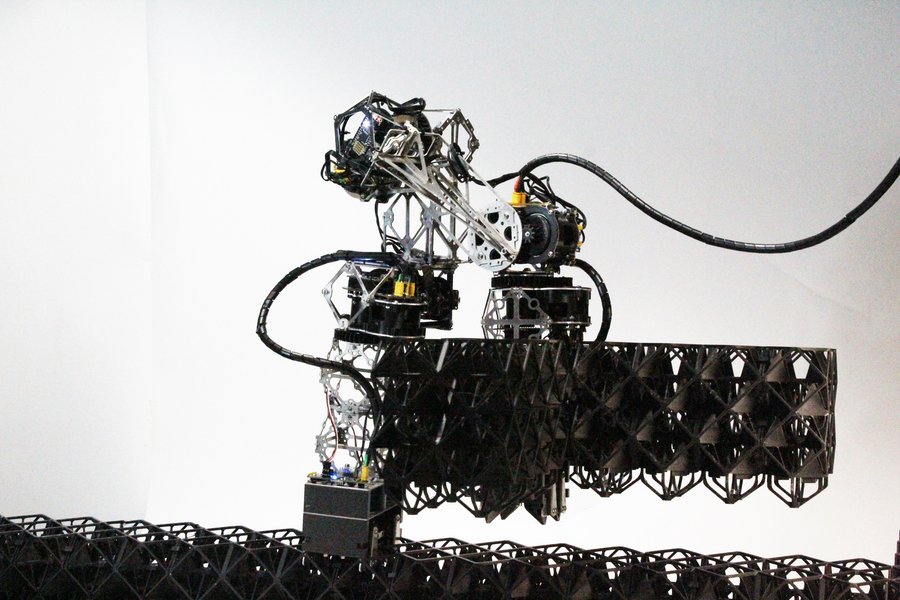
The robots’ legs are shaped to sit securely on the lattice surface, allowing them to walk across a growing structure without slipping.
A user‑friendly interface lets designers input or sketch a voxelized layout. The software computes optimal travel paths for the MILAbots and streams motion commands to the robots. In tests a single robot worked slowly, but a fleet of twenty units operating in parallel matched or exceeded the speed of conventional automated techniques while keeping costs lower.
Environmental and cost benefits
When the team projected the resources needed to erect a simple building using the steel or plywood voxel approach, they found average on‑site assembly times of about 99 hours. Traditional methods such as 3D concrete printing, precast concrete, and steel framing averaged 155 hours for comparable structures.
Carbon calculations revealed that the voxel system could cut embodied carbon by as much as 82 % relative to those standard techniques. The savings stem primarily from the low‑impact materials and the elimination of excess formwork or scaffolding.
Cost estimates placed the voxel method in the same range as existing options, mainly because the robots are relatively simple to produce and the voxel parts can be fabricated with common woodworking or metal‑working tools.
Advantages and flexibility
One notable feature of the voxel approach is its incremental nature. Builders can start with a core structure and add rooms or extensions later by attaching additional voxels. Because the connections are reversible, the same blocks can be disassembled and re‑configured if the building’s purpose changes.
The distributed nature of the robotic fleet also means that failure of a single unit does not halt progress; other robots can continue working while the affected unit is serviced.
Future work
The researchers plan to move from laboratory demonstrations to a larger testbed in Bhutan, where a “super fab lab” established by the Center for Bits and Atoms will replicate the MILAbots for a planned sustainable city. Ongoing investigations will focus on:
- Assessing voxel stability under lateral loads such as wind or seismic forces.
- Refining the design software to incorporate detailed physics of the lattice‑robot interaction.
- Upgrading the MILAbots for greater speed and payload capacity.
- Exploring voxels that integrate sheathing, insulation, or conduits for electrical and plumbing systems.
These steps aim to address remaining questions about long‑term durability, fire resistance, and scalability before the technology can see broader deployment.
Conclusion
The study shows that robotically assembled lattice blocks offer a promising path toward greener, faster, and more adaptable construction. By combining high‑performance voxel designs with simple inchworm‑style robots, the MIT team has demonstrated a system that can significantly lower the carbon footprint of building projects while remaining practical in terms of cost and schedule.
Comments
Please log in or register to join the discussion