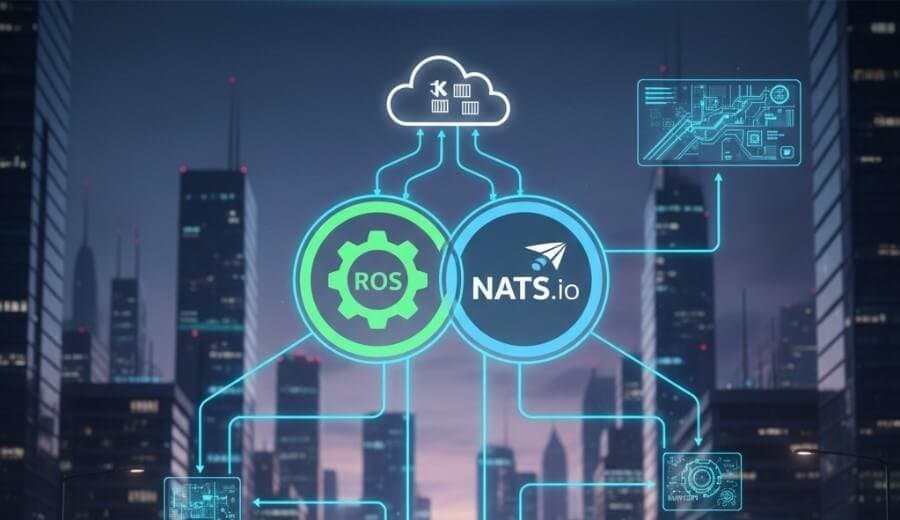
Modern robotics leverages middleware like ROS 2 and NATS to function as distributed systems of microservices, enabling seamless interaction between digital and physical components. This architectural shift allows developers to apply cloud-native principles to robotics, driving innovations in industries from manufacturing to healthcare.
For web developers and cloud architects, robotics has long seemed alien—a realm of humanoid machines and impenetrable low-level code. Yet today's robots are far from monolithic constructs; they embody sophisticated cyber-physical systems (CPS) where computational and physical elements integrate seamlessly through middleware. This convergence is reshaping everything from factory floors to autonomous vehicles, powered by architectures strikingly familiar to software engineers.
The Middleware Revolution: ROS 2 vs. NATS
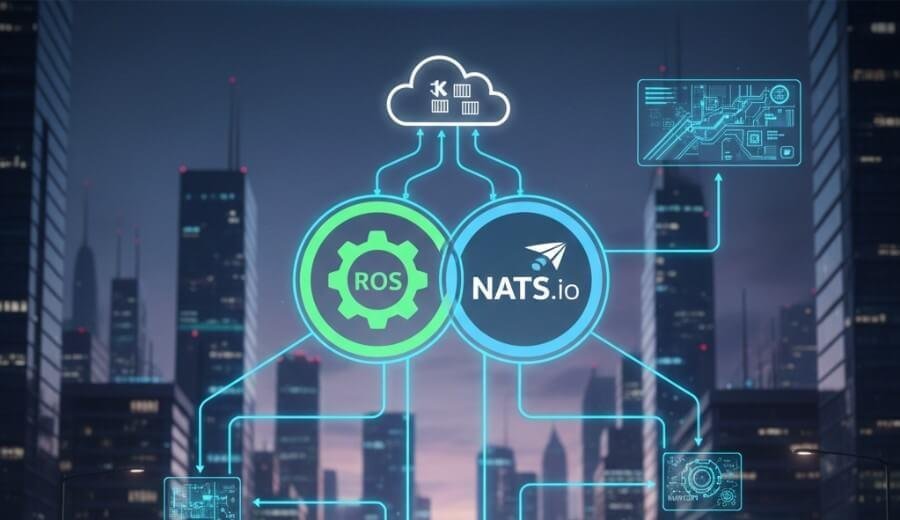
Cyber-physical systems form the backbone of modern robotics, blending sensors, actuators, and controllers to bridge digital intelligence with real-world interactions. As the U.S. National Science Foundation emphasizes through its CPS research programs, these systems demand interdisciplinary innovation for applications spanning smart manufacturing, medical monitoring, and autonomous transportation. At their core lie two middleware contenders: ROS 2 and NATS.
ROS 2, the "batteries-included" framework, provides a comprehensive toolkit for robotics. Built on the Data Distribution Service (DDS) protocol, it offers peer-to-peer communication optimized for reliability. ROS 2 handles everything from sensor drivers to navigation algorithms, enabling real-time coordination across distributed components. Its architecture ensures scalability and resilience—critical for systems where a malfunctioning node shouldn’t cripple an entire robot.
NATS, in contrast, is the "lean and fast" cloud-native messaging system. Originally designed for microservices, it excels at cross-network communication, acting as a central nervous system for data exchange. Where ROS 2 specializes in robotics, NATS offers lightweight, subject-based messaging ideal for scenarios like connecting warehouse robots to cloud dashboards.
Robotics as Microservices: An Architectural Breakdown
The genius of modern robotics lies in its decomposition into discrete, interoperable units—mirroring cloud microservices:
Nodes are the Microservices: Each node handles a specific function (e.g., LIDAR sensing or path planning). Like cloud services, they’re decoupled: a crash in diagnostics doesn’t halt braking. Nodes interact with physical hardware through sensors and actuators, enabling real-time control and adaptability.
Topics Enable Pub/Sub Messaging: Communication uses a publish-subscribe model identical to Kafka or RabbitMQ. A camera node publishes images to
/camera/raw; an object-detection node subscribes, processes data, and publishes results. This decoupling allows effortless system expansion—such as adding a recording module without modifying existing code.Polyglot Development Flexibility: Critical paths (e.g., motor control) use C++ for speed, while high-level logic (e.g., computer vision) employs Python. ROS 2 and NATS enable seamless cross-language communication, letting C++ nodes converse with Python nodes as if they shared a runtime.
Orchestration via Launch Files: Instead of Kubernetes manifests, robots use launch files to manage node lifecycles. These scripts sequence startups (e.g., initialize LIDAR before navigation) and inject configurations, ensuring orderly deployment.
Observability Tools for Spatial Data: Monitoring borrows from cloud practices but with a spatial twist. Tools like Foxglove visualize sensor data in 3D (a "Grafana for robots"), while Rosbags log all inter-node messages for replay-based debugging and predictive analytics.
Security and Intelligence: Non-Negotiables for CPS
As CPS permeate critical infrastructure, robust security becomes paramount. ROS 2 embeds encryption, authentication, and authorization to protect data flows between nodes—vital for medical devices or industrial control systems where breaches risk lives. Meanwhile, machine learning transforms robotic capabilities. Integrated with ROS via TensorFlow or PyTorch, algorithms enable real-time object recognition, adaptive navigation, and predictive maintenance by analyzing sensor streams.
Real-World Impact and Future Horizons
From optimizing crop yields in digital agriculture to enhancing surgical precision in healthcare, ROS-driven CPS demonstrate versatility. Smart factories leverage these systems for predictive maintenance, while autonomous vehicles rely on their real-time decision-making. The NSF-backed evolution continues: edge computing and cloud integration will enable smarter, more responsive robots. Future middleware will prioritize even tighter security and AI-driven autonomy, fostering collaborative robots that learn from environments and work alongside humans.
The next revolution isn’t just in hardware—it’s in recognizing robots as distributed software systems. By applying cloud-native principles like CI/CD, unit testing, and resilient messaging, developers aren't merely building machines; they're engineering adaptable, intelligent ecosystems that move. As one expert notes: "Look past the sensors. What you’re seeing is a cluster of microservices that happens to have wheels."
Source: thomasthelliez.com
Comments
Please log in or register to join the discussion