Roche becomes first pharmaceutical company to announce massive Blackwell GPU deployment, highlighting healthcare's accelerating AI infrastructure race.
Roche has deployed over 3,500 Nvidia Blackwell GPUs, marking what the company calls "the greatest announced GPU footprint available to a pharmaceutical company." The deployment represents a significant milestone in healthcare's AI transformation, as pharmaceutical companies race to build computational infrastructure for drug discovery, clinical trials, and personalized medicine.
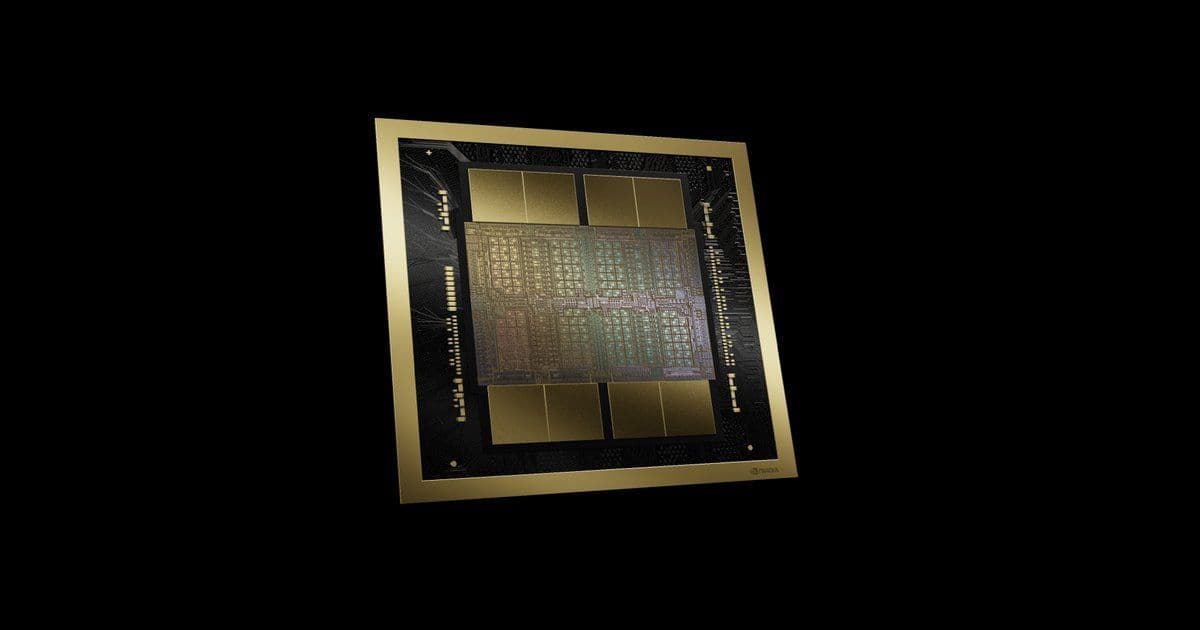
The Blackwell GPUs, Nvidia's latest AI accelerator architecture, offer substantial performance improvements over previous generations. With capabilities for training larger models and processing complex biological data, these chips enable pharmaceutical researchers to simulate molecular interactions, analyze genomic sequences, and accelerate drug candidate screening at unprecedented scales.
This deployment comes amid a broader trend of healthcare organizations investing heavily in AI infrastructure. While tech companies and cloud providers have dominated AI hardware purchases, pharmaceutical companies are now emerging as major buyers. The scale of Roche's deployment suggests the company views AI as critical competitive infrastructure rather than experimental technology.
However, the announcement raises questions about the actual utilization of such massive computational resources. Some industry observers note that pharmaceutical companies have historically struggled to fully leverage AI investments, with many projects failing to deliver promised breakthroughs. The true test will be whether Roche can translate this hardware investment into tangible drug discovery advances or operational efficiencies.
Nvidia's GTC 2026 event, where this deployment was highlighted, also featured other healthcare AI announcements, including new medical imaging tools and drug discovery platforms. The convergence of healthcare and AI infrastructure represents a shift from traditional pharmaceutical research methods toward data-driven approaches.
For context, 3,500 GPUs represents computational power comparable to some of the world's most powerful supercomputers. This level of investment signals that pharmaceutical companies now view AI capabilities as essential competitive advantages, potentially reshaping how drugs are discovered and developed in the coming decade.
[Image:1]
The deployment also highlights the growing importance of specialized AI hardware in healthcare. As models become more complex and datasets grow larger, general-purpose computing proves insufficient for many pharmaceutical applications. Blackwell's architecture, optimized for AI workloads, enables researchers to tackle problems previously considered computationally intractable.
Whether this massive investment will yield the expected returns remains to be seen, but it clearly demonstrates that the pharmaceutical industry's AI arms race is accelerating, with hardware infrastructure becoming as critical as laboratory equipment in modern drug development.
Comments
Please log in or register to join the discussion