Micron enters high-volume production of HBM4 36GB 12-Hi memory for Nvidia's Vera Rubin platform, delivering 2.3x bandwidth improvement and 20% power efficiency gains while becoming first supplier to ship all three key components for the ecosystem.
Micron has achieved a significant milestone in high-bandwidth memory technology by entering high-volume production of its HBM4 36GB 12-Hi memory stacks, specifically designed for Nvidia's upcoming Vera Rubin GPU platform. The announcement, made at GTC 2026, marks a crucial step forward in AI infrastructure development, with Micron simultaneously launching the industry's first PCIe 6.0 data center SSD and a new SOCAMM2 module, making it the first memory supplier to bring all three products to volume shipment for the Vera Rubin ecosystem.
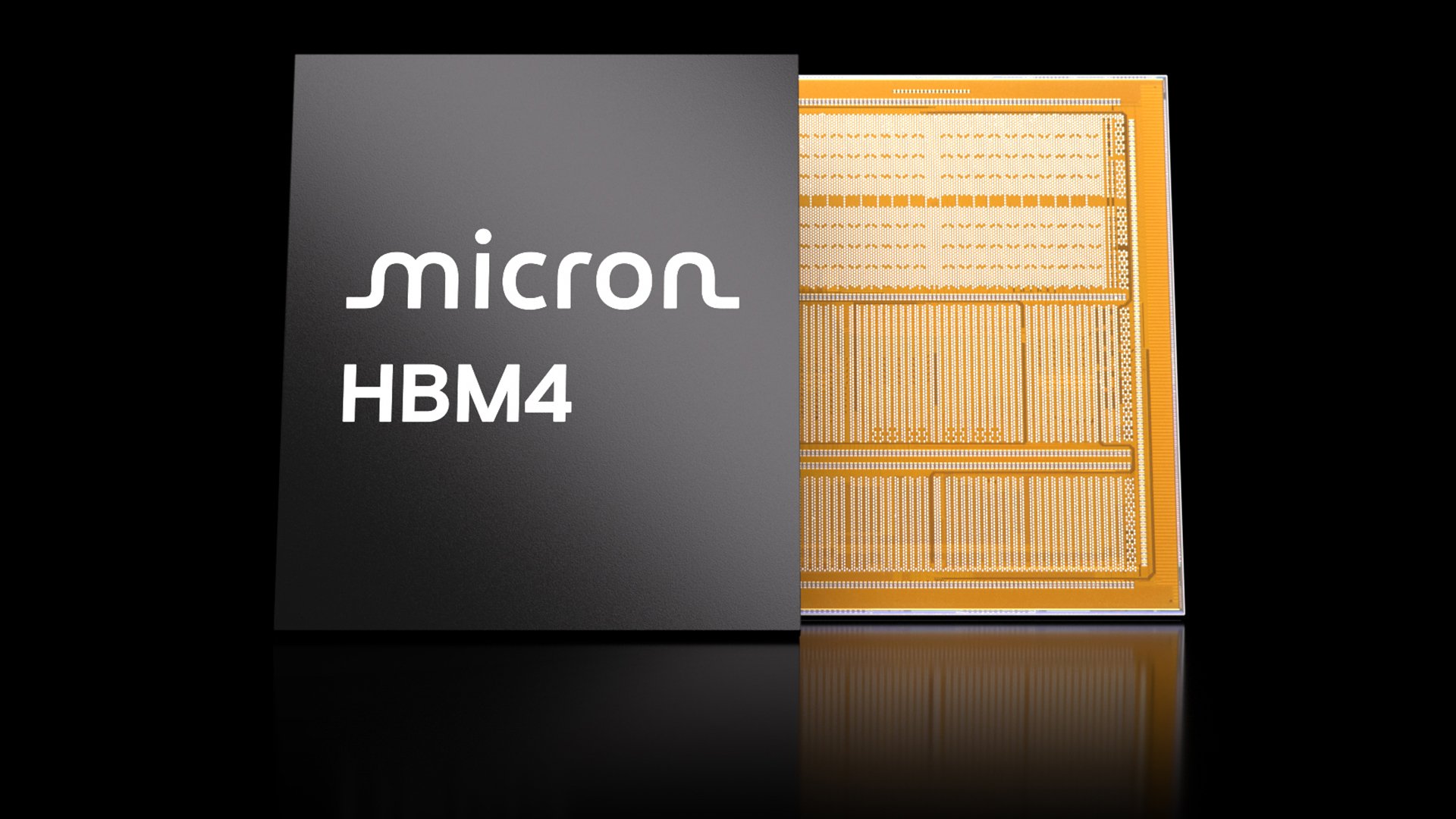
The HBM4 36GB 12-Hi stack represents a substantial leap in performance metrics. Operating at over 11 Gb/s pin speeds, the memory delivers bandwidth exceeding 2.8 TB/s. When compared to Micron's previous HBM3E technology at the same 36GB 12-Hi configuration, this translates to a 2.3x increase in bandwidth alongside more than 20% improvement in power efficiency, according to Micron's internal power calculator data.
This performance boost comes at a critical time for AI development. As AI models continue to grow in complexity and size, the demand for faster, more efficient memory solutions has become paramount. The increased bandwidth allows for quicker data transfer between the GPU and memory, reducing bottlenecks that can slow down AI training and inference processes.
"The next era of AI will be defined by tightly integrated platforms developed through joint engineering innovations across the ecosystem," said Sumit Sadana, executive vice president and chief business officer at Micron Technology. "Our close collaboration with NVIDIA ensures that compute and memory are designed to scale together from day one."
Beyond the 36GB 12-Hi configuration, Micron has also shipped samples of a 48GB 16-Hi HBM4 stack to customers. This higher-capacity variant adds four additional die layers, providing a 33% capacity increase per HBM placement compared to the 36GB 12-Hi product. This milestone suggests even denser configurations will be possible in future AI accelerator generations.
Micron's comprehensive approach to the Vera Rubin ecosystem extends beyond just HBM4. The company has also entered high-volume production of what it claims is the industry's first PCIe 6.0 data center SSD. The 9650 SSD supports up to 28 GB/s sequential read throughput and 5.5 million random read IOPS, effectively doubling PCIe 5.0 read performance while achieving 100% higher performance per watt.
This SSD is specifically optimized for AI inference, training, and agentic workloads in liquid-cooled environments. It's designed to work with Nvidia's BlueField-4 STX reference architecture, ensuring seamless integration within the broader Vera Rubin ecosystem.
Completing the trio of new products is the 192GB SOCAMM2 module, designed for Nvidia Vera Rubin NVL72 systems and standalone Vera CPU platforms. Micron's SOCAMM2 portfolio spans 48GB to 256GB capacities, with the Vera Rubin platform supporting up to 2TB of memory and 1.2 TB/s of bandwidth per CPU using these modules.
The timing of these releases is particularly significant given the current state of the AI market. As companies race to build increasingly powerful AI systems, the ability to deliver all three critical components simultaneously gives Micron a competitive advantage. This integrated approach ensures that all components are optimized to work together, potentially reducing development time and improving overall system performance for Nvidia's customers.
From a technical perspective, the improvements in HBM4 technology reflect several years of research and development in memory architecture. The 2.3x bandwidth improvement isn't just about faster individual memory chips, but also about improvements in how those chips are stacked, interconnected, and managed. The 20% power efficiency gain is equally important, as power consumption has become a major concern in large-scale AI deployments.
Looking ahead, these developments suggest that the AI hardware arms race is accelerating. With HBM4 now in high-volume production, we can expect to see the first Vera Rubin-based systems hitting the market in the coming months. This will likely trigger a new wave of AI model development, as researchers gain access to significantly more powerful hardware.
The fact that Micron is shipping samples of the 48GB 16-Hi configuration also hints at what's coming next. As AI models continue to grow, the demand for higher-capacity memory solutions will only increase. The 33% capacity increase offered by the 16-Hi configuration could be crucial for supporting the next generation of large language models and other AI applications.
For the broader semiconductor industry, Micron's achievement represents a validation of the HBM4 standard and demonstrates the company's ability to execute on complex, high-stakes projects. As AI continues to transform industries from healthcare to finance to entertainment, the importance of companies like Micron in enabling this transformation cannot be overstated.
As the AI hardware landscape continues to evolve, the collaboration between memory manufacturers like Micron and GPU designers like Nvidia will likely become even more critical. The tight integration demonstrated by these new products suggests that future AI systems will be designed as holistic platforms rather than collections of individual components, potentially leading to even greater performance gains in the years to come.
Comments
Please log in or register to join the discussion