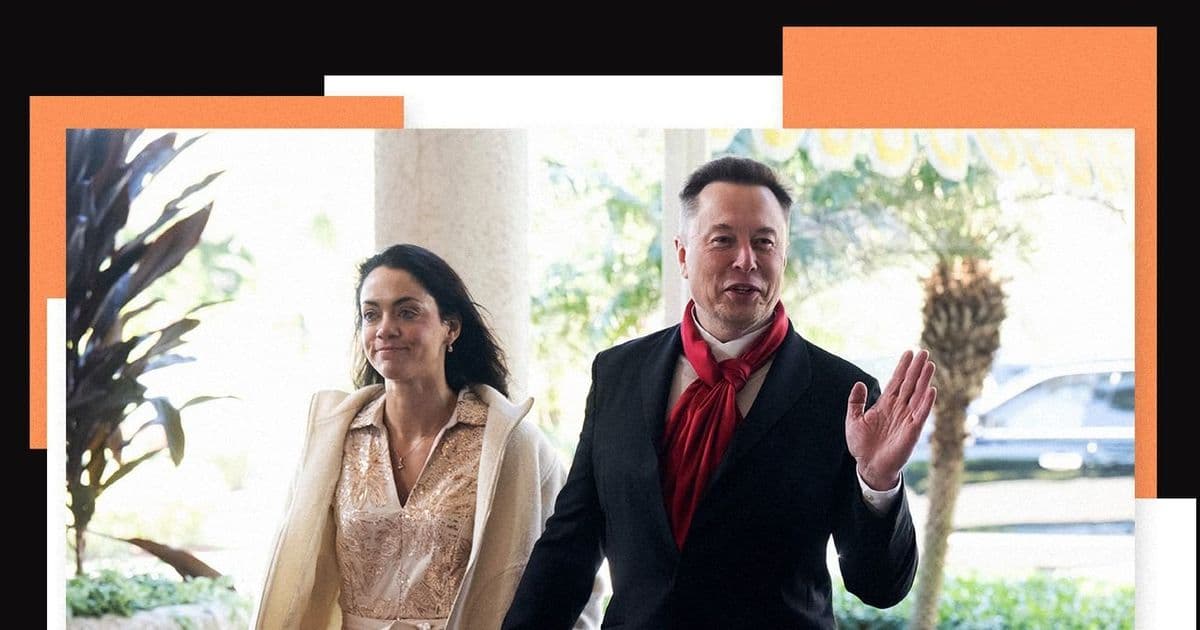
OpenAI's legal team reveals alleged covert communication channels between Elon Musk and the company through Shivon Zilis, adding a personal dimension to the high-stakes lawsuit over AI's original mission.
The ongoing legal battle between Elon Musk and OpenAI has taken a personal turn with allegations that Shivon Zilis, a longtime Musk employee and mother to four of his children, served as a covert liaison between the tech billionaire and the AI company he co-founded. The claim, revealed during testimony in federal court, adds a complex layer to Musk's lawsuit alleging that OpenAI deviated from its original mission of developing AI for the benefit of humanity.
The case centers on Musk's claim that OpenAI, which he helped establish in 2015 with the intention of creating a nonprofit AI research organization, has strayed from its founding principles by partnering with Microsoft and pursuing profit-driven objectives. Musk resigned from OpenAI's board in 2018 and later launched xAI as a competitor.
During his testimony, Musk admitted under oath that xAI has "partly" distilled OpenAI models, arguing that it's standard practice for AI labs to use competitors' models. This admission directly contradicts his legal position that OpenAI has improperly abandoned its open, nonprofit roots.
The revelation about Zilis's alleged role as a covert liaison introduces questions about the nature of Musk's relationship with OpenAI after his departure. Zilis, who joined Musk's companies in 2017 and has since become Neuralink's director of operations and special projects at X (formerly Twitter), has maintained a professional relationship with Musk while also being the mother of four children he fathered through surrogacy.
Legal experts suggest this personal connection could significantly impact the case. "The relationship between Musk and Zilis adds a dimension of personal betrayal to the corporate allegations," said tech law professor Eric Goldman. "If proven, it could strengthen OpenAI's argument that Musk maintained influence over the organization despite his public claims of abandonment."
The court has so far limited testimony to specific contractual disputes rather than broader existential questions about AI. Judge Jacqueline Scott Corley explicitly instructed both sides to avoid discussing AI's potential existential threats, focusing instead on the founding agreement and corporate governance issues.
Community reactions to the case remain divided. Supporters of Musk view the lawsuit as a principled stand against the commercialization of AI that was meant to serve humanity. "OpenAI's transformation into a Microsoft-backed profit center betrays everything we were trying to build," one former OpenAI employee told the court.
Conversely, many in the AI community see Musk's lawsuit as hypocritical, given his own commercial AI ventures and his admission that xAI has utilized OpenAI's work. "The AI community is watching this case closely as it could set precedents for how foundational AI research is governed," said AI researcher Sasha Luccioni. "But it's hard to take Musk's moral high ground seriously when he's building his own AI empire."
The case also raises questions about the governance of AI research organizations. OpenAI's transition from a nonprofit to a capped-profit model in 2019 has been controversial, with critics arguing it prioritized financial interests over the public good. The organization maintains that this structure was necessary to attract the computational resources needed for advanced AI development.
Industry observers note that the legal battle occurs at a critical moment for AI governance. With rapid advancements in generative AI and increasing calls for regulation, the outcome of this case could influence how similar organizations structure themselves in the future. "This isn't just about Musk and OpenAI," commented tech analyst Benedict Evans. "It's about whether AI research can remain open and accessible or will inevitably be dominated by corporate interests."
As the case continues, attention has turned to the personal relationships that intersect with corporate and ethical questions. The involvement of Zilis, who has been both a professional colleague and a personal partner to Musk, adds complexity to the already contentious legal battle. Her potential role as a covert liaison suggests that the lines between Musk's personal and professional interests regarding OpenAI may be blurrier than either party has acknowledged.
The trial is expected to continue for several weeks, with testimony from other key figures in OpenAI's history. Legal analysts predict that the case will ultimately hinge on interpreting the original founding agreement and determining whether OpenAI's current structure violates the spirit of its mission, regardless of the personal relationships involved.
Comments
Please log in or register to join the discussion