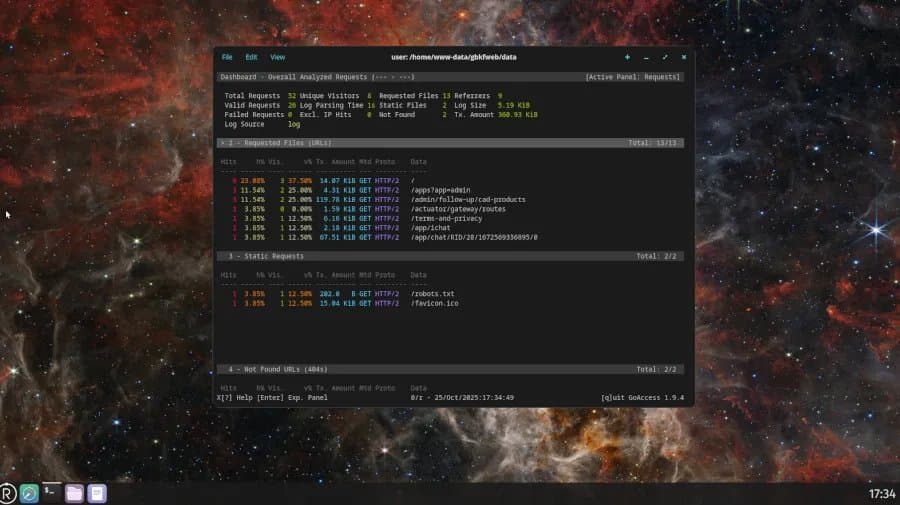
Redox OS, the open-source operating system written entirely in Rust, has made significant progress in April 2026, with notable improvements for running on real hardware, kernel stability enhancements, and better desktop performance.
Redox OS continues its steady development with a series of meaningful improvements in April 2026, particularly focusing on enhancing compatibility with real hardware beyond virtual environments. This Rust-based operating system, built from the ground up without relying on existing codebases, is demonstrating increasing maturity as it addresses practical deployment challenges.
The most significant advancement this month is the improved boot process for physical hardware. Redox OS has traditionally been developed and tested primarily in virtual machine environments, but recent changes now allow it to boot successfully on actual computer systems. These improvements include updating against the latest Rust-OSDev ACPI crate, which provides better support for hardware configuration and power management across various system architectures. The ACPI (Advanced Configuration and Power Interface) is crucial for modern hardware compatibility, as it handles power management, system configuration, and device enumeration.
Boot time optimization has also received attention, specifically for systems with multiple CPU cores. Multi-core systems often experience longer boot times due to the increased complexity of initializing multiple processing units. Redox's improvements in this area could make it more competitive with established operating systems in terms of startup performance.
Hardware compatibility has been further extended with enhanced support for RISC-V architecture systems. RISC-V is an open-source instruction set architecture gaining traction in both embedded systems and server markets. By improving RISC-V compatibility, Redox OS is positioning itself as a viable option for emerging hardware platforms beyond traditional x86 and ARM architectures.
The user experience has been enhanced with the port of tmux, a popular terminal multiplexer. Tmux allows users to manage multiple terminal sessions within a single terminal window, a feature highly valued by developers and system administrators. This addition brings Redox closer to feature parity with established operating systems in terms of developer tools.
Performance improvements include better accuracy of CPU time statistics, which is essential for system monitoring, profiling, and performance analysis. Additionally, the Orbital desktop environment now supports partial window pixel updates, reducing unnecessary rendering operations and improving overall responsiveness when windows are moved or resized.
Kernel stability has been a focus area with several important improvements:
- Memory leak fixes: These prevent gradual degradation of system performance over time, a critical issue for long-running systems
- Enhanced multi-threading stability: Improves reliability when applications utilize multiple processor cores
- Deadlock prevention: Addresses potential scenarios where processes could become permanently locked waiting for resources
The graphics subsystem has seen significant changes with the replacement of the Bochs video driver with the VESA driver. VESA (Video Electronics Standards Association) provides standardized interfaces for video cards, offering better compatibility and performance across a wider range of hardware compared to the Bochs emulator, which was primarily designed for virtual environments.
Code quality improvements include de-duplication efforts, which reduce the codebase size and maintenance burden while potentially improving security by minimizing code that needs to be audited.
The Relibc implementation, Redox's compatibility layer for standard C library functions, has also received numerous improvements. This is particularly important for running software that depends on established C libraries, expanding the ecosystem of applications that can run on Redox OS.
For those interested in exploring Redox OS further, the official Redox-OS.org website provides comprehensive documentation, installation guides, and source code access. The project's GitHub repository contains the complete codebase, allowing developers to contribute or examine the implementation details.
These improvements demonstrate Redox OS's continued progress toward becoming a practical alternative to established operating systems. While still in development, the combination of Rust's memory safety guarantees and these hardware compatibility enhancements positions Redox as an interesting option for specific use cases, particularly where security and reliability are paramount.
Comments
Please log in or register to join the discussion