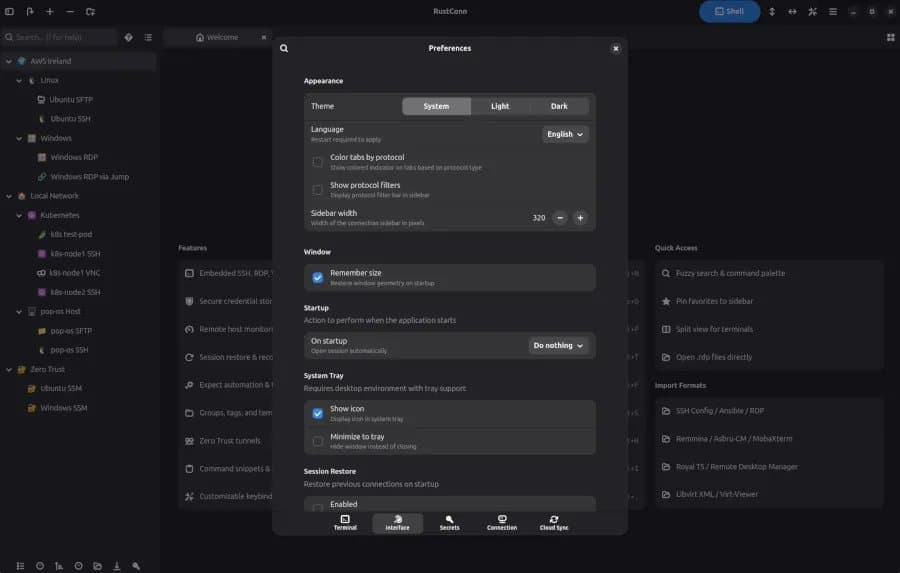
RustConn, the GNOME-aligned Rust-written connection manager, continues its rapid development cycle with three major feature additions: cloud synchronization, SSH tunnel management, and extended jump host support across multiple protocols.
The GNOME ecosystem continues to evolve with innovative applications, and RustConn stands out as one of the most promising recent developments. This modern GTK4-based connection manager, written entirely in Rust, has been steadily gaining traction among Linux users who need a sophisticated solution for managing remote connections. The project's latest release introduces what the developers describe as "the three biggest features since the project started," significantly expanding its capabilities and positioning it as a serious contender in the connection management space.
What Makes RustConn Special
RustConn distinguishes itself through its modern architecture, leveraging Rust's performance and safety guarantees to create a responsive and reliable connection management tool. Unlike many traditional connection managers that feel dated or sluggish, RustConn benefits from Rust's memory management and concurrency features, resulting in a snappy user experience even when managing multiple simultaneous connections.
The application supports a comprehensive range of protocols including SSH, RDP, VNC, and SPICE, making it suitable for both system administrators and developers who regularly work with remote servers and desktop environments. Its tight integration with GNOME's design language ensures it feels at home on modern Linux desktops while maintaining cross-platform compatibility.
The Three Major New Features
The recent update introduces three significant capabilities that dramatically enhance RustConn's utility:
Cloud Sync Support
Perhaps the most anticipated feature is cloud synchronization, which allows users to keep their connection configurations consistent across multiple devices. RustConn now supports synchronization through several popular cloud services:
- Google Drive integration
- Nextcloud compatibility
- Dropbox support
- USB flash drive synchronization
- Other media options
This feature addresses a common pain point for professionals who work across multiple machines. By storing connection configurations in the cloud, users can seamlessly transition between their desktop, laptop, and even different workstations without manually recreating connection settings. The implementation appears to handle encryption and securely storing credentials, which is crucial for a tool managing sensitive connection information.
SSH Tunnel Manager
The SSH Tunnel Manager represents a significant improvement for users who regularly work with SSH port forwarding. Traditionally, managing SSH tunnels required either manual command-line configuration or keeping terminal sessions open. RustConn's new dedicated tunnel management interface provides:
- Visual creation and management of SSH tunnels
- Persistent tunnel configurations
- Status monitoring of active tunnels
- Easy port forwarding setup without terminal knowledge
This feature is particularly valuable for developers who need to expose local services to remote networks or access remote services through forwarded ports. The visual interface abstracts away the complex SSH command-line syntax while still providing the flexibility power users need.
Extended Jump Host Support
SSH jump hosts (or bastion hosts) are commonly used for accessing internal networks through a middleman server. RustConn has already supported SSH jump hosts, but the latest release extends this capability to RDP, VNC, and SPICE connections. This unified approach means users can:
- Configure a single jump host for all protocols
- Maintain consistent authentication across connection types
- Simplify network access through restricted environments
For organizations that require all remote connections to route through a bastion server, this feature eliminates the need for separate configurations for each protocol, streamlining the connection management process.
Additional Improvements
Beyond these three major features, the recent update includes a complete rework of RustConn's tab management system, making it easier to organize and navigate between multiple active connections. The developers have also implemented numerous smaller enhancements, including improved error handling, better protocol-specific settings, and a more polished user interface.
Installation and Availability
RustConn's availability has expanded significantly, making it accessible to users across various Linux distributions:
- Flatpak package for universal distribution compatibility
- Snap package for easy installation and updates
- AppImage for portable, distribution-agnostic usage
- Debian and RPM packages for traditional package-based systems
- AUR package specifically for Arch Linux users
This comprehensive distribution strategy ensures that nearly any Linux user can easily install and start using RustConn without complex compilation or dependency resolution. The availability through multiple channels also provides redundancy and flexibility for different user preferences.
Technical Implementation Details
The choice of Rust for this project is particularly interesting. Rust's memory safety guarantees and performance characteristics make it an excellent choice for a connection manager that needs to handle sensitive credentials and maintain responsiveness during complex network operations. The developers have leveraged GTK4 for the user interface, taking advantage of its modern rendering and improved accessibility features.
The cloud sync functionality likely uses Rust's strong cryptography libraries to ensure secure transmission and storage of connection configurations. The SSH tunnel management probably builds upon existing Rust SSH libraries like libssh2 or ssh2, providing a more user-friendly interface around these powerful tools.
Use Cases and Recommendations
RustConn is particularly valuable for several user groups:
- System Administrators: Managing multiple servers across different protocols with consistent configurations
- Developers: Regularly connecting to development environments, databases, and cloud services
- DevOps Professionals: Orchestrating connections across various environments during deployments
- Remote Workers: Maintaining secure connections to corporate resources from different locations
For users who currently rely on multiple specialized tools for different connection types, RustConn offers a unified solution that can reduce cognitive load and streamline workflows. The cloud sync feature is especially valuable for those who frequently switch between devices.
Future Outlook
The rapid pace of development suggests that RustConn will continue to evolve with additional features. Potential future enhancements might include:
- Integration with GNOME keyring for credential management
- Protocol-specific optimizations and features
- Team collaboration features for shared connection configurations
- Advanced connection health monitoring
The project's GitHub repository shows active development and community engagement, indicating a healthy project lifecycle. For users interested in following the development or contributing, the source code is readily available with a permissive license.
RustConn represents the kind of modern, thoughtfully designed application that strengthens the Linux desktop ecosystem. By combining Rust's technical advantages with a focus on user experience and comprehensive protocol support, it addresses real needs for connection management in today's increasingly distributed computing environments.
Comments
Please log in or register to join the discussion