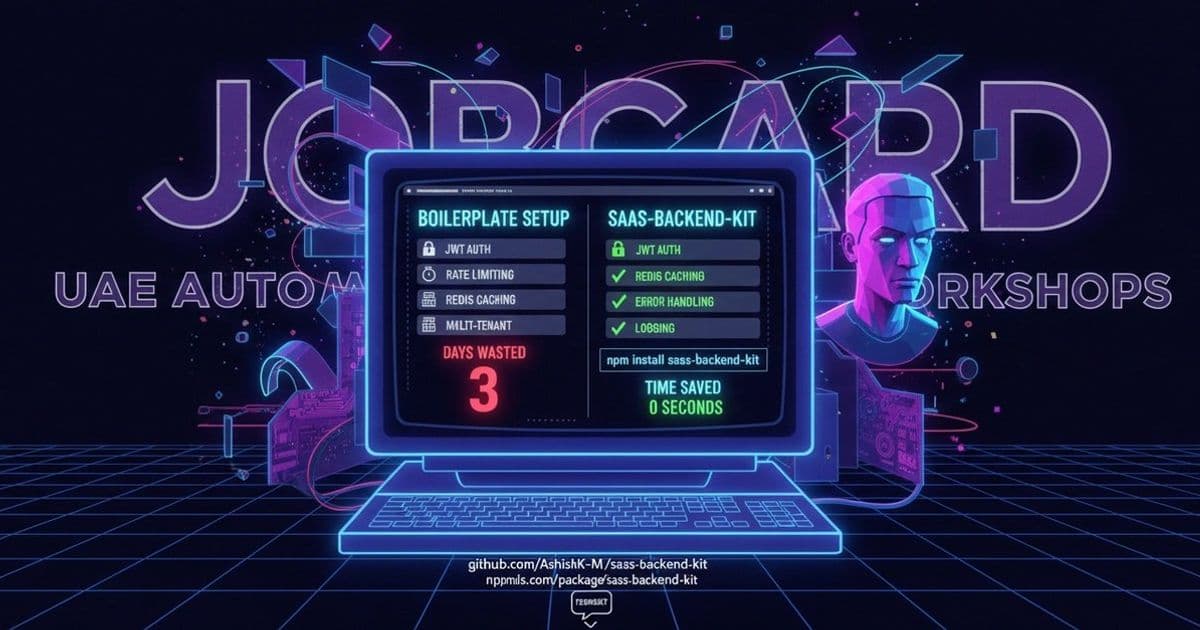
A new open-source Node.js/Express starter kit provides essential SaaS infrastructure components out of the box, allowing developers to skip 2-3 days of repetitive backend setup.
The SaaS development lifecycle begins with a familiar pattern: before writing any business logic, developers spend days setting up authentication, caching, rate limiting, and multi-tenant infrastructure. This repetitive boilerplate work consumes valuable time that could be dedicated to product differentiation. The creator of saas-backend-kit, AshishK-M, experienced this firsthand while developing JobCard, a garage management system for UAE auto workshops. After implementing the same backend structure across three different products, the decision to package these common components into a reusable solution became clear.
The saas-backend-kit addresses this problem by providing a drop-in Node.js/Express starter with pre-configured infrastructure components. The kit includes JWT authentication with access and refresh tokens, Redis caching, rate limiting middleware, centralized error handling, a multi-tenant ready structure, TypeScript support, and Docker configuration. This comprehensive approach reduces initial setup time from days to minutes, allowing teams to focus on building their unique value proposition rather than infrastructure plumbing.
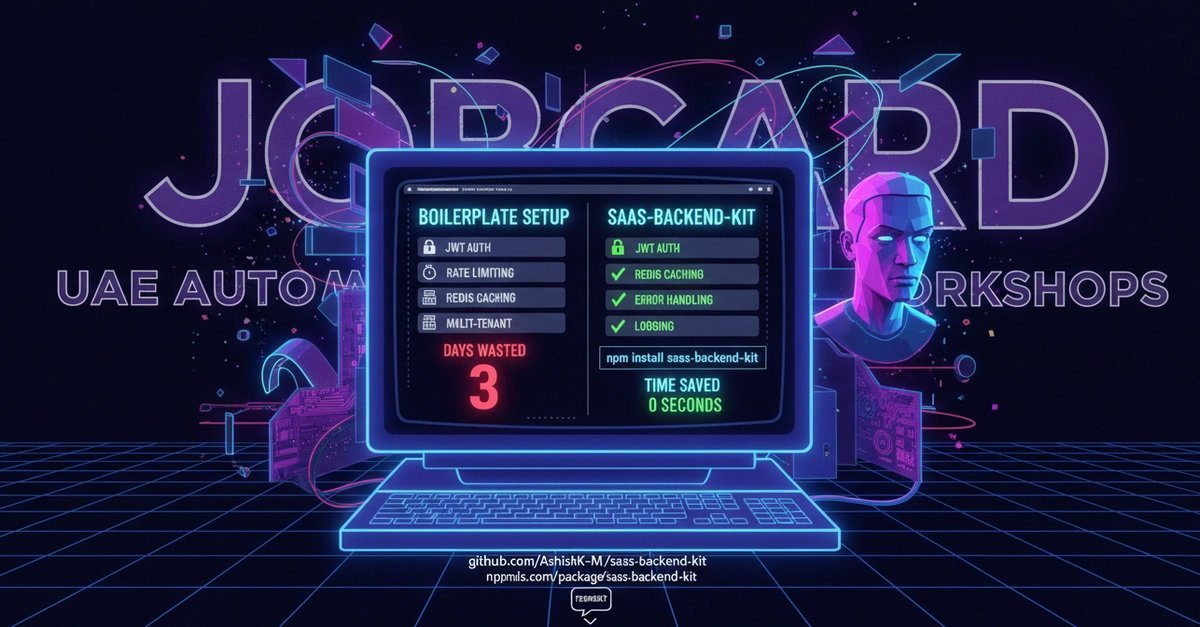
From an architectural perspective, the implementation demonstrates several sound design decisions. The JWT authentication system implements a proper token refresh mechanism, which is critical for maintaining security while providing a smooth user experience. The Redis integration serves as both a cache and session store, offering performance benefits that become increasingly valuable as user count grows. The rate limiting middleware provides protection against abuse while being configurable to match different product requirements.
The multi-tenant structure deserves particular attention. Many SaaS products underestimate the complexity of proper tenant isolation, leading to security vulnerabilities and data leaks. The kit's approach to tenant separation at the database and API level provides a solid foundation that teams can extend based on their specific scaling needs.
Trade-offs exist in any architectural decision. The kit's opinionated structure may not fit all use cases. Teams with existing infrastructure investments or specific technology preferences might find certain components unnecessary. The TypeScript support, while beneficial for code quality and maintainability, adds compilation overhead that some teams might prefer to avoid. Additionally, the abstraction layers might obscure implementation details for developers who want full control over every aspect of their backend.
The project's GitHub repository (github.com/AshishK-M/saas-backend-kit) and npm package (npmjs.com/package/saas-backend-kit) indicate a well-maintained approach with proper documentation and versioning. The creator's willingness to solicit community feedback suggests an understanding that no single solution fits all scenarios, and the project will likely evolve based on real-world usage patterns.
For solo developers and small teams, this type of starter kit represents a pragmatic approach to accelerating development while maintaining architectural soundness. The time saved on infrastructure setup can be redirected toward product development, which is often the bottleneck for early-stage SaaS companies. However, as products scale, teams must be prepared to potentially replace or customize components that no longer meet their specific performance or security requirements.
The emergence of such specialized starter kits reflects a broader trend in software development: the commoditization of common infrastructure patterns. While this allows teams to focus on innovation, it also creates a dependency on external codebases that must be carefully evaluated for security, maintainability, and alignment with long-term architectural goals. Teams adopting saas-backend-kit or similar solutions should plan for regular updates and potential refactoring as their products evolve.
Comments
Please log in or register to join the discussion