
WebKit's latest Safari Technology Preview introduces visual order tracking for CSS Grid Lanes layouts, providing developers unprecedented clarity into content flow mechanics.
The WebKit team's latest Safari Technology Preview release delivers crucial developer tooling enhancements for CSS Grid Lanes, the newly standardized approach for creating masonry-style layouts. These innovations address the persistent challenge of visualizing content flow in complex grid structures, particularly relevant as Grid Lanes adoption gains momentum.

CSS Grid Lanes fundamentally changes layout possibilities by enabling content alignment along either columns or rows exclusively. This approach solves a core design limitation: arranging variably-sized content elements—like photo galleries or product cards—without artificial cropping or forced dimensions. Content flows sequentially through the container while preserving source order integrity. New lazy-loaded items appear at the container's end without disrupting existing elements, a significant improvement over traditional grid systems.
The challenge emerges in visualizing how content flows perpendicular to the defined layout axis. When developers create column-based layouts, content traverses horizontally as if rows existed; in row-based layouts, it flows vertically as if columns were present. This non-linear progression can confuse developers expecting traditional grid patterns.
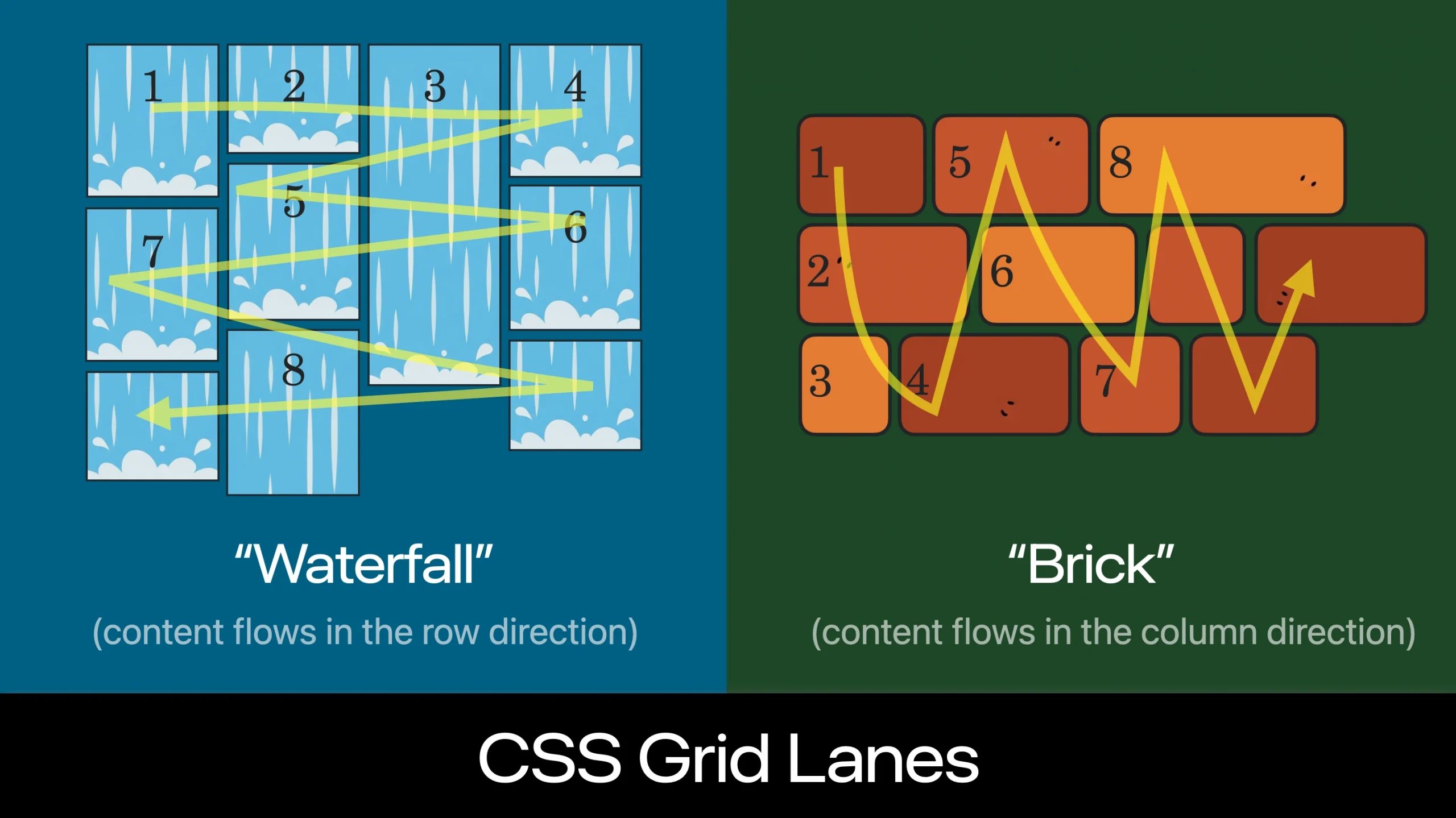
Safari's Grid Inspector now illuminates this behavior through Order Number labels that visually map the sequence of DOM elements within Grid Lanes containers. Enabled in the Layout panel, these numeric overlays reveal exactly how items populate the structure. For example, a three-column layout might show items 1-4 filling the first visual row before continuing to the next row, making the content flow immediately apparent.
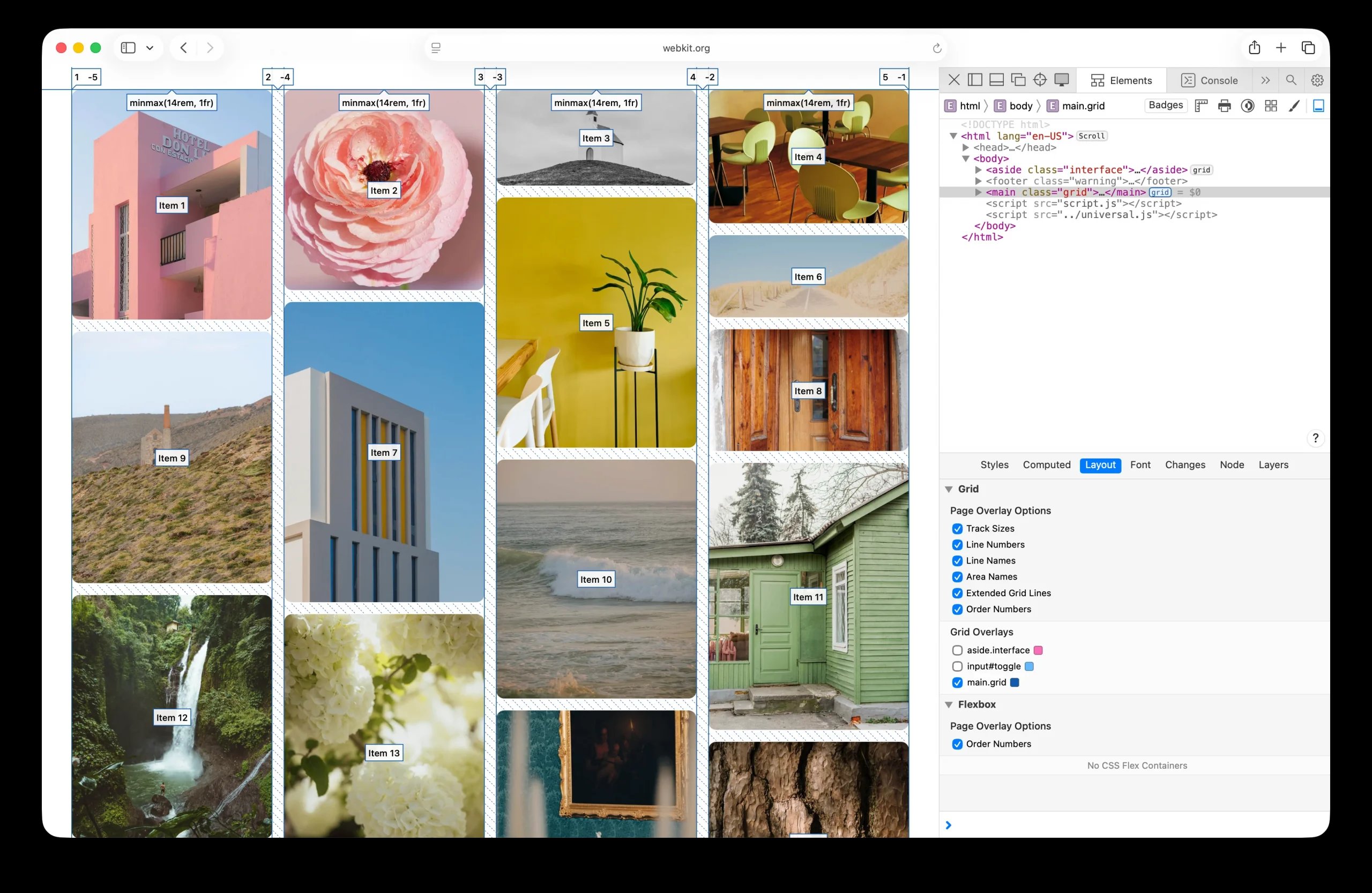
Understanding content order proves critical beyond visual design. Keyboard navigation, screen reader output, and focus management all rely on DOM sequence. The Order Numbers feature helps developers optimize flow-tolerance settings—a Grid Lanes parameter controlling how aggressively items fill available space—to create logical traversal paths. Without this visual feedback, developers risk creating disorienting jumps during keyboard navigation.
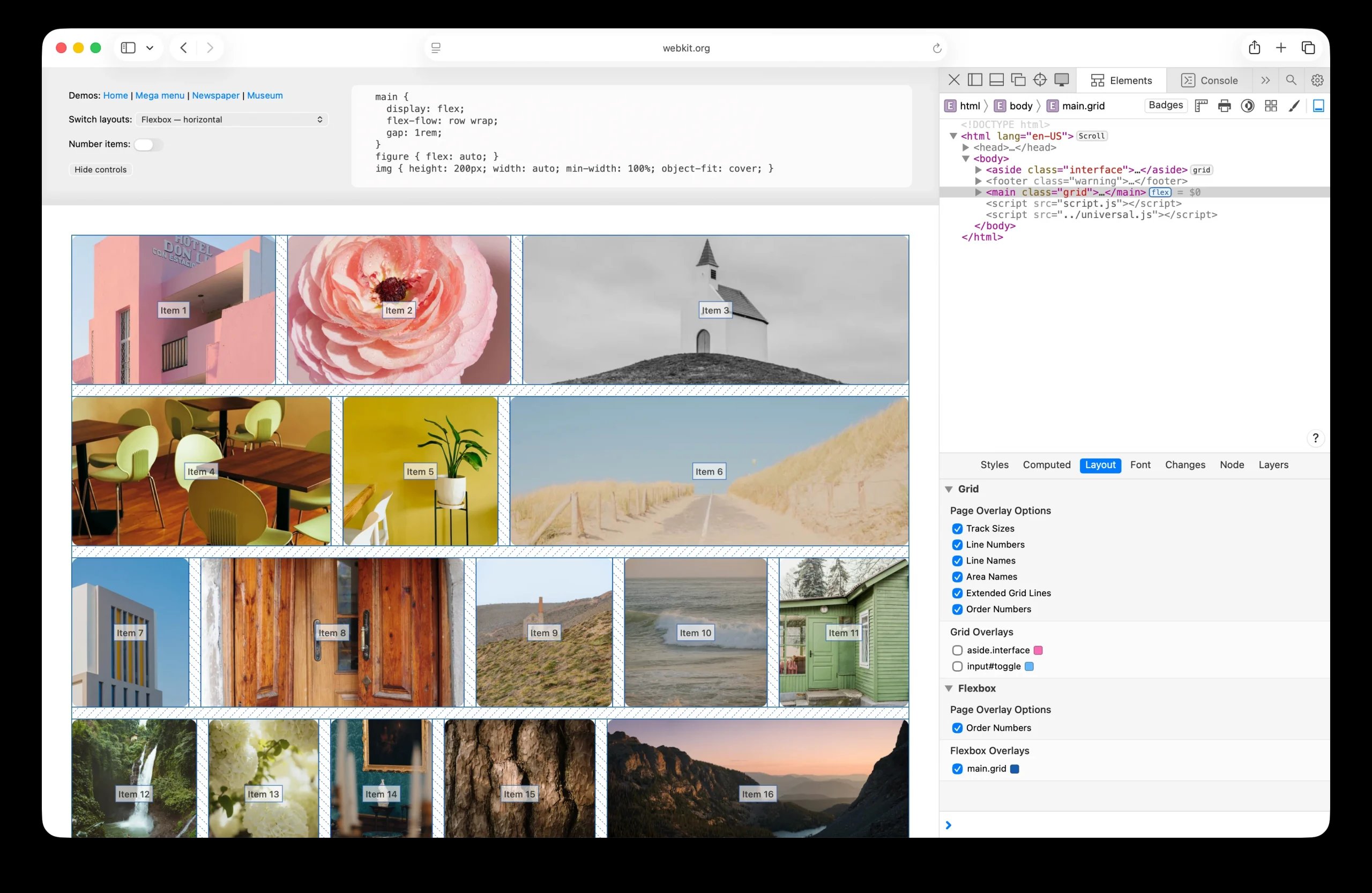
This functionality extends Safari's existing layout debugging capabilities. The Flexbox Inspector has featured similar order visualization since Safari 16, particularly valuable when manipulating the order property. Safari's implementation stands apart by allowing unlimited simultaneous layout overlays without performance degradation, clearly distinguishing free space from gaps, and exposing distribution along both primary and cross axes.
Additional refinements include:
- Color customization for overlays to match site aesthetics
- Comprehensive lists of all Flexbox and Grid containers on a page
- Clear labeling of track sizes, line numbers, and named areas
- Visual differentiation between Flexbox gaps and leftover space
The Order Numbers feature ships in Safari Technology Preview 235 alongside complete Grid Lanes support in STP 234. Developers can experiment with Grid Lanes demos and explore the Web Inspector Reference documentation. The WebKit team actively solicits feedback via Jen Simmons' Mastodon and Bluesky profiles as they refine these tools before stable release.
This tooling advancement arrives as CSS Grid Lanes transitions from experimental to production-ready, offering developers unprecedented insight into a layout methodology poised to reshape how we handle variable-content interfaces. By revealing the invisible relationships between markup order and visual presentation, Safari's tools empower developers to build more accessible, predictable layouts without sacrificing creative flexibility.
Comments
Please log in or register to join the discussion