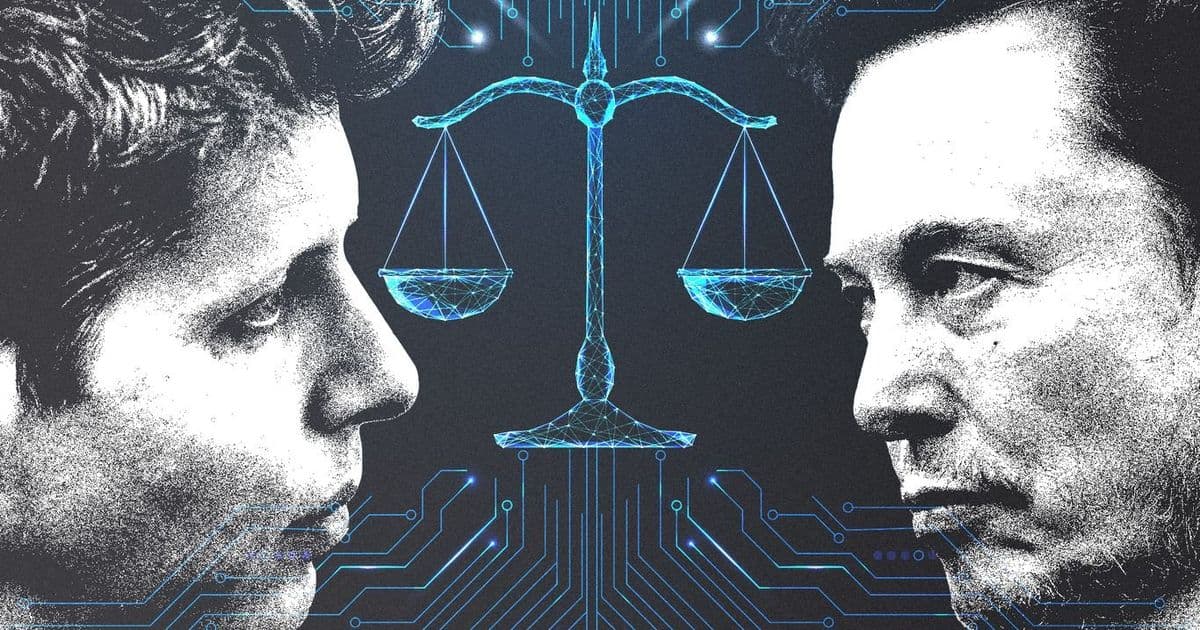
In a high‑profile federal court case, Sam Altman took the stand to defend OpenAI’s safety protocols while Elon Musk alleges the companies misled investors about AI risks. The testimony highlights the financial stakes, the regulatory pressure on large language model developers, and the strategic fallout for the AI industry.
Sam Altman Testifies as Elon Musk Sues OpenAI and Microsoft Over AI Safety Claims
On Tuesday, OpenAI CEO Sam Altman appeared before the U.S. District Court in San Francisco for the first day of what has become the most closely watched litigation in the artificial‑intelligence sector. Elon Musk, through a newly formed venture, filed a $10 billion lawsuit accusing OpenAI and its primary cloud partner Microsoft of deliberately downplaying the existential risks of large language models (LLMs) to secure funding and market share.
The financial backdrop
- Musk’s claim: The plaintiff alleges that OpenAI raised $13 billion in private capital between 2020 and 2024 on the premise that its models were “safe enough for deployment.”
- OpenAI’s valuation: At the time of the last funding round, OpenAI was valued at $29 billion, with Microsoft contributing $10 billion in a multi‑year Azure partnership.
- Potential damages: If the jury finds the defendants liable for the full amount sought, the judgment could exceed $20 billion when punitive damages are added, a sum that would dwarf the total market cap of most AI‑focused public companies.
Key points from Altman’s testimony
- Safety‑by‑design roadmap – Altman walked the court through OpenAI’s internal risk‑assessment framework, which includes quarterly safety audits, external red‑team evaluations, and a publicly released “AI Incident Database.” He cited the 2023 Red‑Team Report, which identified 42 failure modes, all of which received mitigation plans within 90 days.
- Transparency to investors – The CEO presented email excerpts and board minutes showing that OpenAI disclosed “high‑impact risk scenarios” to its Series C and D investors. The documents indicate that the board approved a $2 billion safety‑budget increase in 2022.
- Microsoft’s role – Altman emphasized that Microsoft’s Azure cloud services were provisioned under a “responsible‑use clause” that required OpenAI to implement usage throttles for any model exceeding a predefined compute threshold. He argued that the clause limited the speed at which potentially unsafe models could be released.
- Regulatory compliance – The testimony referenced OpenAI’s alignment with the EU AI Act’s high‑risk AI requirements and the U.S. Executive Order on AI Safety (issued 2023). Altman claimed that the company had already submitted a pre‑market safety dossier to the Federal Trade Commission.
Why the case matters for the broader AI market
- Capital allocation – Venture capitalists are now scrutinizing AI‑related term sheets for explicit safety‑budget language. A ruling against OpenAI could force startups to allocate a larger share of their capital to compliance and risk mitigation, potentially slowing the pace of model scaling.
- Cloud partnership dynamics – Microsoft’s involvement puts the cloud‑services market under a microscope. If the court finds that Microsoft’s infrastructure enabled risky deployments, other providers such as Google Cloud and Amazon Web Services may tighten their own responsible‑use policies.
- Regulatory precedent – The lawsuit is one of the first attempts to hold private AI firms accountable under consumer‑protection and securities‑law theories. A verdict that validates Musk’s allegations could accelerate the introduction of mandatory AI‑safety disclosures for publicly traded companies.
- Talent migration – The high‑profile nature of the trial may influence where top AI researchers choose to work. Companies that can demonstrate a rigorous safety culture may attract talent wary of reputational risk.
Strategic implications for OpenAI and Microsoft
- OpenAI is likely to double‑down on its safety narrative, leveraging the testimony to showcase compliance as a competitive advantage. Expect a series of blog posts and whitepapers highlighting the concrete steps outlined in the court documents.
- Microsoft may seek to distance its brand from the litigation by emphasizing the contractual safeguards it imposed. The firm is also expected to file a motion for summary judgment on the grounds that the alleged misrepresentations fall under standard forward‑looking statements protected by the Private Securities Litigation Reform Act.
What investors should watch
| Metric | Current Level | Potential Impact |
|---|---|---|
| OpenAI valuation | $29 B | Downward pressure if judgment exceeds $10 B |
| Microsoft Azure AI revenue | $5.2 B (FY 2024) | Possible slowdown in AI‑specific contracts |
| AI‑sector VC funding Q2 2024 | $12.3 B | May tighten as due‑diligence incorporates safety clauses |
| Regulatory activity (EU AI Act) | Draft stage | Likely to become law in 2025, raising compliance costs |
Investors should monitor the court’s rulings on the admissibility of internal safety documents and any settlement talks that could set a de‑facto industry standard for AI‑risk disclosure.
The article draws on court filings released by the U.S. District Court, statements from OpenAI’s public safety reports, and market data from PitchBook and Bloomberg. For a full copy of the filing, see the court docket.
Comments
Please log in or register to join the discussion