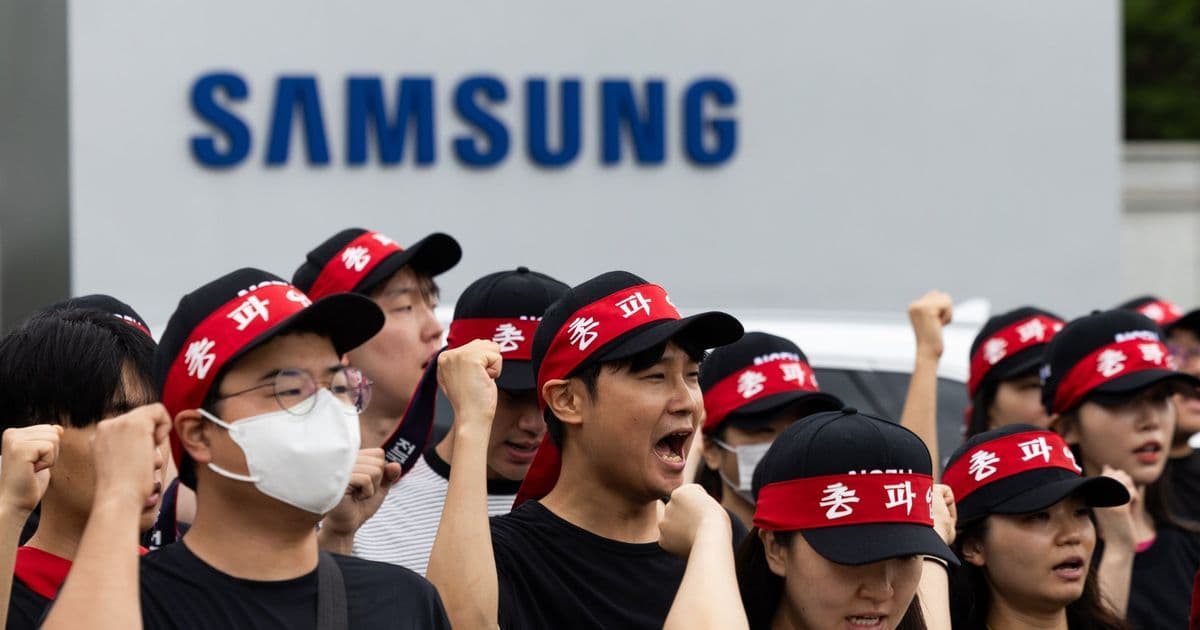
Samsung’s semiconductor division faces a potential 18-day strike by 30,000 unionized chip workers after rejecting a one-time $340,000 bonus offer, with demands for guaranteed annual payouts tied to operating profits, a dispute that could disrupt global HBM4 supply chains and cost the company up to $11.7 billion in direct losses.
Labor Negotiations Stall Over Bonus Terms
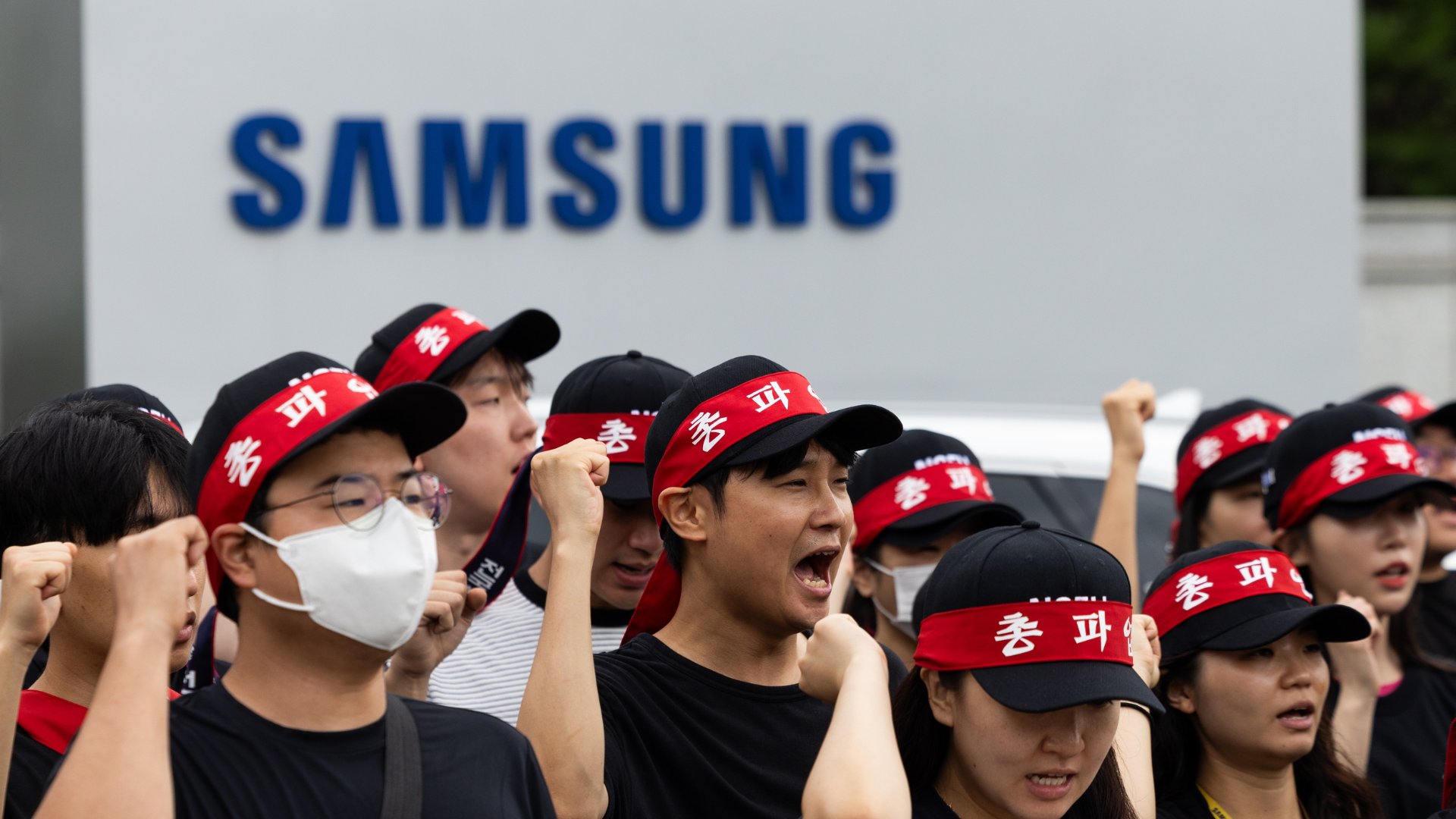
Negotiations between the National Samsung Electronics Union (NSEU) and Samsung management have stalled over bonus structure terms, with the union representing more than 30,000 semiconductor division workers rejecting a one-time payout offer worth roughly $340,000 per employee. The two sides have agreed to a 13% allocation of the semiconductor division’s operating profit as the bonus pool, but management insists the payout be a one-time award, while the NSEU demands the 13% allocation be guaranteed annually and written into the multi-year labor agreement.
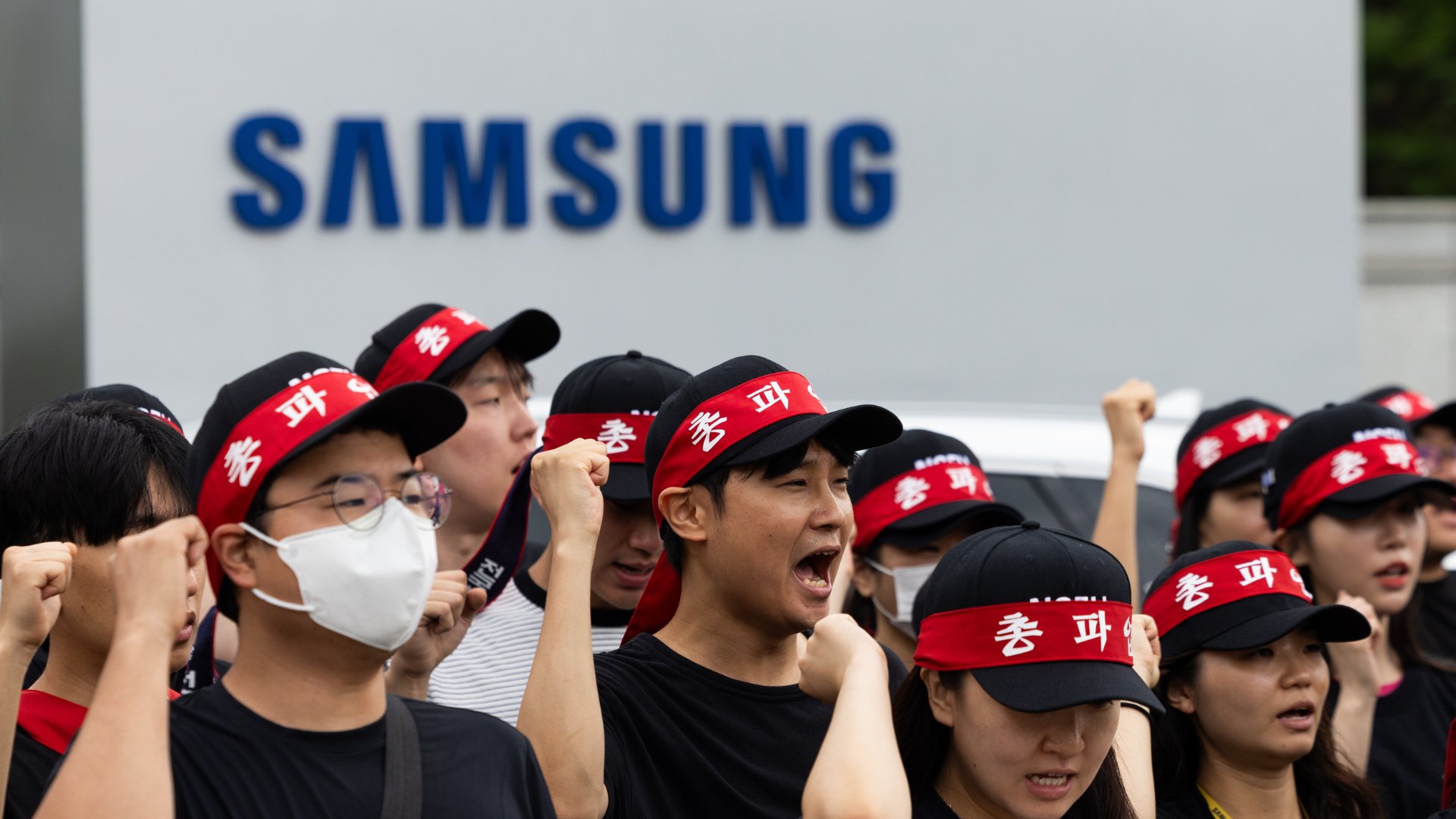
More than 30,000 workers held street protests in late April to demand a larger share of AI-driven profits, pointing to SK hynix’s guaranteed bonus structure as a benchmark. SK hynix, a standalone memory manufacturer, has committed to paying workers $477,000 in bonuses this year, with payouts rising to $900,000 next year, guaranteed for 10 years. These bonuses are funded by operating profit windfalls from the AI infrastructure buildout, as hyperscalers and data center operators pay premium prices to secure HBM and high-capacity SSD supply. Samsung chip workers note that their proposed $340,000 payout is less than 30% of SK hynix’s 2025 per-worker bonus, even though Samsung’s semiconductor division reported higher total operating profit in Q1 2024 than SK hynix.
 (Image credit: Getty Images)
The union’s initial demands included a 15% operating profit allocation, removal of the 50% bonus cap, and a 7% wage hike. Management countered with a 10% profit allocation, 6.2% wage increase, and benefits including preferential mortgage rates. The 13% allocation represents a compromise on the bonus pool size, but the annual guarantee remains the only outstanding issue.
The NSEU has scheduled a general strike from May 21 to June 7, 18 days total, which would cripple fab operations. A single-day strike action in April caused a 58% drop in production for one shift at Samsung’s Pyeongtaek 2 fab, which produces HBM3E and 1β process DRAM. Kwon Seok-joon, a professor at Sungkyunkwan University, estimates the 18-day strike would cause $6.9 billion to $11.7 billion in direct losses for Samsung, with additional indirect costs from delayed customer deliveries and reputational damage.
Technical Context: HBM Production and Process Nodes
Samsung’s HBM4 development targets 1.5TB/s bandwidth per 12-layer stack, 50% higher than HBM3E, using the 1γ (1-gamma) process node with 12nm-class peripheral circuitry. Samsung HBM4 samples are currently in qualification for next-gen AI accelerators, a process that requires uninterrupted fab operation to maintain process node stability, as even 48 hours of downtime can alter yield rates for 1γ DRAM, which has a 0.1μm feature size for through-silicon vias (TSVs).
HBM production requires 3x more wafer starts than standard DDR5 DRAM, as each stack requires 12 layers of DRAM dies bonded vertically using TSVs, a process defined in the JEDEC JESD238A standard. TSV bonding has a 15% lower yield than standard DRAM production, adding to per-unit costs. The AI infrastructure buildout has driven HBM prices up 300% year-over-year since 2023, with HBM now accounting for 35% of Samsung’s semiconductor operating profit in Q1 2024, up from 12% in Q1 2023.
SK hynix holds 65% of the global HBM3E market share, as it was first to ramp 1β (1-beta) process HBM3E production in 2023, 6 months ahead of Samsung. The company’s bonus structure is tied directly to this HBM windfall, with multi-year supply agreements with Nvidia, Microsoft, and Amazon that guarantee premium pricing through 2026. SK hynix’s standalone corporate structure allows it to tie worker bonuses directly to semiconductor division profits, without pressure from less profitable business units.
Market Implications and Supply Chain Impact
The strike comes as the three major memory manufacturers, Samsung, SK hynix, and Micron, are competing for HBM4 supply contracts for Nvidia’s Blackwell Ultra and AMD’s MI350 AI accelerators. An 18-day shutdown would delay Samsung’s HBM4 qualification by 6 to 8 weeks, risking the loss of supply contracts to competitors. Samsung’s reputation as a reliable HBM supplier is already under pressure, as the company lagged SK hynix in HBM3E production ramp in 2023, losing 15% market share in the process.
Samsung’s semiconductor division operates under Samsung Electronics, which is part of the larger Samsung Group. Other divisions, including smartphones, TVs, and home appliances, posted 8% and 12% operating margin declines in Q1 2024 due to higher component costs from the chip shortage, even as the semiconductor division reported record profits. Granting annual guaranteed bonuses to chip workers would create pay equity pressure from workers in less profitable divisions, a concern that led a smaller union representing 12,000 smartphone and consumer electronics workers to pull out of the planned joint strike. This union noted that its members receive average annual bonuses of $12,000, far below the proposed $340,000 payout for chip workers.
Prof. Kwon noted that Samsung’s corporate structure makes bonus concessions more difficult, as a 15% operating profit allocation for chip workers would require similar concessions for other divisions, creating unsustainable labor costs across the Samsung Group. For now, the two sides remain at an impasse, with the May 21 strike deadline approaching. Samsung has not issued a public statement on whether it will reconsider the annual bonus guarantee, but industry analysts note that the total annual bonus pool for 30,000 workers would total roughly $10.2 billion, less than the $11.7 billion maximum direct loss estimate for the 18-day strike.
Comments
Please log in or register to join the discussion