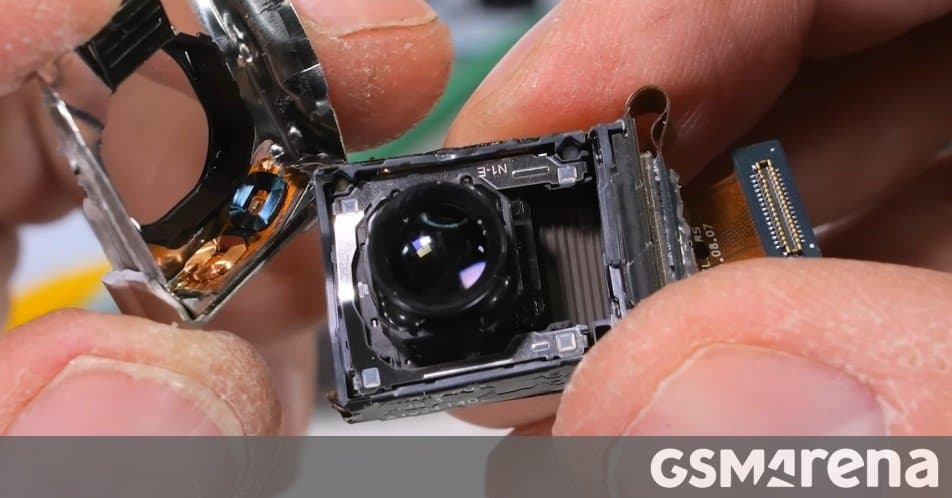
A new teardown video reveals Samsung's innovative All Lenses on Prism (ALoP) 5x telephoto camera in the Galaxy S26 Ultra, showcasing a more compact design that captures 37% more light than the previous generation.
Samsung's Galaxy S26 Ultra may appear to be a modest upgrade over its predecessor at first glance, but a closer look reveals a significant innovation in its camera system. A recent teardown video by Zack Nelson, better known as JerryRigEverything, provides an unprecedented view of the phone's new All Lenses on Prism (ALoP) 5x periscope telephoto camera, a design that Samsung's imaging division announced in 2024.
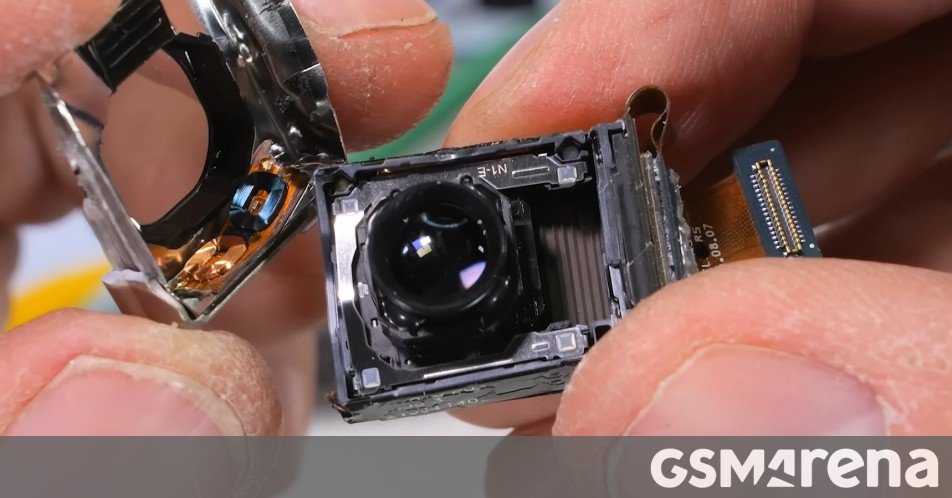
The ALoP technology represents a fundamental rethinking of periscope camera architecture. Traditional periscope designs arrange components with the lens array positioned between the image sensor and the prism, creating a relatively long optical path. Samsung's approach flips this arrangement, placing the lens array directly on top of the prism. This seemingly simple change has profound implications for both size and performance.
At the 8:00 mark in Nelson's teardown video, viewers can see the ALoP assembly in all its engineering glory. The design achieves a remarkable 22% reduction in length compared to conventional periscope modules. This space savings isn't just about making the phone thinner—it enables Samsung to optimize other internal components and potentially improve heat dissipation in this densely packed flagship device.
Perhaps more impressive than the size reduction is the optical performance gain. The ALoP design features a wider f/2.9 aperture, a significant improvement over the S25 Ultra's f/3.4 opening. This wider aperture translates to 37% more light capture, which directly impacts image quality in challenging lighting conditions. More light means better low-light performance, faster shutter speeds to reduce motion blur, and improved overall image clarity.
The practical benefits of this design extend beyond raw specifications. The combination of a more compact form factor and enhanced light-gathering capability means users get a powerful telephoto camera that doesn't compromise the phone's ergonomics or battery capacity. For mobile photography enthusiasts, this translates to better zoom shots in a wider range of conditions without the bulk typically associated with high-magnification periscope cameras.
This innovation arrives at a time when smartphone camera differentiation has become increasingly challenging. While many manufacturers focus on adding more lenses or increasing megapixel counts, Samsung's approach with ALoP demonstrates how rethinking fundamental optical arrangements can yield meaningful improvements. The technology showcases Samsung's continued investment in imaging R&D, building on their established reputation for mobile camera excellence.
The Galaxy S26 Ultra's camera system, including this ALoP periscope module, forms part of a broader imaging strategy that Samsung has refined over multiple generations. For those interested in comprehensive camera performance analysis, including sample shots and comparative testing, our detailed Galaxy S26 Ultra review provides extensive coverage of how these hardware innovations translate to real-world photography.
As smartphone cameras continue to evolve, innovations like ALoP suggest that there's still significant room for improvement through clever engineering rather than just chasing higher specifications. The success of this design could influence future smartphone camera development across the industry, potentially setting new standards for how manufacturers approach telephoto photography in increasingly compact devices.
Comments
Please log in or register to join the discussion