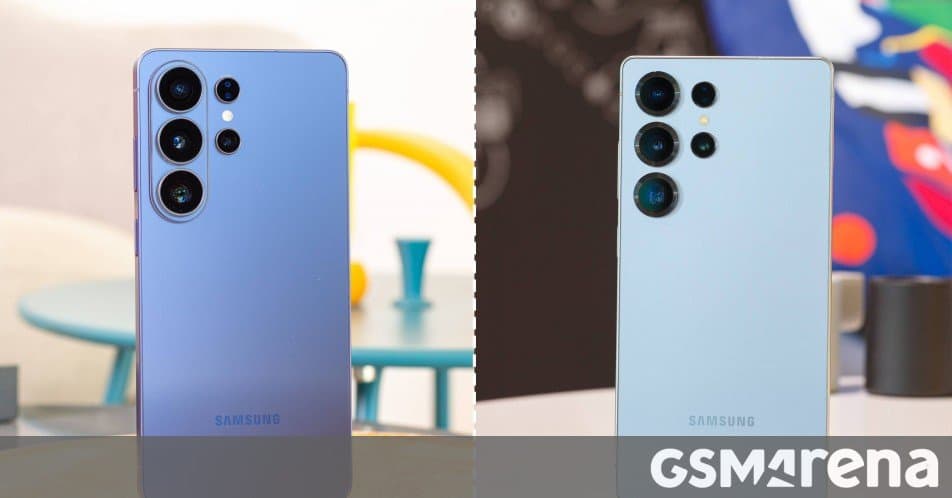
Samsung's latest flagship offers modest improvements over its predecessor, with faster charging, a privacy display, and slightly better battery life. We compare the two Ultra models to help you decide if the upgrade is worth the $200 price premium.
Samsung has unveiled the Galaxy S26 Ultra, continuing its annual flagship refresh cycle. For potential buyers, the question remains: does this latest iteration justify upgrading from the still-capable Galaxy S25 Ultra? With Samsung's impressive 7-year software support promise, the newest model loses one of its traditional advantages, making the decision more nuanced than ever.
Design: Evolutionary Changes with Trade-offs
The Galaxy S26 Ultra introduces several design tweaks, though not all are improvements. The device is noticeably thinner at 7.9mm compared to the S25 Ultra's 8.2mm, and the more rounded corners make it more comfortable to hold. The sharp corners of the previous model made the phone feel bulkier than its actual dimensions.
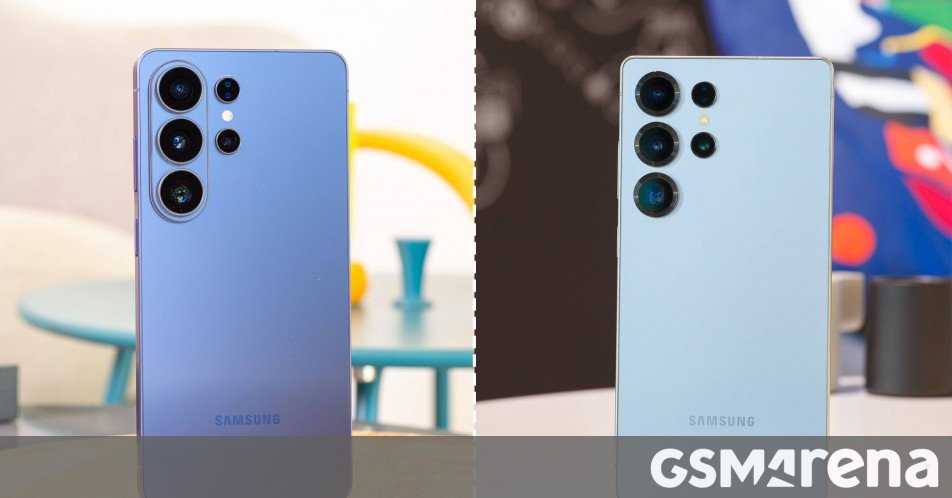
However, the camera island protrudes more on the S26 Ultra, which we consider a step backward. Interestingly, despite having identical display sizes, the S26 Ultra is both wider and taller than its predecessor—imperceptible in daily use but puzzling from a design perspective.
The frame material has changed from titanium on the S25 Ultra to Armor aluminum 2 on the S26 Ultra. While still durable, this represents a slight step down in premium build quality.
Display: Same Panel, New Privacy Feature
Both devices feature identical 6.9-inch LTPO OLED panels with 120Hz refresh rates and QHD+ resolution. They perform similarly in brightness tests, easily exceeding 1400 nits in auto mode, and both include anti-reflective coatings for improved outdoor visibility.
The standout addition on the S26 Ultra is the Privacy Display feature, which functions like a built-in privacy screen protector. When activated, it makes it difficult for bystanders to view your screen from an angle. The trade-off is a significant reduction in maximum brightness (cut in half when Privacy Display is active). When disabled, the display performs identically to the S25 Ultra in terms of viewing angles, sharpness, and brightness.
Battery Life: Modest but Meaningful Improvement
Both phones house the same 5000 mAh battery, yet the S26 Ultra shows notable improvements in our battery tests. During web browsing, the newer model lasted 16 hours and 23 minutes compared to the S25 Ultra's 14 hours and 49 minutes. Video playback also improved from 36 hours and 44 minutes to 37 hours and 44 minutes.
These gains, while not revolutionary, are welcome and demonstrate Samsung's optimization of the new Snapdragon 8 Elite Gen 5 chipset for better power efficiency. The endurance scores in other usage scenarios remain relatively similar between the two models.
Charging Speed: A Notable Upgrade
Perhaps the most significant hardware improvement is the charging capability. The Galaxy S26 Ultra supports 60W fast wired charging, a substantial jump from the S25 Ultra's 45W. In our tests, the S26 Ultra reached 51% charge in just 15 minutes and 84% in 30 minutes, completing a full charge in 43 minutes. The S25 Ultra, by comparison, only reached 41% in 15 minutes and 72% in 30 minutes, taking 59 minutes for a full charge.
This upgrade positions the S26 Ultra much more competitively in the flagship segment, addressing a long-standing weakness of Samsung's flagship series.
Audio: Balanced Tuning Over Raw Volume
While the S26 Ultra's speakers measure slightly quieter (-26.2 LUFS) compared to the S25 Ultra (-24.6 LUFS), the newer model offers a more balanced audio experience. The S26 Ultra produces more natural-sounding vocals and highs without the ringing or squeaking sometimes present on the S25 Ultra. Bass performance remains comparable between the two models.
Performance: Incremental Gains with the New Snapdragon
The Galaxy S26 Ultra introduces the Snapdragon 8 Elite Gen 5 "for Galaxy" processor, an incremental upgrade over the S25 Ultra's Snapdragon 8 Elite "for Galaxy". Both chips are manufactured using Samsung's 3nm process, but the newer model features slightly higher clock speeds on the main cores and GPU.
Benchmark tests confirm these improvements:
- Geekbench 6: S26 Ultra scores 11,566 vs. S25 Ultra's 9,846 (17% improvement)
- AnTuTu 10: S26 Ultra scores 2,627,986 vs. S25 Ultra's 2,207,809 (19% improvement)
- 3DMark Wild Life: S26 Ultra scores 7,744 vs. S25 Ultra's 6,687 (16% improvement)
While these gains are noticeable in synthetic benchmarks, both devices remain exceptionally capable in real-world usage, handling games, multitasking, and demanding applications with ease.
Cameras: Familiar Hardware with Minor Tweaks
The camera system sees minimal hardware changes between generations. The main camera and 5x telephoto receive brighter aperture lenses on the S26 Ultra. The 5x telephoto also switches from a periscope to a conventional lens design, while the 3x telephoto gets a slightly smaller sensor. The ultrawide camera remains unchanged.
The front camera keeps the same sensor but benefits from a wider lens on the S26 Ultra, allowing for more expansive selfies and better group shots.
In practical terms, the image quality differences between the two models are subtle. The S26 Ultra produces slightly warmer skin tones in portraits and may preserve a bit more texture in certain scenes. The S25 Ultra maintains an advantage in close-up photography due to its periscope telephoto lens.
Low-light performance sees mixed results. The S26 Ultra's Night mode implementation is different, working automatically rather than as a dedicated mode. It tends to preserve more texture than the S25 Ultra's processing, but the 3x telephoto suffers from the smaller sensor size.
Video capabilities are largely similar, with both models offering 4K60 recording across all cameras and 8K30 at native focal lengths. The S26 Ultra introduces pre-loaded LUTs, Horizon lock stabilization, and the APV (Advanced Professional Video) codec as minor upgrades.
Value Proposition: Is the Upgrade Worth It?
With approximately a $200/€200 price difference between the models, the value proposition of upgrading to the S26 Ultra depends on your priorities and how much you value the specific improvements.
The S26 Ultra justifies the premium if you prioritize:
- Thinner, more comfortable design with rounded corners
- Privacy Display functionality for sensitive content
- Noticeably faster charging times
- Slightly improved battery life
- Marginal performance gains
- Wider selfies
- Better-sounding, more balanced audio
- New video features
The S25 Ultra remains the better choice if:
- You want maximum value for your money
- You prefer the titanium build quality
- You frequently take close-up photographs
- You prefer louder speakers
- You don't need the absolute latest processor
Given Samsung's commitment to 7 years of software updates for both models, the S25 Ultra remains a compelling option for most users. The S26 Ultra's improvements are welcome but evolutionary rather than revolutionary, making the decision primarily a matter of personal preference and budget considerations.
Comments
Please log in or register to join the discussion