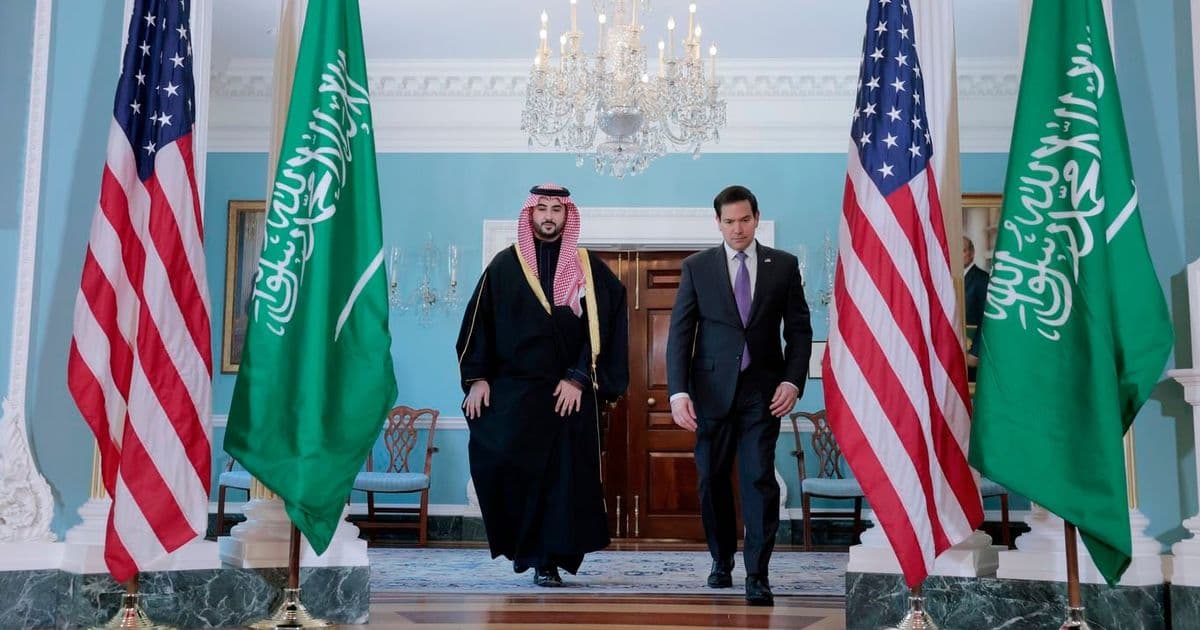

Saudi Arabia's Defense Minister Prince Khalid bin Salman and Israeli officials are in Washington for high-stakes talks about potential U.S. military action against Iran, as regional tensions escalate over Tehran's nuclear program and proxy activities.
Saudi Arabia's Defense Minister Prince Khalid bin Salman arrived in Washington, D.C. this week for critical discussions with U.S. officials about potential military strikes on Iran's nuclear facilities and missile programs. The visit comes amid escalating regional tensions and follows similar meetings with Israeli security officials who have also been consulting with the Trump administration about coordinated responses to Tehran's nuclear ambitions.
High-Level Strategic Consultations
The meetings between Prince Khalid and Secretary of State Marco Rubio signal the Biden administration's efforts to coordinate with key regional allies before any potential military action. Saudi Arabia, which has historically maintained a cautious distance from direct confrontation with Iran, appears to be signaling a shift in its approach as Tehran's nuclear program advances.
Israeli officials, including representatives from the Mossad and military intelligence, have been separately meeting with their American counterparts to discuss intelligence assessments and operational planning. These parallel tracks of diplomacy suggest the administration is seeking both Arab and Israeli buy-in for any potential military campaign.
Regional Dynamics and Military Preparations
Iran's nuclear program has accelerated significantly over the past year, with International Atomic Energy Agency reports indicating uranium enrichment levels approaching weapons-grade purity. Tehran has also expanded its missile capabilities and proxy network across the region, from Hezbollah in Lebanon to the Houthis in Yemen.
The potential for U.S. strikes would likely target Iran's nuclear enrichment facilities at Natanz and Fordow, as well as missile production sites and command centers. Military planners are reportedly considering both limited strikes to degrade specific capabilities and more extensive operations aimed at setting back Iran's nuclear program by several years.
Saudi Arabia's involvement marks a significant development, as the kingdom has traditionally avoided direct military confrontation with Iran despite their regional rivalry. The kingdom's participation suggests growing concern about Iran's regional influence and the potential for nuclear proliferation in the Middle East.
Economic and Diplomatic Implications
Any military action against Iran would have immediate consequences for global oil markets, with Brent crude prices already showing volatility in response to the diplomatic developments. The Strait of Hormuz, through which approximately 20% of global oil supplies pass, could become a flashpoint for Iranian retaliation.
European allies have expressed concern about the potential for military escalation, with several NATO members privately urging diplomatic solutions. However, the Biden administration appears to be moving toward a more confrontational stance, particularly after Iran's recent ballistic missile tests and support for proxy attacks on U.S. forces in Iraq and Syria.
Intelligence and Military Considerations
U.S. intelligence assessments suggest Iran has dispersed its nuclear program and hardened key facilities against potential airstrikes. The Fordow facility, built into a mountain near Qom, would be particularly difficult to destroy without bunker-buster munitions or ground forces.
Military experts note that any strikes would need to be sustained and comprehensive to significantly impact Iran's nuclear timeline. A limited campaign might only delay Iran's program by months, while a more extensive operation could potentially set it back several years.
The timing of these consultations is particularly sensitive, coming just months before Iran's presidential election and amid ongoing indirect negotiations over the nuclear deal. Some analysts suggest the administration may be using the threat of military action as leverage in diplomatic talks, while others believe preparations for actual strikes are underway.
Regional Security Architecture
The consultations in Washington reflect broader efforts to build a regional security architecture that includes both Arab states and Israel. The Abraham Accords have already normalized relations between Israel and several Arab states, and military coordination against a common threat could further strengthen these ties.
However, the potential for military action also risks destabilizing the region and could trigger retaliatory attacks on Saudi oil facilities, Israeli cities, or U.S. military bases. The administration appears to be weighing these risks against the consequences of allowing Iran to develop nuclear weapons capability.
As discussions continue in Washington, the international community watches closely for signs of whether diplomacy or military action will prevail in addressing one of the most pressing security challenges in the Middle East.
Comments
Please log in or register to join the discussion