The fourth release candidate for Linux 7.0 arrives with critical fixes for hangs, performance regressions in the mm/cid scheduler code, AMDGPU power consumption bugs, and other stability improvements as the kernel nears its mid-April stable release.
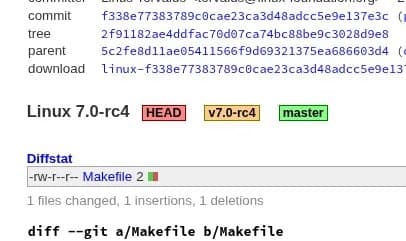
Linux 7.0-rc4 has been released, bringing us one step closer to the Linux 7.0 stable release scheduled for mid-April 2026. The release comes with critical fixes for hangs, performance regressions, and various other bug fixes as the kernel development team continues to polish the upcoming major version.

Performance Regression Fixed in mm/cid Scheduler Code
One of the most significant fixes in this release candidate addresses a performance regression that has existed since Linux 6.19 in the mm/cid scheduler code. This regression had been affecting system performance for several kernel versions, and its resolution in 7.0-rc4 should provide noticeable improvements for workloads that heavily utilize memory management and scheduling features.
The mm/cid (Memory Management / Cache ID) scheduler is responsible for optimizing memory access patterns and cache utilization across different CPU cores and NUMA nodes. Performance regressions in this subsystem can have far-reaching effects on system responsiveness, particularly for memory-intensive applications and multi-threaded workloads.
AMDGPU Power Consumption Bug Fixed
Another critical fix in this release targets AMDGPU drivers, specifically addressing an idle/power consumption bug that occurs after running compute workloads with RDNA4 GPUs. This issue was particularly noticeable when using AI frameworks like Llama.cpp, where users would experience unexpectedly high power consumption even when the GPU was idle.
The fix is particularly relevant for developers and researchers working with AI/ML workloads on AMD hardware. RDNA4 GPUs, which include the latest Radeon RX 7000 series, are becoming increasingly popular for AI inference tasks due to their competitive performance-per-watt ratio compared to NVIDIA's offerings.
Rust Language Support Preparations
Linux 7.0-rc4 also includes preparations for upcoming Rust language releases. The Linux kernel has been gradually adopting Rust for new driver development, particularly for security-sensitive components where Rust's memory safety guarantees can help prevent entire classes of vulnerabilities.
These preparations likely include updates to the kernel's Rust tooling, build system integration, and compatibility shims to ensure smooth transitions as new Rust compiler versions are released. The ongoing integration of Rust into the kernel represents one of the most significant language shifts in Linux's 30+ year history.
cpupower Systemd Service Enhancement
The cpupower utility's systemd service file now allows setting the Energy Performance Preference (EPP), giving administrators more granular control over CPU power management policies through systemd services. This enhancement simplifies the deployment of custom CPU performance profiles across systems without requiring manual configuration.
EPP settings control the trade-off between performance and power consumption, with options ranging from maximum performance to maximum power savings. The ability to configure this through systemd services makes it easier to implement consistent power management policies across fleets of Linux systems.
Linus Torvalds on Release Candidate Size
In his release announcement, Linus Torvalds noted that what initially appeared to be a calm week turned into another "bigger than usual" release candidate. He observed that while rc1 was a fairly normal size at 11.5k commits, rc2 through rc4 have all been slightly larger than typical for this stage in the release cycle.
Torvalds speculated that the increased activity might be psychological, with developers being more active due to the new major version number. He noted that this pattern has been fairly consistent, with most submissions arriving at the end of the week as usual.
Despite the larger size, Torvalds characterized the changes as "fairly small and benign," with most commits being small fixes rather than major feature additions. The selftest updates showed up fairly noticeably in the diffstat, while the actual kernel diffs looked "mostly pretty flat and spread out."
Looking Ahead to Linux 7.0 Stable
With approximately one month remaining until the Linux 7.0 stable release, the development team is focused on stabilizing the kernel and addressing any remaining critical issues. The next release candidate will be crucial in determining whether the kernel is ready for final release or if additional stabilization time is needed.
Linux 7.0 is set to power major distribution releases including Ubuntu 26.04 LTS and Fedora 44, among other H1'2026 Linux distribution releases. The kernel will bring these distributions new hardware support, performance improvements, and security enhancements that will be maintained throughout their support lifecycle.
Impact on Enterprise and Development
The fixes in 7.0-rc4 are particularly important for enterprise environments where stability and performance are critical. The resolution of the mm/cid scheduler regression alone could provide meaningful performance improvements for database servers, virtualization hosts, and other memory-intensive workloads.
For developers working on AI/ML applications, the AMDGPU power consumption fix removes a significant pain point when using AMD hardware for inference workloads. This could make AMD GPUs more attractive for deployment scenarios where power efficiency is a key consideration.
The cpupower systemd service enhancement also benefits enterprise deployments by simplifying the management of CPU performance policies across large numbers of systems, reducing administrative overhead and ensuring consistent behavior.
Community Testing Encouraged
As with all release candidates, the Linux community is encouraged to test Linux 7.0-rc4 extensively. Testing on diverse hardware configurations helps identify any remaining issues before the stable release. The kernel's extensive hardware support means that testing across different architectures, from x86_64 to ARM64 to RISC-V, is particularly valuable.
Users can download Linux 7.0-rc4 from kernel.org or through their distribution's testing repositories if available. As this is a release candidate, it should not be used in production environments, but rather for testing and development purposes.
Comments
Please log in or register to join the discussion